
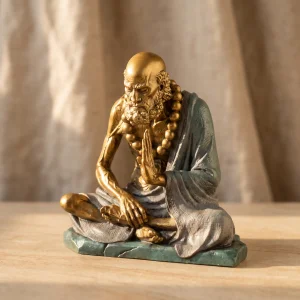
Shaolin Quiet Sakyamuni Statue: Bronze-Tone Qingsha Stone Buddha Bust with Silence Gesture
-
Free shipping on all orders. Estimated delivery: 5–10 business days (U.S., Germany & U.K.), 10–16 business days (international).
-
Return within 60 days of purchase. Shipping & Return

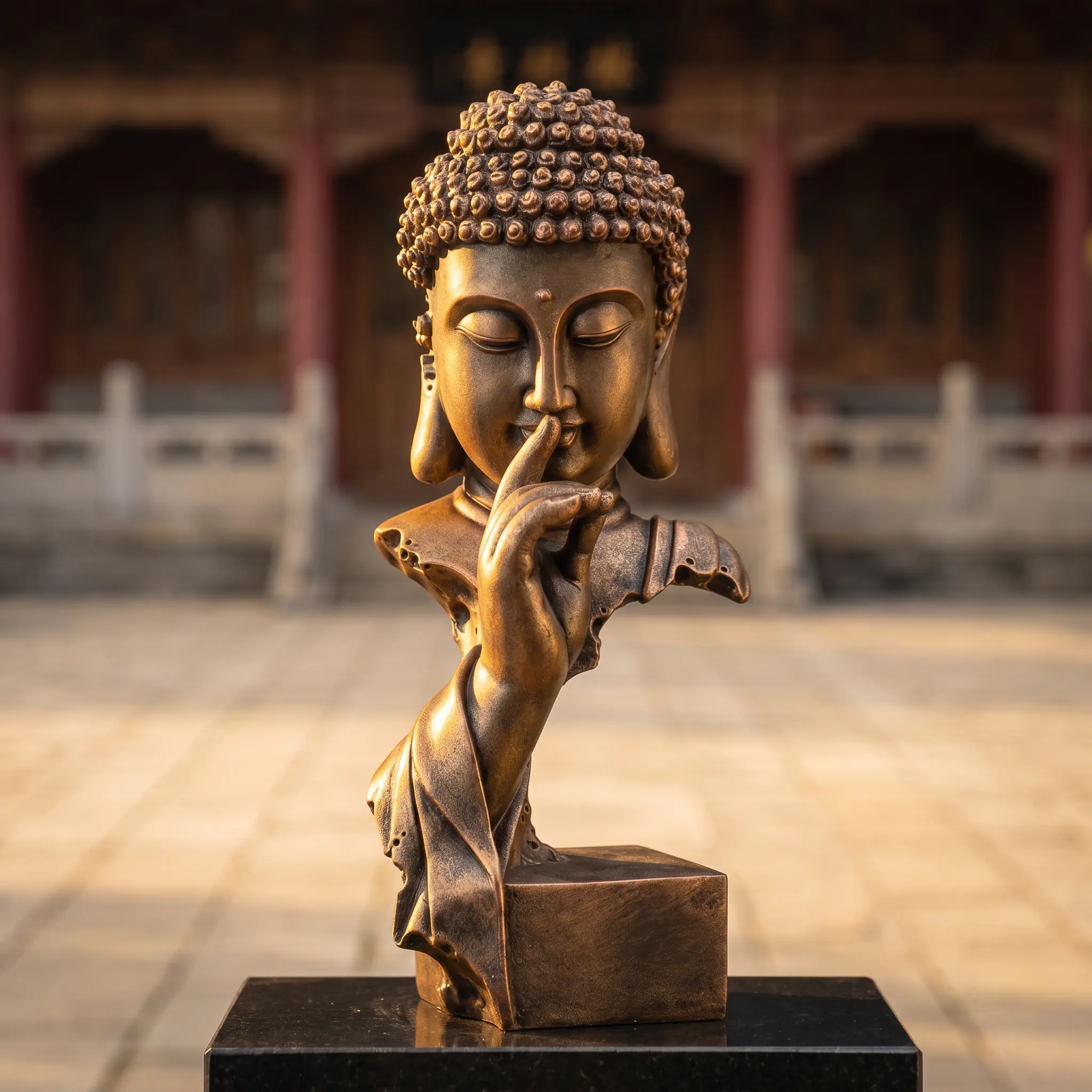
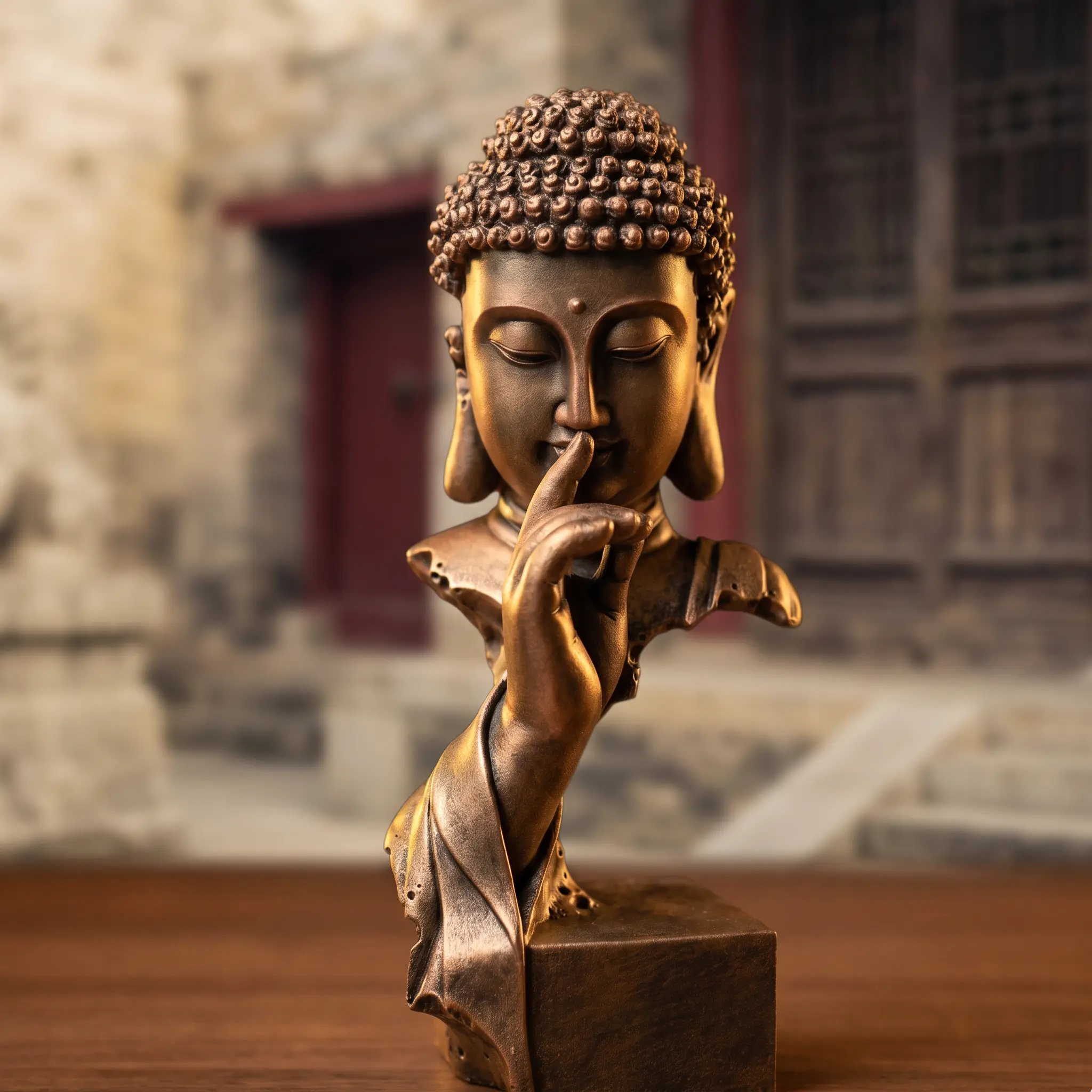
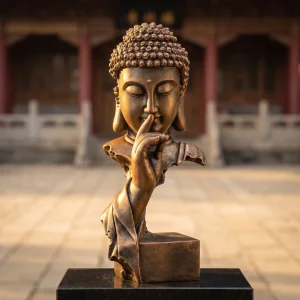
Your phone buzzes. Your inbox grows. Your day is loud. This Sakyamuni Buddha bust answers with stillness. Its eyes are lowered. One finger rests at its lips. It asks you to pause before you speak.
Keep it where you work, read, or sit. It is a small, steady cue that calm is something you practice, not something you wait for.
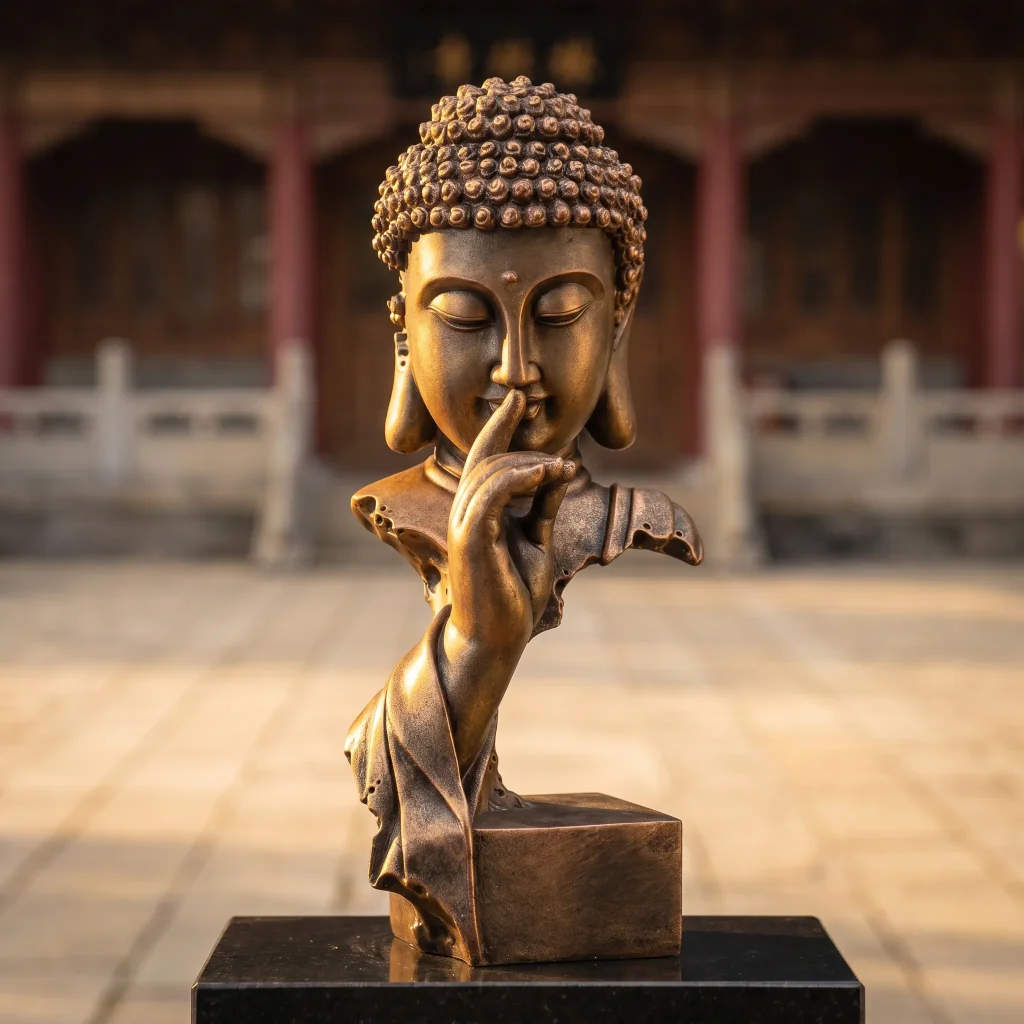
What the “Quiet” Gesture Means (and What It Doesn’t)
A Modern Gesture, Not a Classical Mudra
Let’s be straight with you. The finger-to-lips pose is not a traditional Buddhist mudra. Classic Shakyamuni images use gestures like meditation, earth-touching, teaching, fearlessness, and wish-granting. This statue is a contemporary artistic interpretation.
The “hush” pose has a mixed history. Greek and Roman viewers read the Egyptian child-god Horus, shown with a finger at his lips, as a sign of silence. We mention it so you know where the gesture really comes from. In this bust, we read it as an invitation to your own attention.
Rooted in Chan’s Wordless Teaching
Teaching without words is much older in Chan, the school known in the West as Zen. In the Flower Sermon story, the Buddha holds up a flower and says nothing. Only his disciple Mahākāśyapa smiles. Chan tradition calls this a transmission outside the scriptures.
A note on honesty: that story first appears in a Chan text from 1036 CE. Treat it as tradition, not history. Its lesson still holds. Some things are understood by being still, not by being explained.
Pause before you speak. Listen before you answer.The idea behind this bust
Reading the Face
- Snail-shell curls: the classic hair of Buddha images, shown as tight, rounded knots.
- Forehead dot (urna): a mark between the brows, traditionally linked to insight.
- Long earlobes: often explained as a reminder of the princely jewelry Siddhartha gave up.
- Lowered eyes: attention turned inward, not outward.
Why Sakyamuni, Why Shaolin
Sakyamuni means “sage of the Shakya clan.” It is the name for the historical Buddha, Siddhartha Gautama. He is the teacher behind the whole tradition, not a lucky charm.
Shaolin Temple, on Mount Song in Henan, is recognized as the birthplace of Chan Buddhism. Legend says the monk Bodhidharma arrived there in 527 CE. The temple sits within the Historic Monuments of Dengfeng, a UNESCO World Heritage Site since 2010.
At shaolinstore, we design pieces around that heritage, from this bust to our Spiritual Jewelry. We don’t promise luck or wealth. We offer a daily cue for calm. If you already wear a mala or other spiritual jewelry, this statue is a natural partner on your desk or altar.
Crafted in Qingsha Stone with a Bronze-Tone Finish
Natural Matte Texture
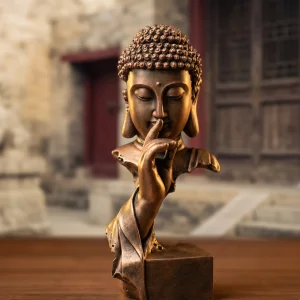
Look closely at the surface. You will see fine stone grain and soft, matte light. There is no plastic shine. The bronze-tone color gives the warmth of aged metal, with the weight and feel of real stone.
The Weathered Drapery Is Intentional
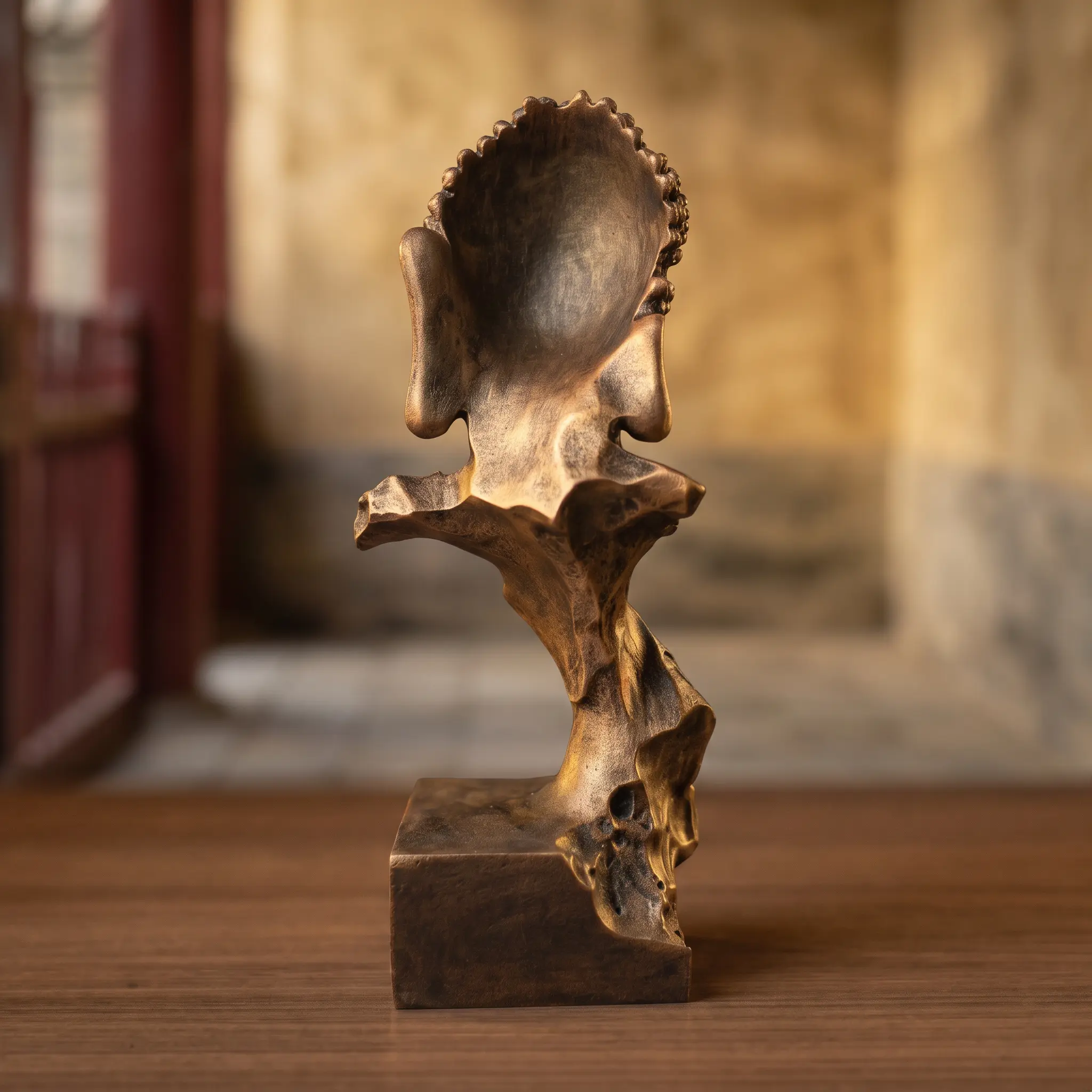
Check the robe and shoulder edges. They are uneven and pitted, as if worn by time. That is a deliberate sculptural finish, not shipping damage. You can read it as a quiet nod to impermanence, a core Buddhist idea.
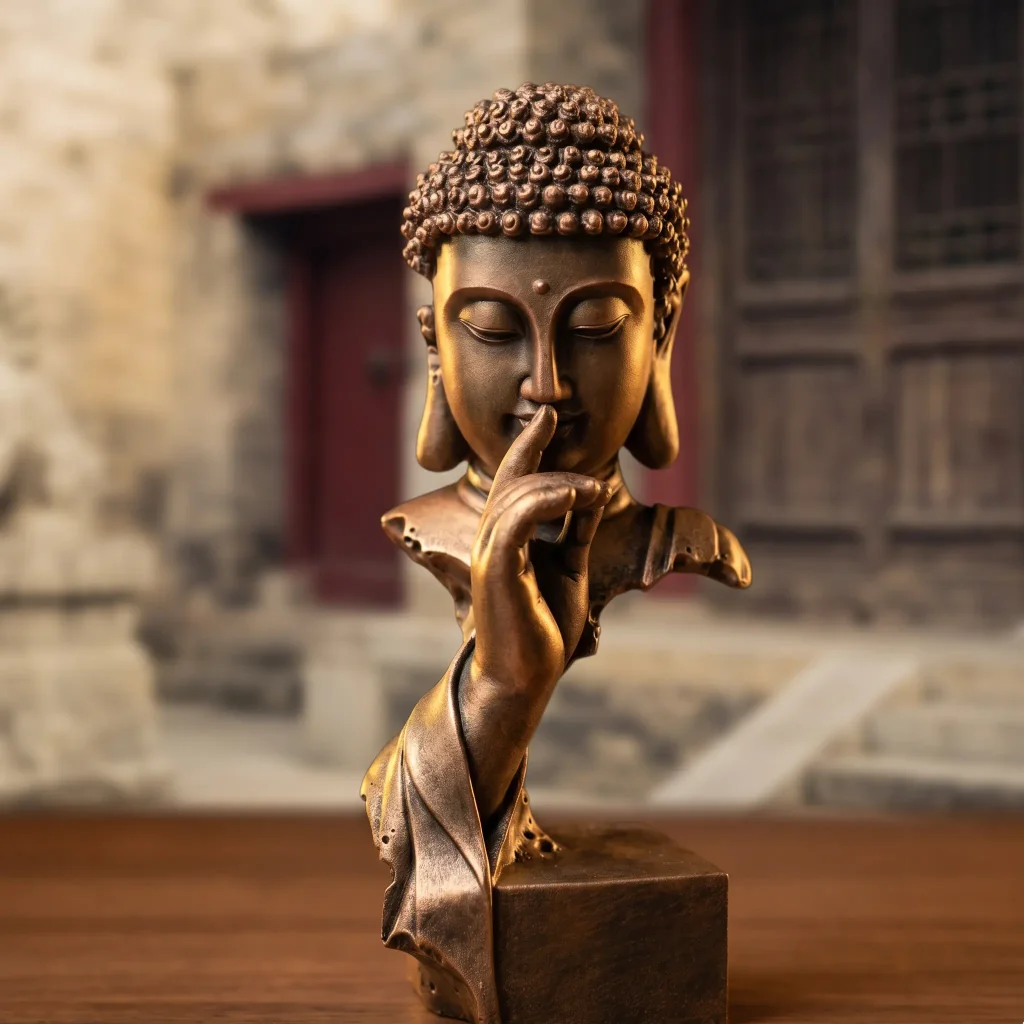
Is It Real Bronze?
No. It is made from Qingsha stone with a bronze-tone finish. We say so clearly, so there are no surprises. If you want cast metal, this is not that piece. If you want stone warmth with a bronze glow, it is.
Choose Your Size
| Size | Dimensions | Weight | Best spot |
|---|---|---|---|
| Large | 12.5″ × 5.4″ × 4.0″ 31.8 × 13.8 × 10.2 cm |
1.85 kg 4.1 lb |
Console, mantel, entry shelf, altar |
| Medium | 8.1″ × 3.5″ × 2.7″ 20.5 × 8.8 × 6.8 cm |
550 g 1.2 lb |
Desk, bookshelf, nightstand |
Not sure? Pick the Large if the statue is the focal point of a room. Pick the Medium if you want it within arm’s reach. Many people buy both and layer them on one shelf.
Where to Place Your Quiet Buddha Respectfully
Best Spots
- A meditation corner or yoga space
- Your home office desk (Medium)
- A bookshelf or reading nook
- A console, mantel, or entryway shelf (Large)
Simple Placement Etiquette
- Keep it elevated, ideally at or above eye level when you sit.
- Face it into the room, not toward a wall.
- Keep it off the floor, and away from bathrooms, shoes, and trash.
- Dust it gently, as you would any object that matters to you.
Some people also follow Feng Shui or Vastu advice, such as facing it east or toward the entrance. Those are home customs, not Buddhist rules. Use them if they help. Skip them if they don’t.
Is a Buddha Bust Respectful to Display?
Fair question. Some collectors object to isolated Buddha heads, because many antique heads were removed from temples and sold. This piece is different. It is an original contemporary bust with a shoulder, a hand, and a base. It is not a fragment of an old temple image.
Display it with care, and it honors the tradition. You don’t need to be Buddhist to own one. You do need to treat it with respect.
A Meaningful Gift for Calm Minds
Want a gift that isn’t another candle? This statue suits:
- Meditators and yoga teachers
- Students and busy professionals
- New homeowners
- Anyone who could use a quiet cue
Frame it as a symbol of calm and presence, not a luck charm. A thoughtful gift of a Buddha image is widely seen as kind, as long as it is chosen with respect.
Care Guide
- Dust with a soft dry brush or a microfiber cloth.
- Spot-clean with a barely damp cloth. Dry it right away.
- Skip bleach, vinegar, and pressure washing.
- Keep it indoors or under cover. Natural stone is porous, and freezing damp can crack it.
- Lift it with both hands from the base, never by the hand or shoulder.
FAQ
What does the finger on the lips mean on this Buddha statue?
It is a call to inner stillness: pause before you speak, listen before you answer. It is a modern artistic gesture, inspired by Chan’s wordless teaching.
Is the silence gesture a traditional mudra?
No. Classic Shakyamuni mudras include meditation, earth-touching, teaching, fearlessness, and wish-granting. The finger-to-lips pose is a contemporary interpretation, and we describe it that way.
Is this statue made of real bronze?
No. It is made from Qingsha stone with a bronze-tone finish. You get the look of aged bronze with the weight and texture of stone.
Which size should I choose?
Choose the Large (12.5 in) as a focal point on a console, mantel, or altar. Choose the Medium (8.1 in) for a desk, shelf, or nightstand.
Can I place it outdoors?
We recommend indoors or a sheltered spot. Natural stone is porous, and freezing damp can damage it.
Is it okay to own a Buddha statue if I’m not Buddhist?
Yes, if you display it with respect. Keep it elevated and clean, and never on the floor or in a bathroom.
Which way should a Buddha statue face?
Face it into the room, not toward a wall. Some people also face it east or toward the entrance. That is a Feng Shui custom, not a Buddhist rule.
| size | Large(12.5"×5.4"×4.0")-4.2lbs, Medium(8.1"×3.5"×2.7") |
|---|
Related Products
Seated Guanyin Statue – Painted Aged Copper Kwan Yin
Original price was: $493.95.$465.95Current price is: $465.95.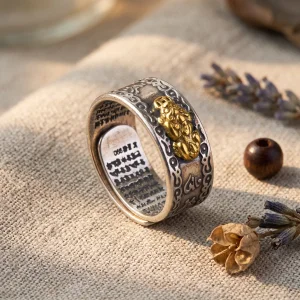
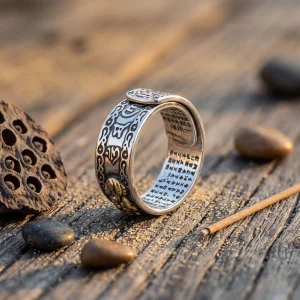
Feng Shui Pixiu Ring: 990 Silver Mantra Ring, Adjustable US 8–13
Original price was: $65.95.$46.95Current price is: $46.95.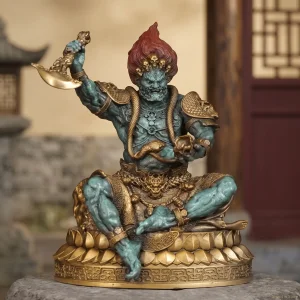
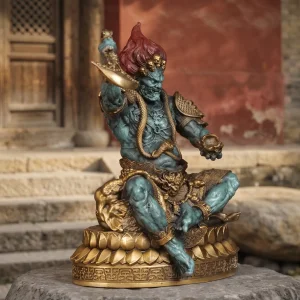
Handcrafted Copper Mahakala Sculpture – Seated Protector Statue for Home, Altar & Meditation Space
Original price was: $465.95.$425.95Current price is: $425.95.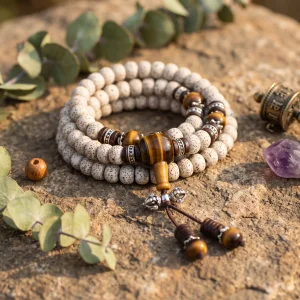

Handmade Tibetan Tiger Eye Bodhi Seed Peace Bracelet
Original price was: $135.95.$106.95Current price is: $106.95.Recently Viewed Products
Shaolin Quiet Sakyamuni Statue: Bronze-Tone Qingsha Stone Buddha Bust with Silence Gesture
Original price was: $250.95.$195.95Current price is: $195.95.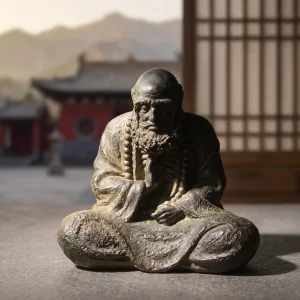
Bodhidharma Stone Statue – Handcrafted Seated Damo Zen Sculpture
Original price was: $136.95.$122.95Current price is: $122.95.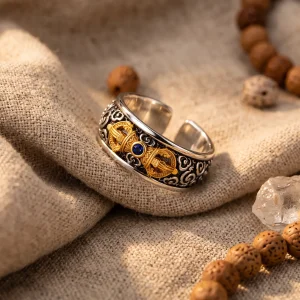
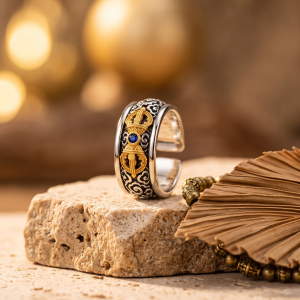
Vajra Ring: Shaolin-Blessed Adjustable Silver Dorje Ring with Gold-Tone Vajra & Blue Stone
Original price was: $135.95.$120.95Current price is: $120.95.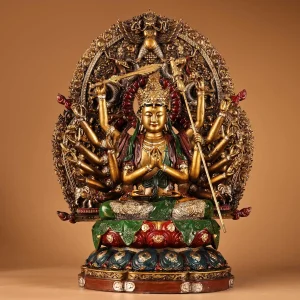
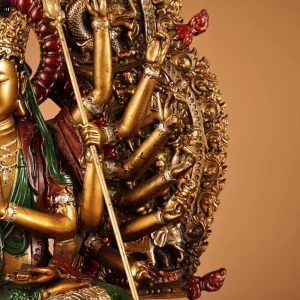
Multi-Armed Guanyin Copper Statue – 15.75 in Hand-Painted Avalokiteshvara Sculpture
Original price was: $960.95.$920.95Current price is: $920.95.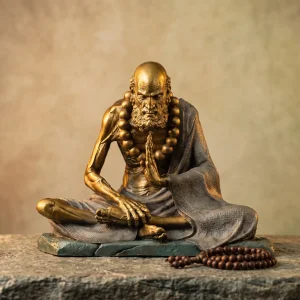
Reviews
There are no reviews yet.