

The Figure & Its Meaning
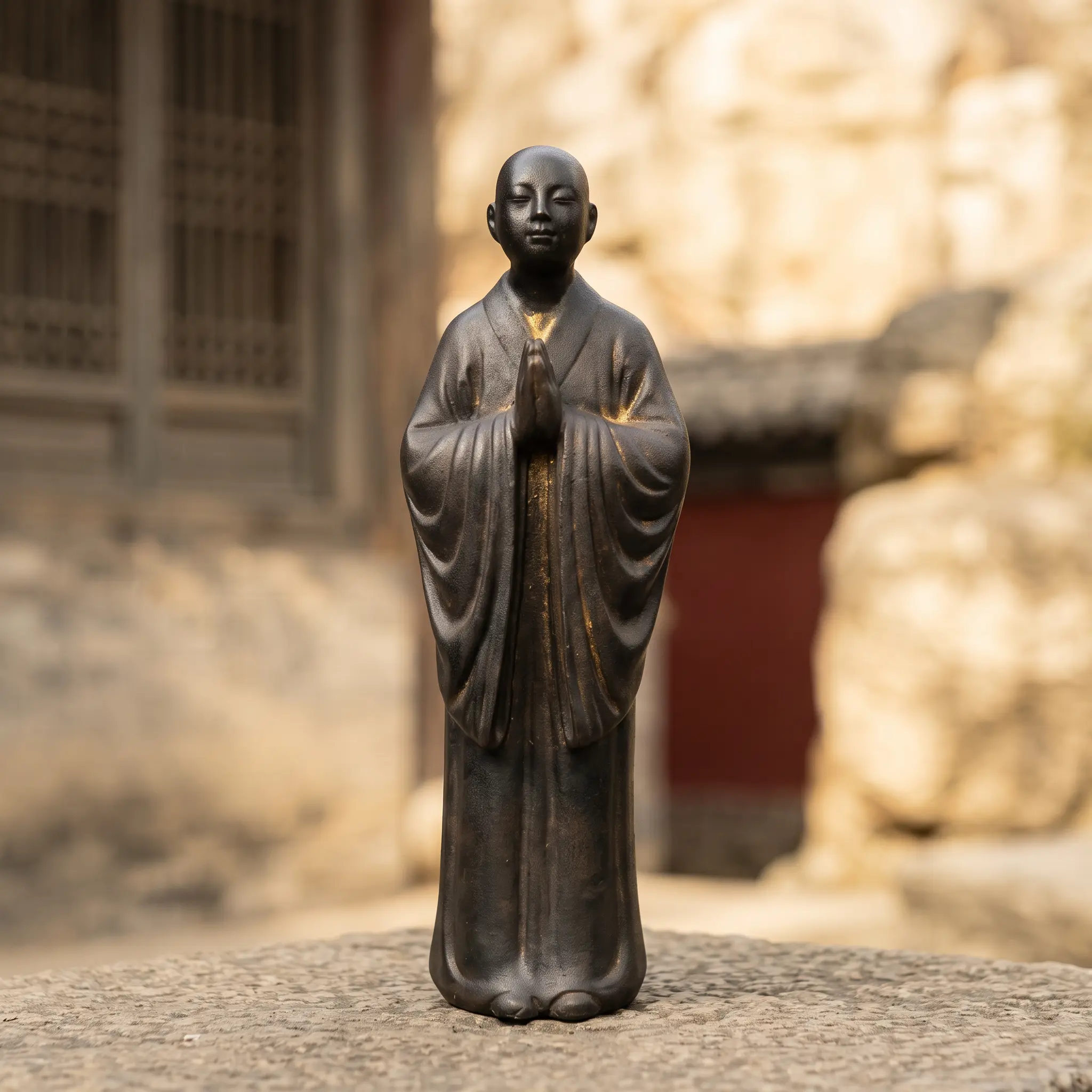
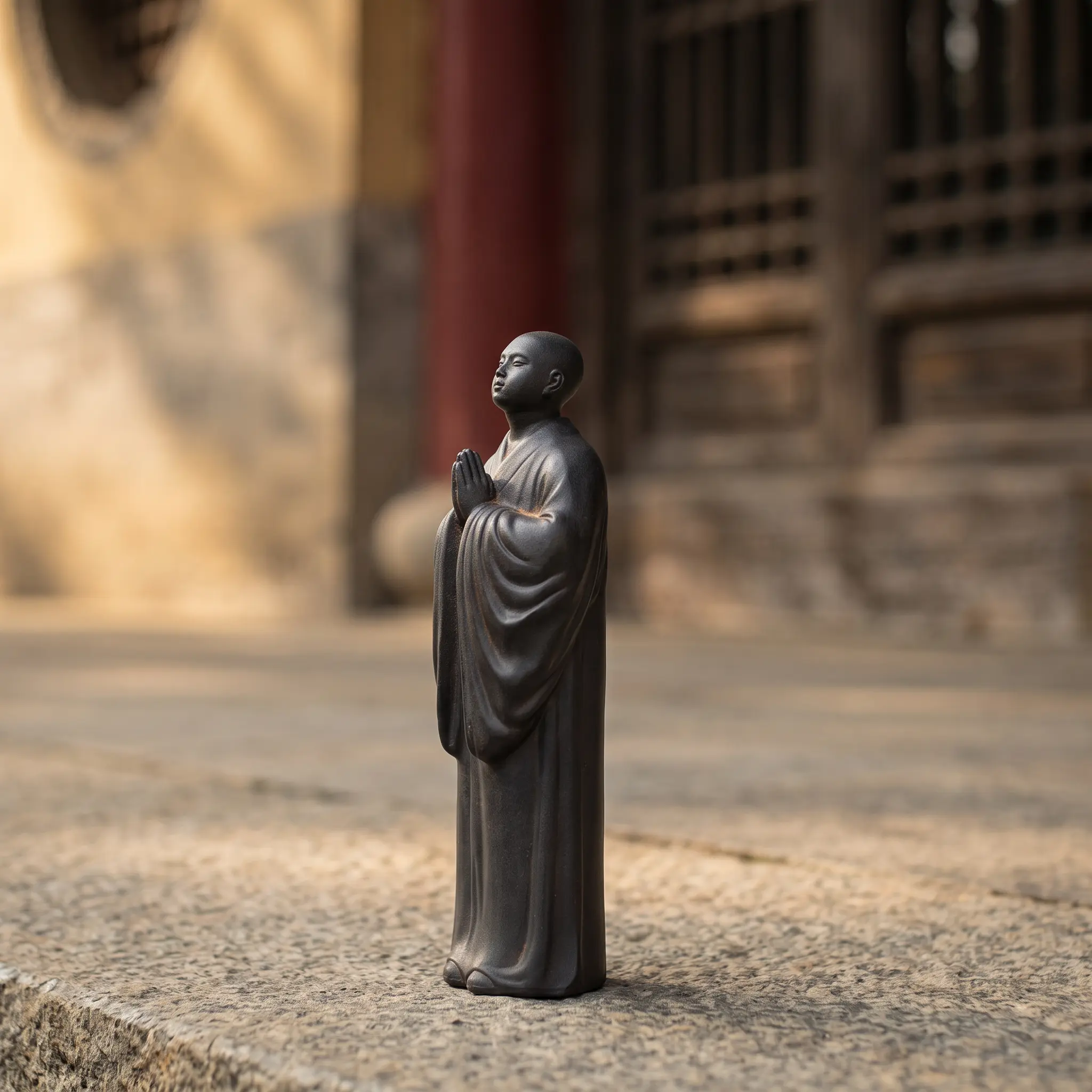
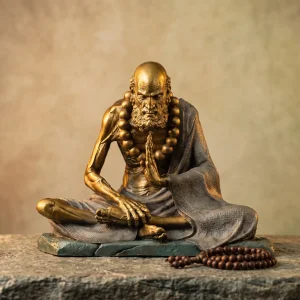
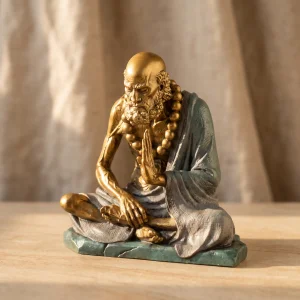
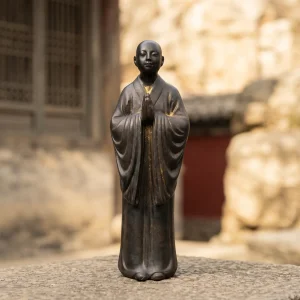
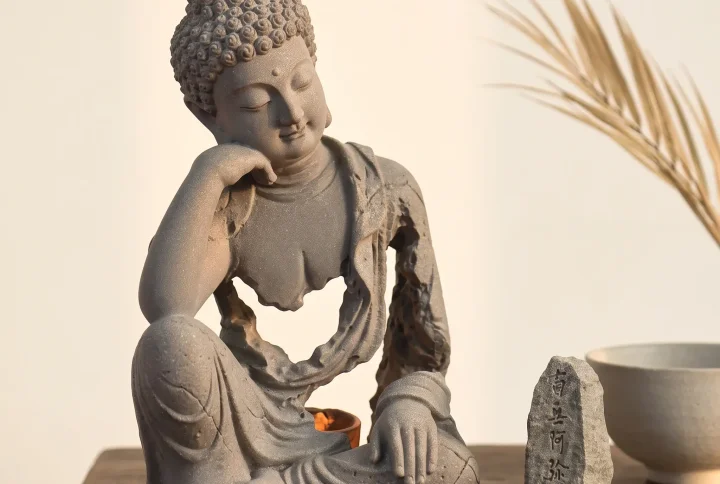
Look closely at the face. The monk’s eyes are closed, and his lips hold a gentle half-smile. In Buddhist art, closed eyes point to inward attention, not sleep. The face says: I am here, and I am calm.
His palms press together at the chest. This is the anjali mudra, from a Sanskrit root meaning “to honor.” Zen practice calls it gassho, and Chinese temples say héshí (合十). It is a gesture of reverence and respect. Many teachers read the joined hands as one: self and others, the Buddha and all beings, together.
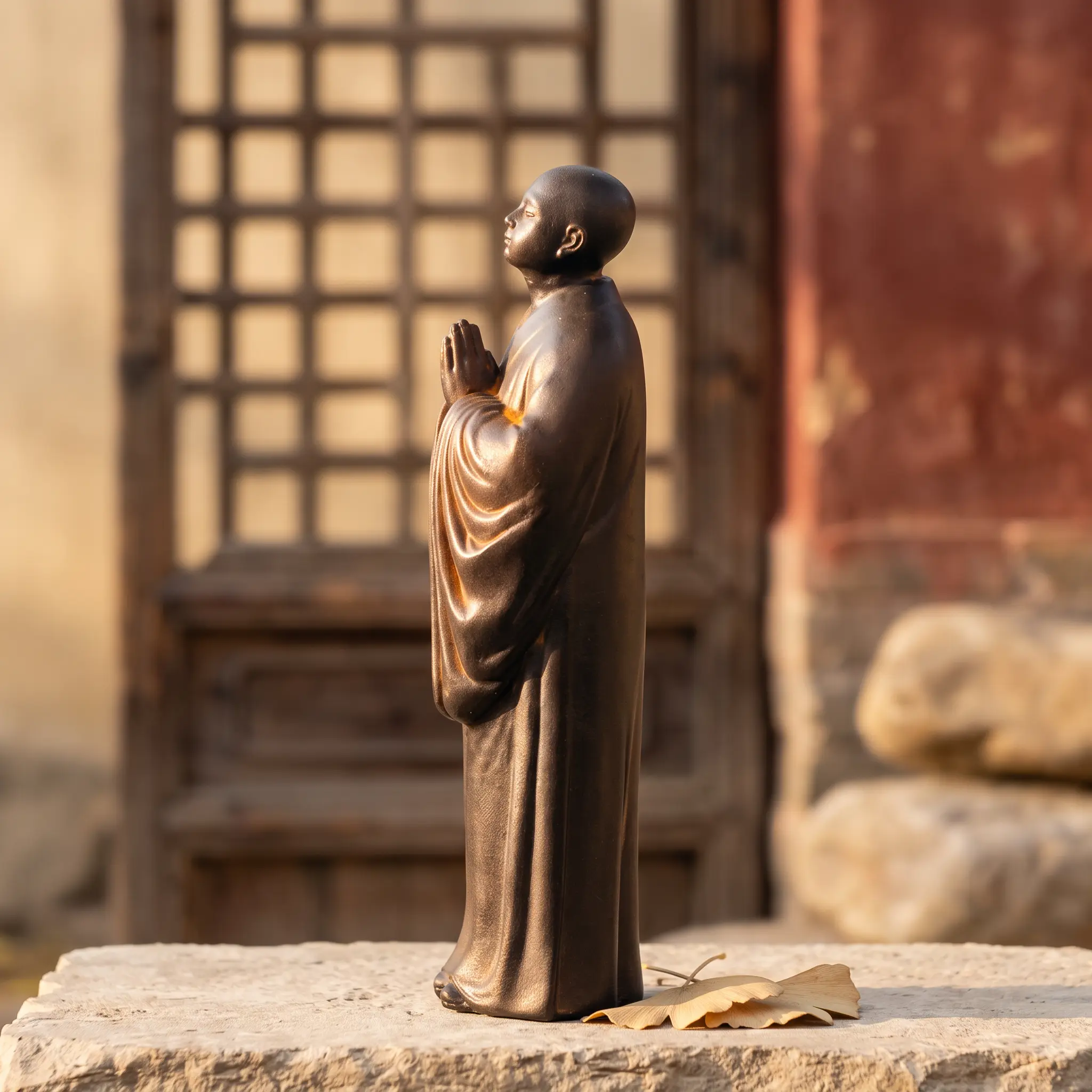
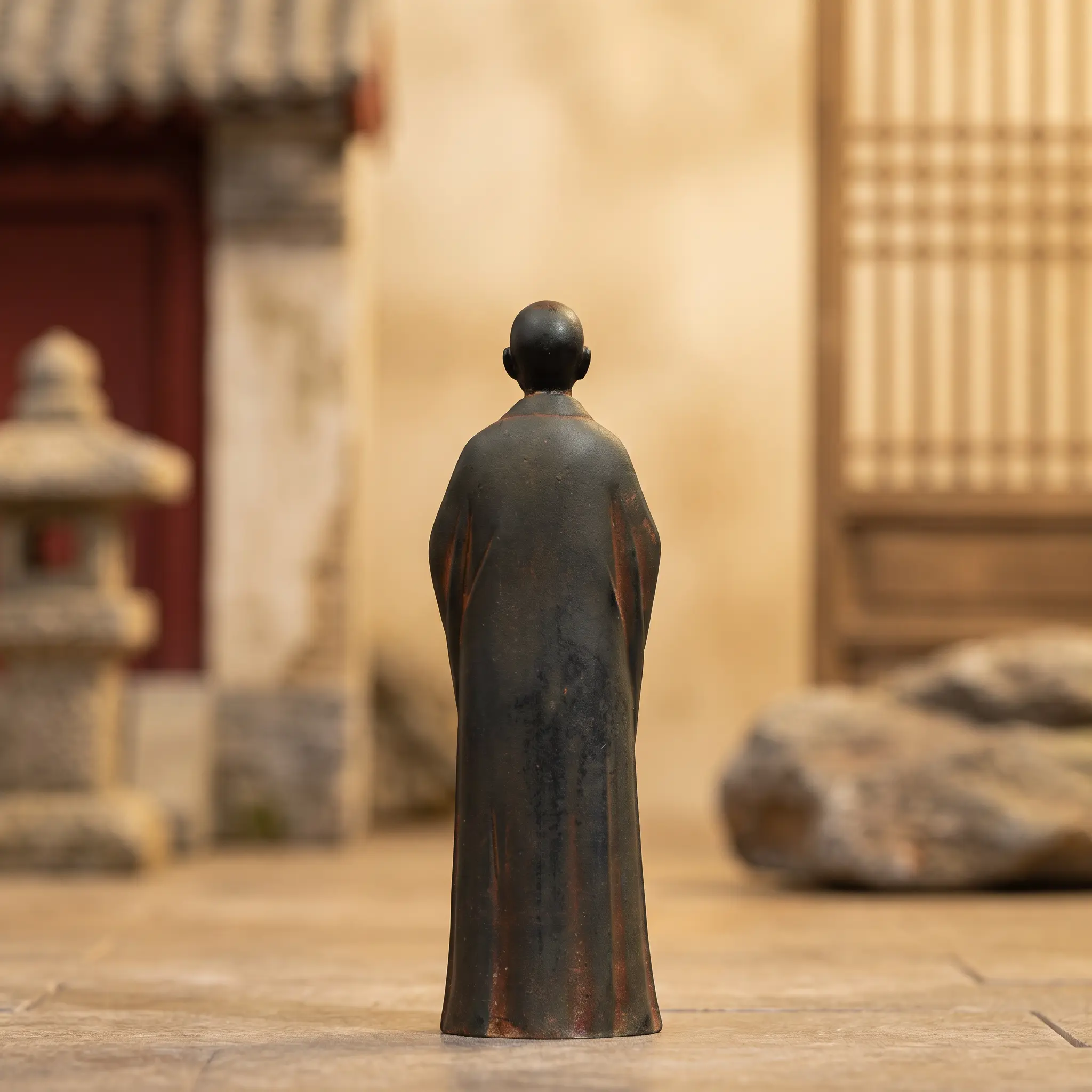
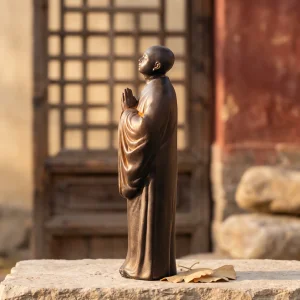
Turn it to the side and his face tilts gently upward, with one long sleeve falling in a smooth line. From the back you see a shaved head and a full-length robe, the plain dress of a monk.
Why a monk, and why Shaolin? Shaolin Temple was founded in 495 CE on Mount Song in Henan, China. Tradition honors it as the cradle of Chinese Chan, where Bodhidharma is said to have taught as Chan’s first patriarch. Since 2010, its buildings have been part of a UNESCO World Heritage Site. The world knows Shaolin for kung fu, yet its elders put meditation first. As the late Shaolin elder Shi Suxi put it: “Shaolin is Chan, not martial arts.”
The blessing. This statue is made with reclaimed Shaolin iron and has been blessed by Shaolin monks. In Chinese Buddhism, a blessing sets a sacred image apart for respectful use. We share it as part of the statue’s story. It is not a promise of luck, wealth, or protection.
“My supernatural power and marvelous activity: drawing water and chopping wood.”— Layman Pang, Tang-dynasty Chan layman
That is the spirit here. No magic. Just a steady reminder that ordinary work, done with attention, is practice.
Why Iron? Weight, Finish & Feel
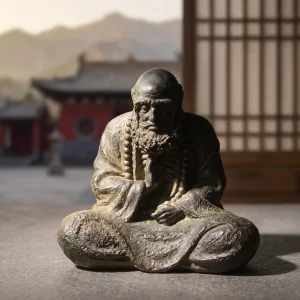
Pick it up and you notice the weight first. At about 1.36 lbs (0.62 kg) on a slim 2.4-inch frame, it feels dense and settled in your hand. On a desk, it stays put when you type or when a cat brushes past.
That weight does quiet work. A solid object makes a good touch point for mindfulness. Hold the statue for three slow breaths. Feel the cool metal warm in your palm. Set it down. You are back.
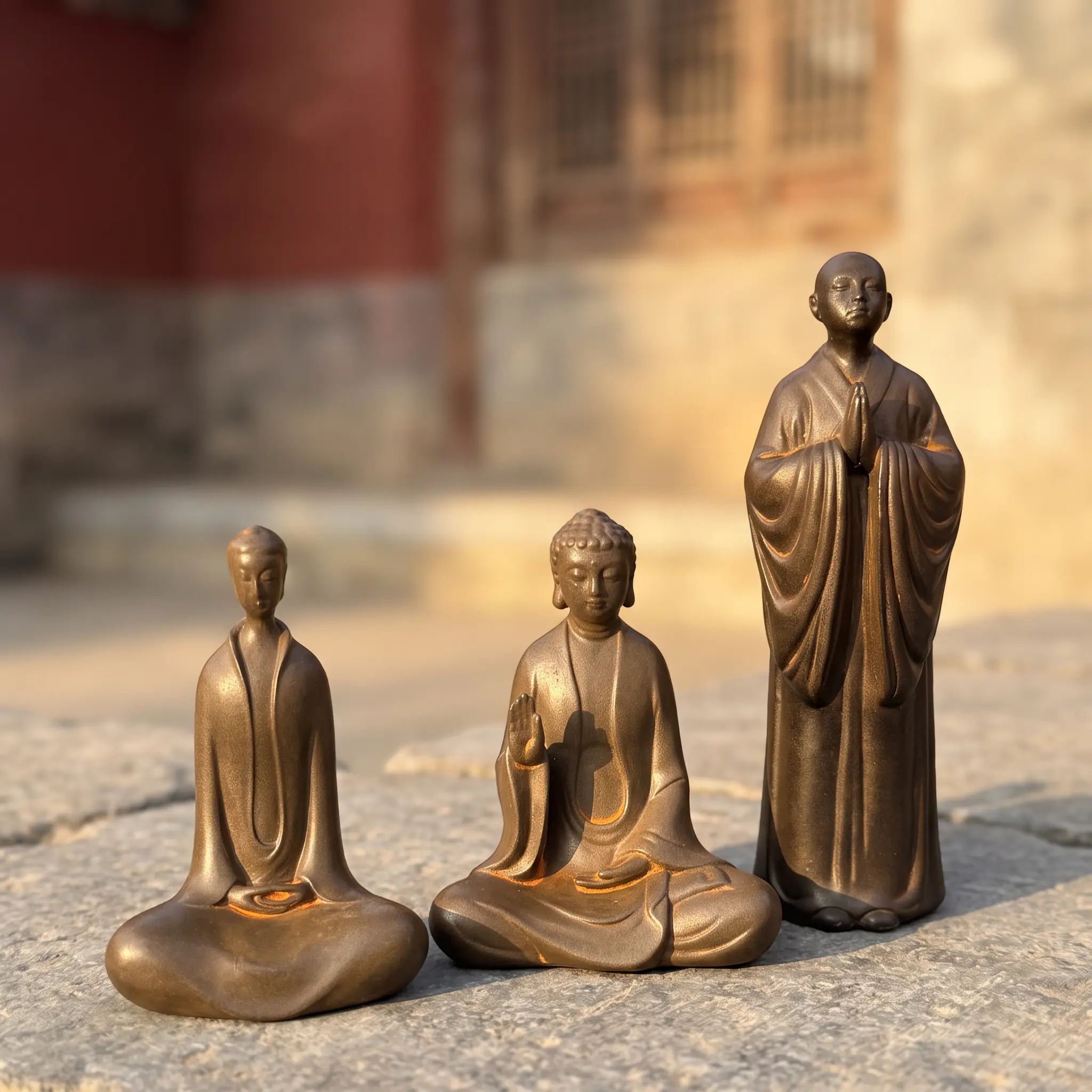
The vintage matte finish is dark, not shiny. In warm light you will see bronze-gold glints on the folds and, in places, a soft reddish-orange tone. That is natural wear on iron, so no two pieces look exactly alike.
An honest note: iron reacts with moisture. Over time it can deepen its patina or show small rust spots, especially in humid rooms. Many owners love that aged look. If you prefer it as it arrives, the care steps below take one minute.
Perfect For
Your Desk
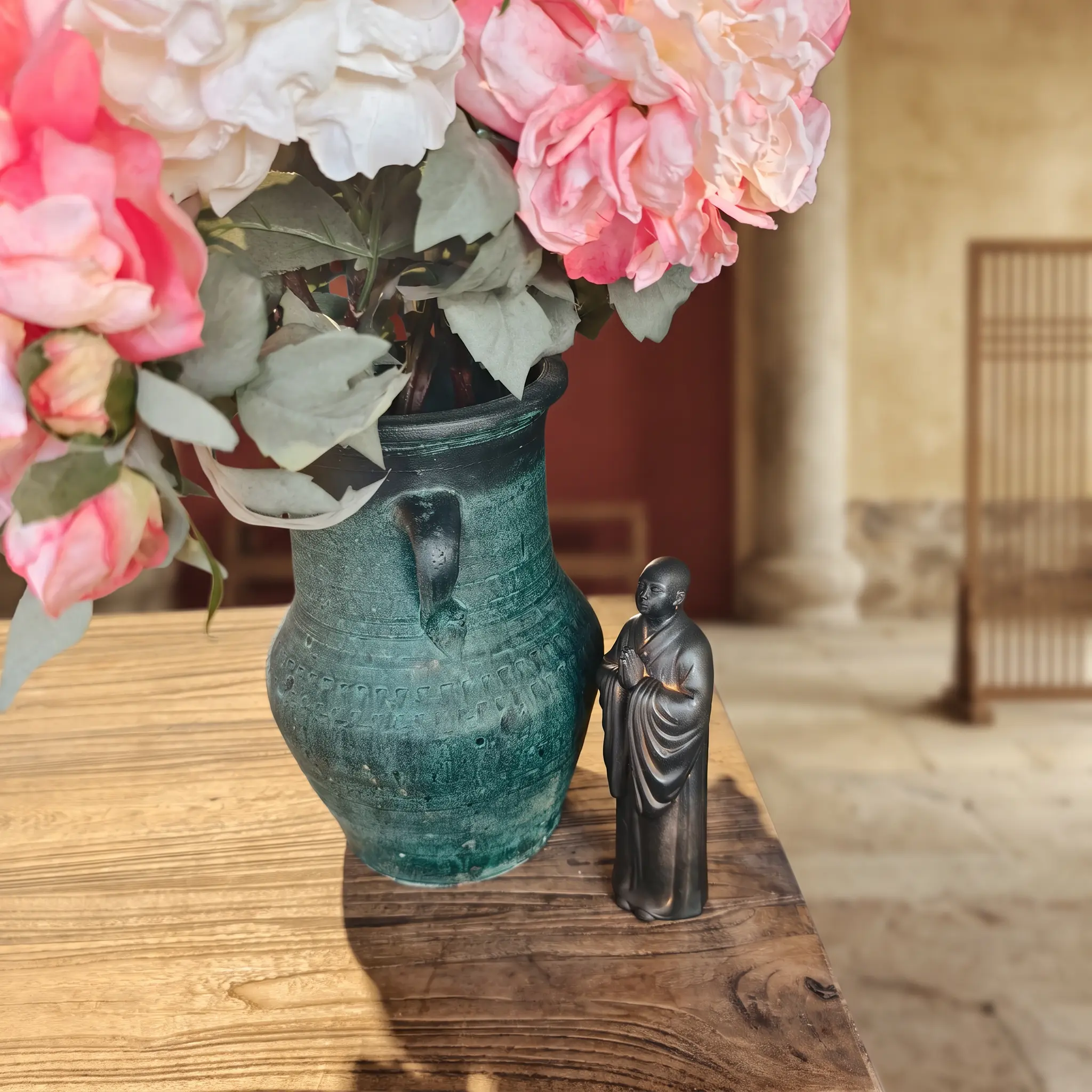
Place the statue where you can see its face while you work. Facing you, it becomes a cue: when you glance up, drop your shoulders and take one slow breath.
- Choose a clear, stable spot away from the edge.
- Keep it apart from cups, cables, and paper piles.
- Please don’t use it as a paperweight. It is a figure of respect, not a tool.
Meditation Corner
Set it on a shelf, low table, or small altar at or slightly above your eye level when seated. Raising a sacred image is a long-held sign of respect in Buddhist homes. Before you sit, join your palms the way the monk does. Then begin.
A Meaningful Gift
It suits a housewarming, a new job, or a friend in a hard season. Tell them what it means: joined palms for respect, closed eyes for inner calm, iron for steadiness. A gift with a story stays on the shelf for years.
- Add a short note that explains the joined-palms gesture.
- Point out the Shaolin Protection Amulet as a pocket keepsake.
- Suggest a home for it: their desk or a quiet corner.
Specifications & What’s Included
| Figure | Standing praying monk, palms together (anjali / gassho) |
|---|---|
| Material | Authentic Cast Iron Blend |
| Finish | Vintage matte, natural variation |
| Height | 7″ (approx. 17.8 cm) |
| Width | 2.4″ (approx. 6.1 cm) |
| Weight | ~1.36 lbs (~0.62 kg), heavy and solid feel |
| Blessing | Blessed by Shaolin monks |
| Best for | Desk, meditation corner, gift |
Display & Care
Respect and good care point the same way. A clean, dry, raised spot honors the figure and protects the iron.
Display it respectfully:
- On a clean, dry, elevated surface
- Off the floor and away from shoes
- Never in a bathroom or beside a sink
- Clear of clutter, so the figure has room to breathe
Care in four steps:
- Dust it weekly with a soft, dry cloth.
- Keep it away from moisture, humidifiers, and misted plants. Never wash it.
- If it gets wet, dry it at once.
- If spotting appears, rub on a thin coat of clear wax, then buff gently.
Frequently Asked Questions
What do the praying hands mean?
Palms joined at the chest form the anjali mudra, called gassho in Zen. It expresses reverence, respect, and gratitude. Many read the two hands as self and others becoming one.
Is it respectful to use a Buddha or monk statue as decor?
Yes, when you treat it with care. Keep it clean, raised, and out of bathrooms. Treat it as a reminder of practice, not a lucky charm or a joke prop.
Where should I place it on my desk?
Put it on a clear, stable spot, facing you, away from the edge and from drinks. Let it be the thing you see when you pause.
Will the iron rust, and how do I care for it?
Iron can develop patina or small rust spots in humid air. Keep it dry and dust it with a soft cloth. A thin coat of clear wax helps if spotting appears.
Do I need to be Buddhist to keep one?
No. Many people keep a monk statue as a mindfulness cue or a sign of respect for Chan culture. Sincere intent and respectful placement matter more than labels.




Reviews
There are no reviews yet.