Want a mantra bracelet that is honest about what it’s made of? Here is everything you need to choose with confidence.
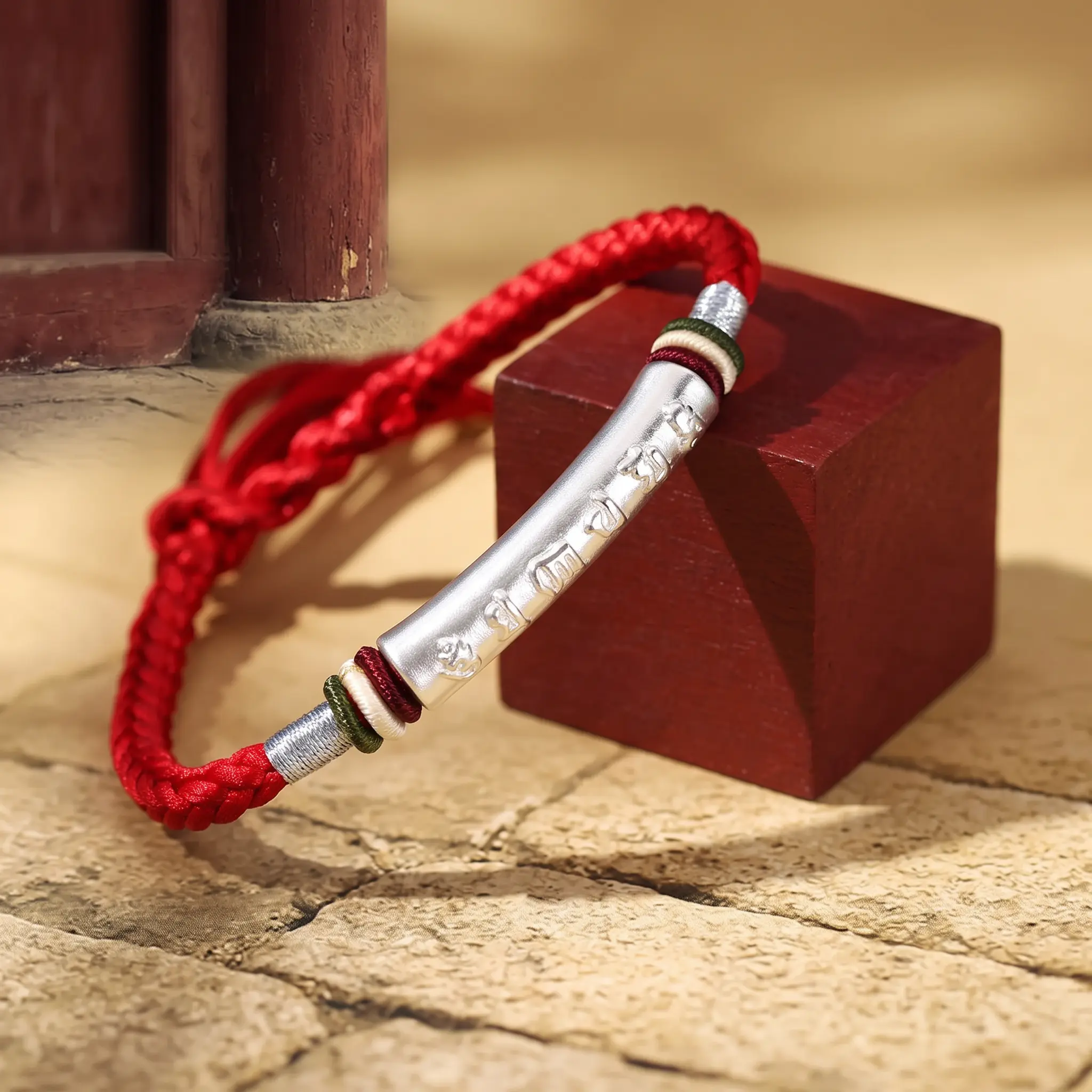
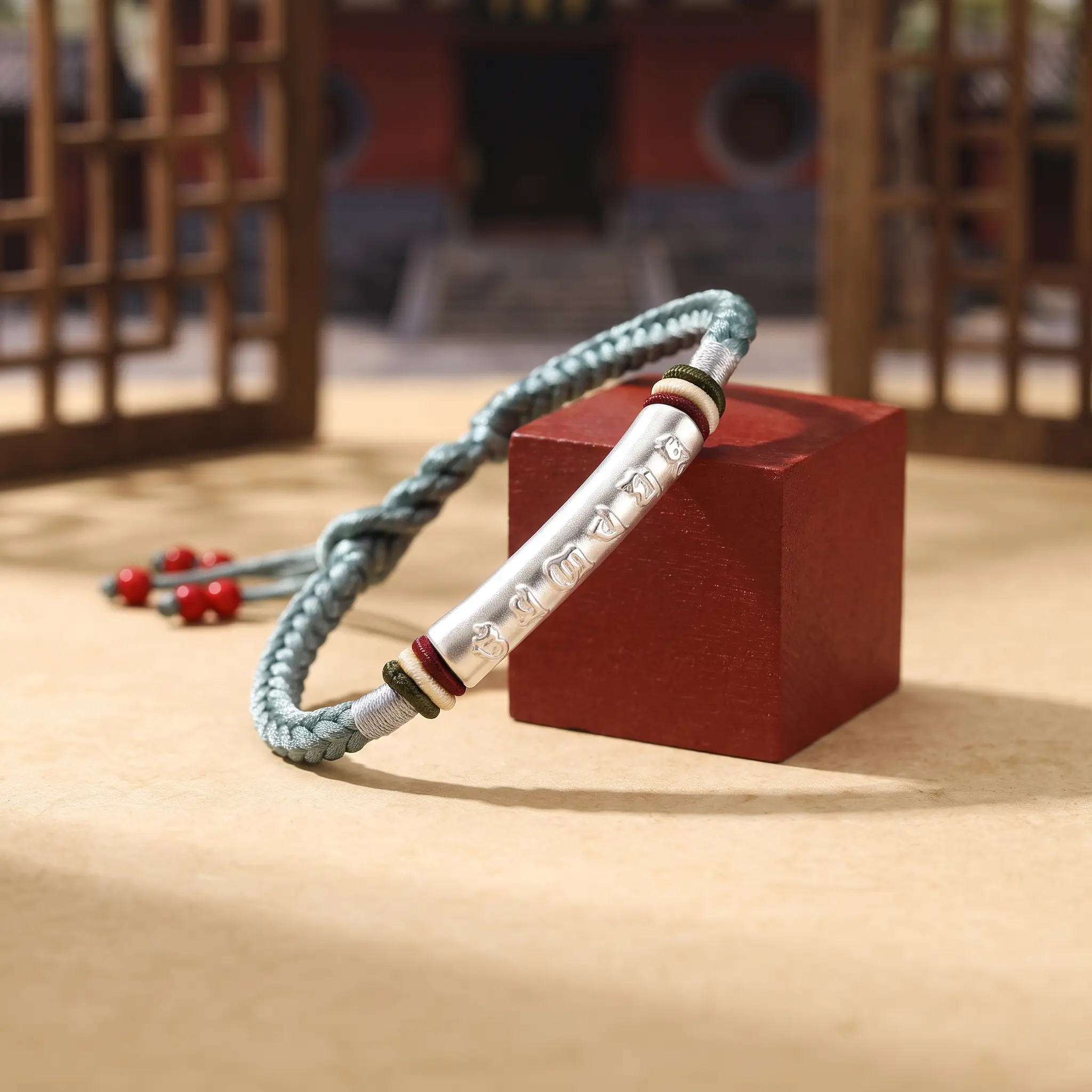
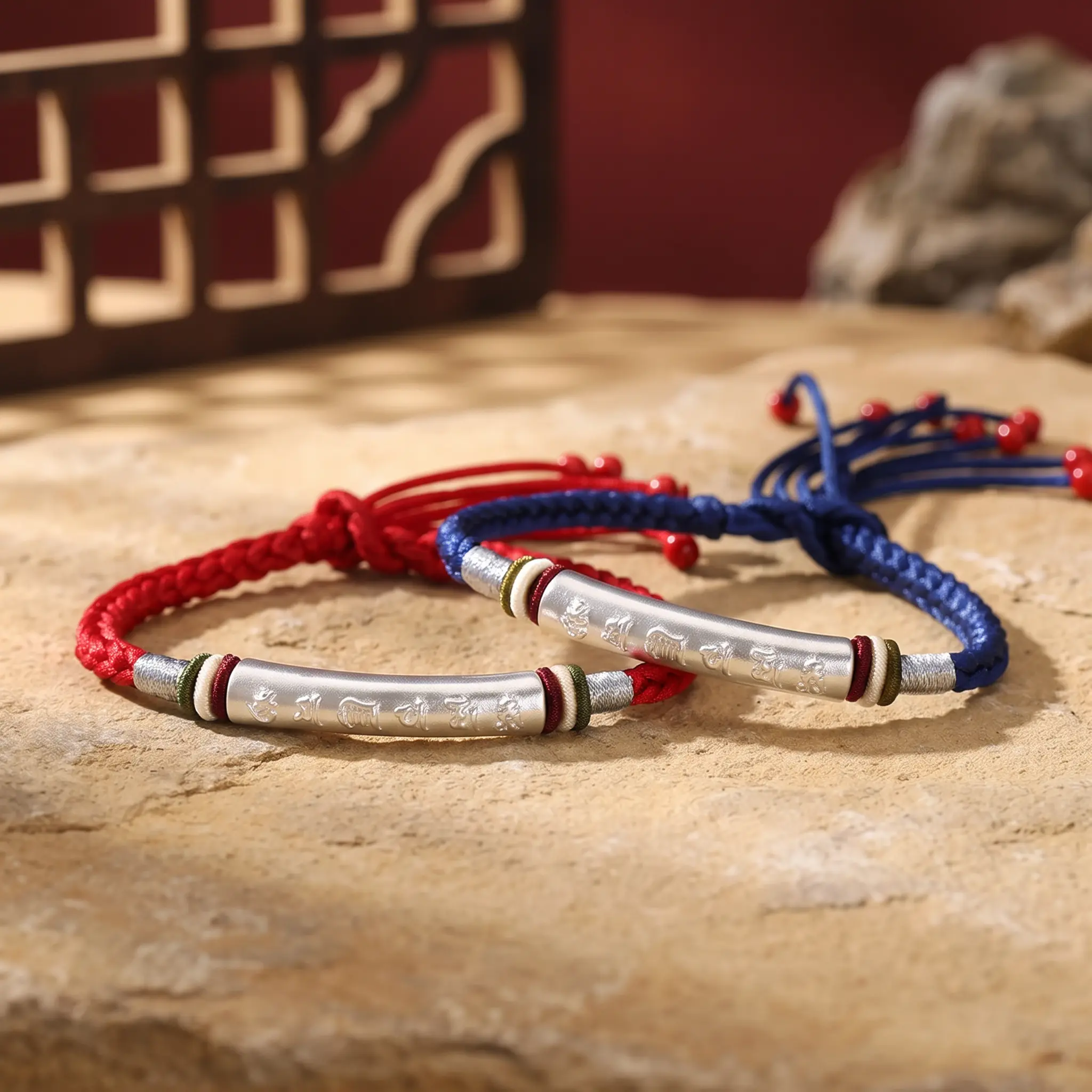
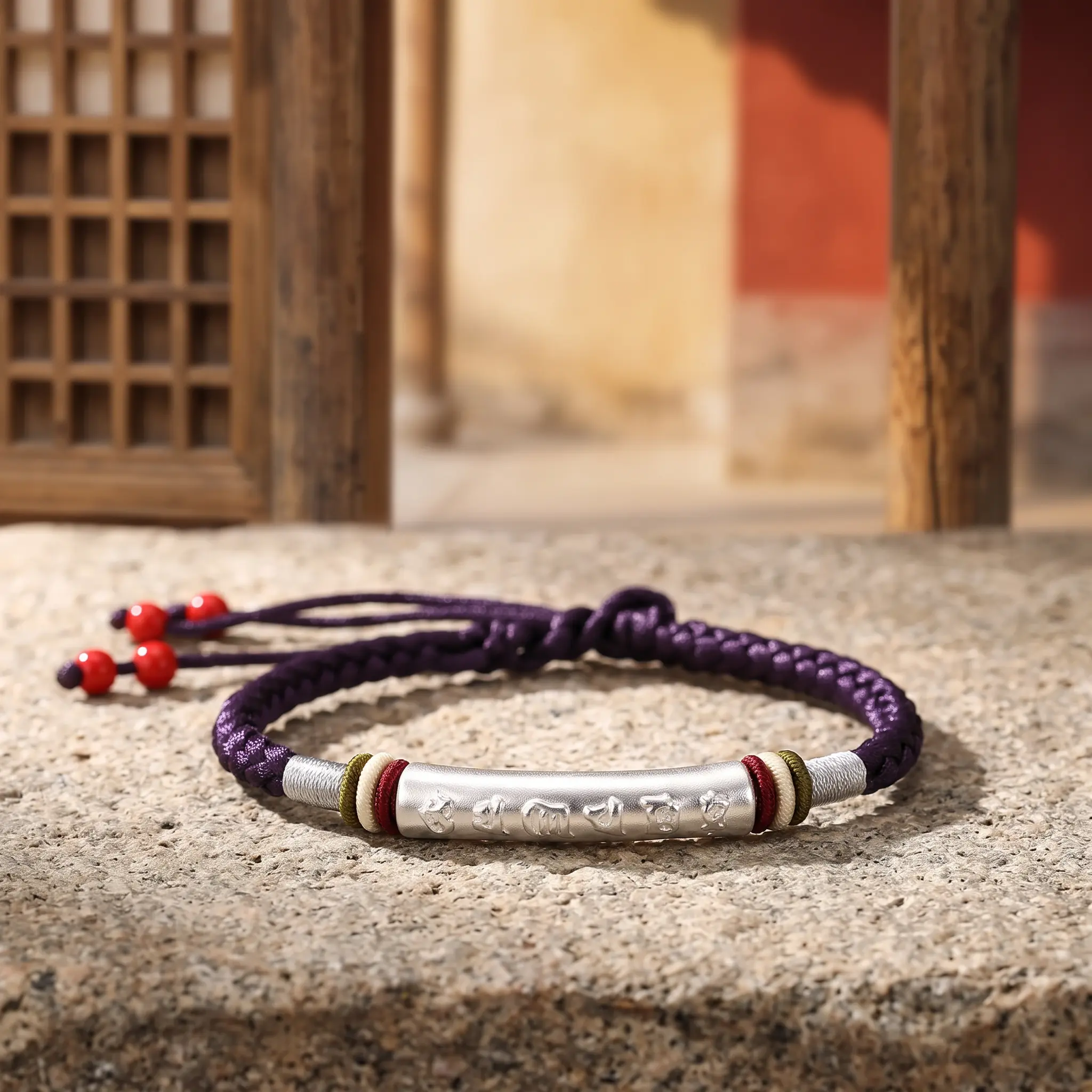
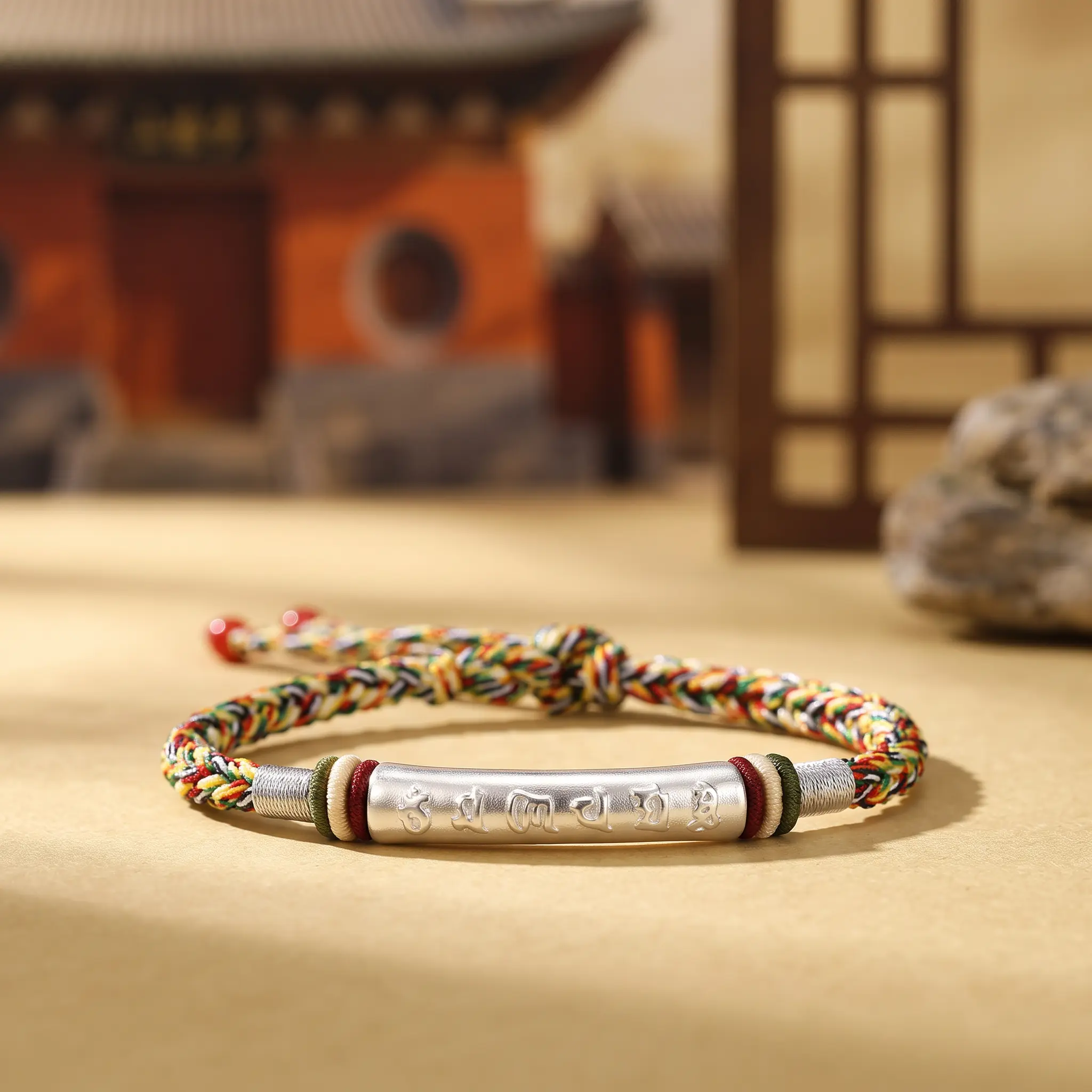
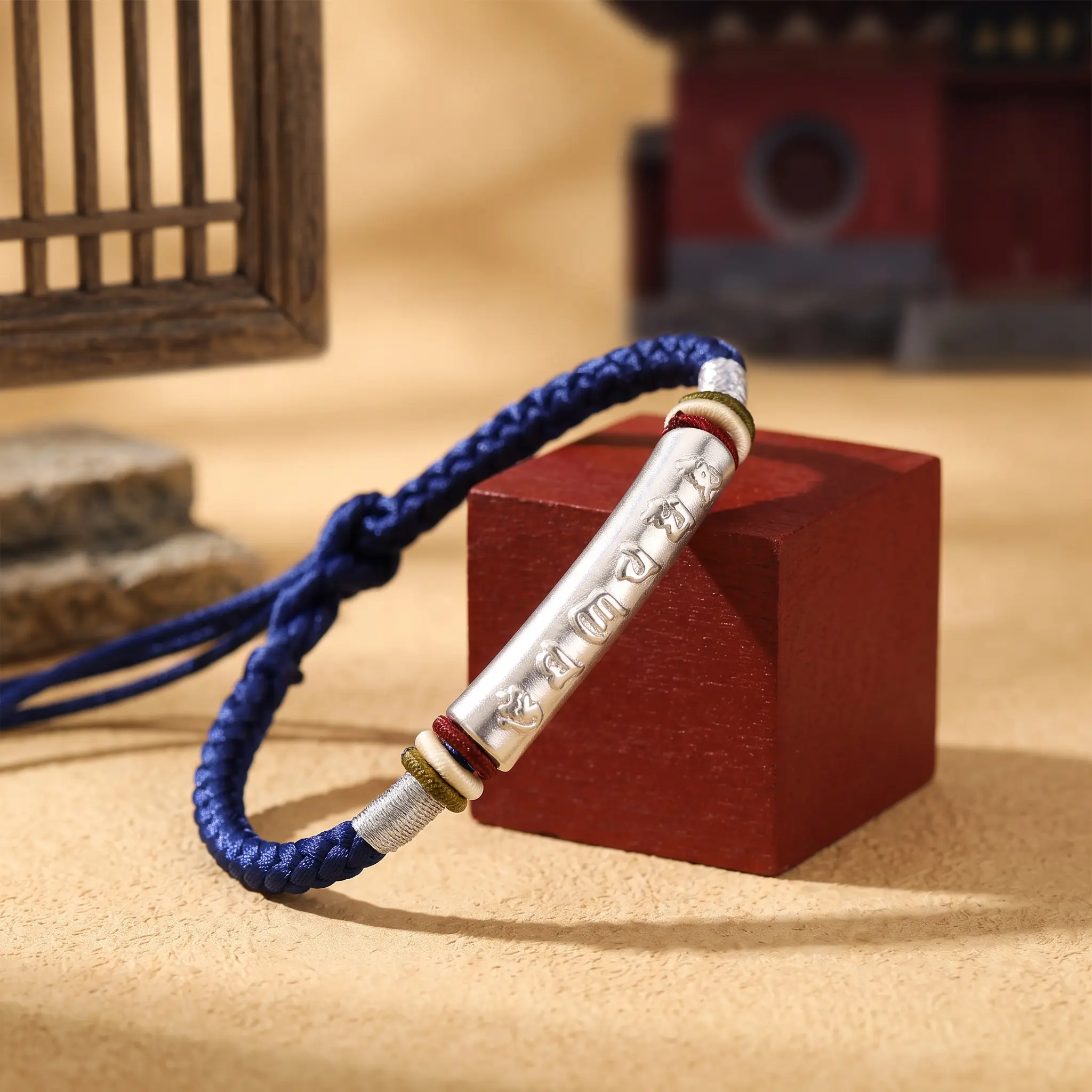
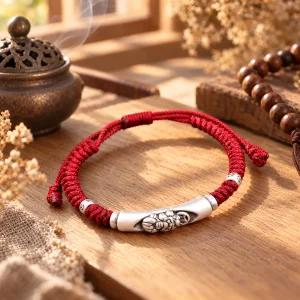
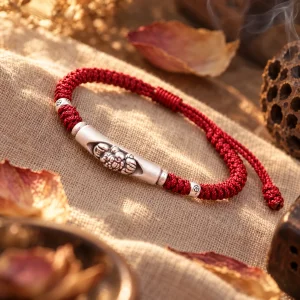
- A curved S999 fine silver bar (99.9% silver) carries the six syllables of Om Mani Padme Hum
- Hand-braided eight-strand cord with silver-thread wrapped ends
- Adjustable sliding knot fits wrists from 6.3–8.5 in (16–21.5 cm)
- Featherlight: about 3.9 g total, with 1.7 g of fine silver
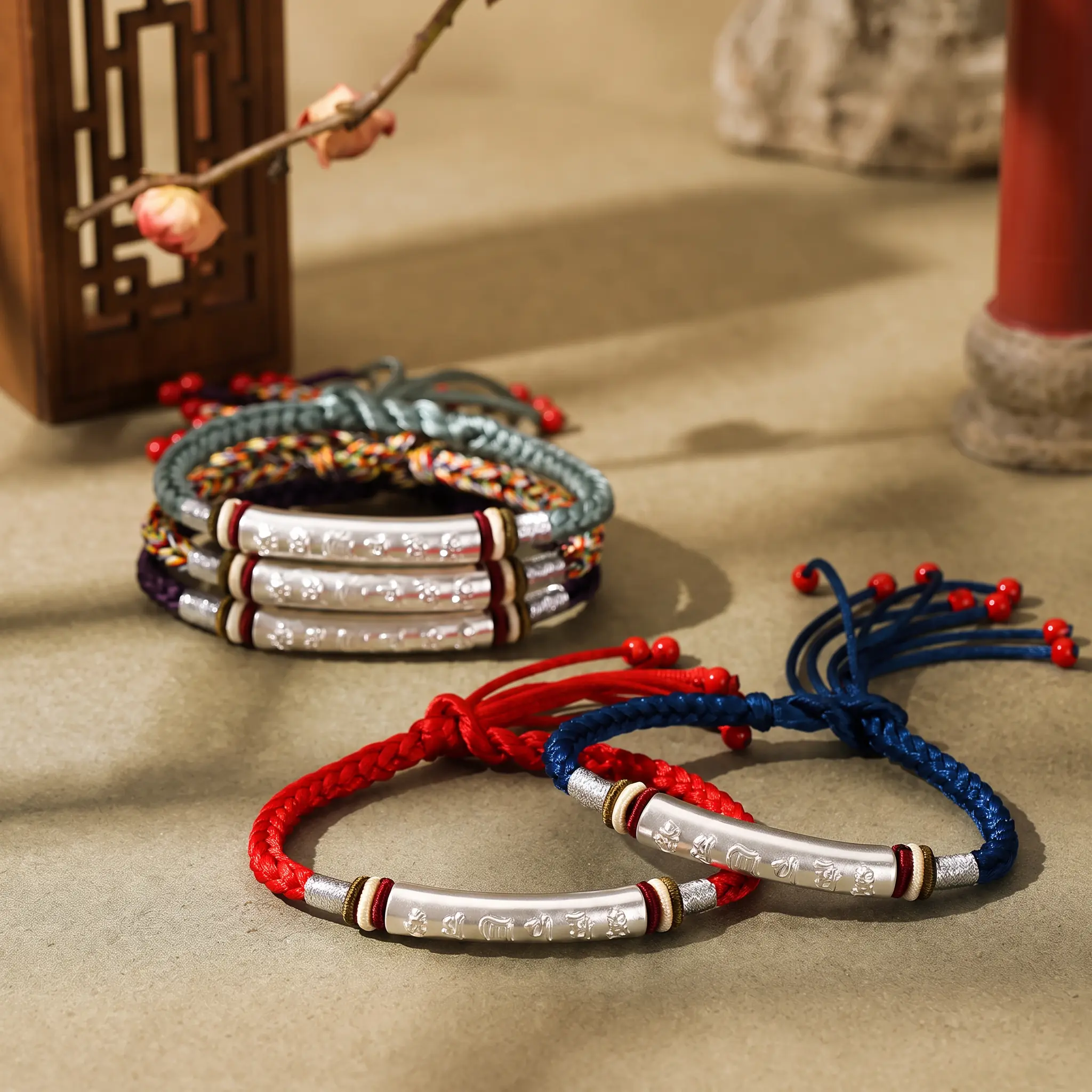
- Five colors, unisex, from the shaolinstore Shaolin culture collection
What the Six Syllables Mean
Om Mani Padme Hum: The Mantra of Compassion
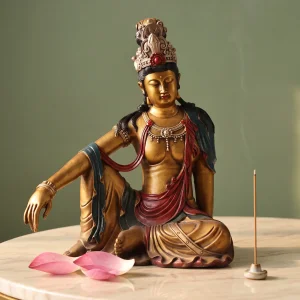
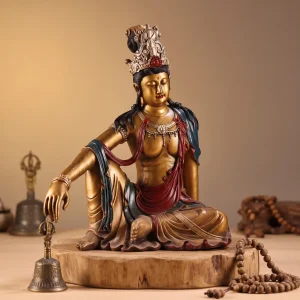
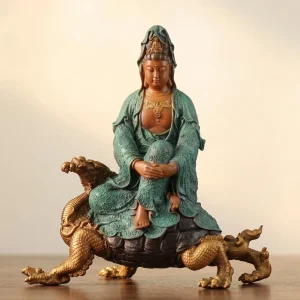
You have probably seen these six syllables on prayer wheels, temple walls, and jewelry. Om Mani Padme Hum is the mantra of Avalokiteshvara, the bodhisattva of compassion. Chinese Buddhists know this figure as Guanyin.
The mantra appears in the Kāraṇḍavyūha Sūtra. Chinese temples call it the Six-Character Great Bright Mantra (六字大明咒). Note the spelling: it ends in “Hum,” not “Om.”
Often translated as “the jewel in the lotus.”
Scholars still debate the literal sense. Alexander Studholme’s 2002 study, The Origins of Om Manipadme Hum, explores that question. So treat the phrase as a symbol, not a sentence.
The Six Syllables at a Glance
In one common reading, each syllable links to a Buddhist perfection:
- Om – generosity
- Ma – ethical conduct
- Ni – patience
- Pad – diligence
- Me – concentration
- Hum – wisdom
Different traditions read the syllables differently. This is one widely taught version.
Why It Belongs in Shaolin Temple Culture
Shaolin is famous for martial arts. Its spiritual roots, though, are in Chan (Zen) Buddhism. The six-syllable mantra is part of everyday Chinese Buddhist practice, so it fits a Shaolin-inspired design.
At shaolinstore, we call this a cultural-creative piece. It is not a consecrated object, and we make no claims about luck, healing, or protection. It is jewelry that carries a meaningful symbol.
Craftsmanship: Hard-Formed Silver Meets Handwoven Cord
3D Hard-Metal Forming
Soft metal can dent, so we use a 3D hard-metal forming technique to shape the bar. It gives the bar a defined curve and crisp, raised lettering. It also keeps the piece light enough to forget you’re wearing it.
Hand-Braided Eight-Strand Cord
- Eight-strand braid, woven by hand
- Silver-thread wrapped ends that frame the bar
- Olive, cream, and burgundy accent rings on each side of the bar
- Red bead tassels on select colors
Size and Fit: One Bracelet for 16–21.5 cm Wrists
The sliding knot adjusts from 6.3 to 8.5 in (16–21.5 cm). Measure first:
- Wrap a soft tape or string around your wrist bone.
- Mark where the ends meet.
- Measure that length and compare it with the range above.
To adjust, hold the knot and pull the cord ends apart to tighten. Push the knot to loosen. If your wrist is under 16 cm, the bracelet may sit loose, so check before you order.
Choose Your Color
- Deep Red – the classic red-cord look
- Multicolor – a lively mix of red, green, yellow, white, and black strands
- Royal Blue – a deep, calm tone with a satin sheen
- Autumn Green – a soft grey-green
- Black-Purple – dark and understated for daily wear
Red cords and multicolor strands carry long-standing symbolism in Buddhist cultures. Still, pick the color you like. The meaning comes from the mantra.
Specifications
| Material |
S999 fine silver bar (99.9%) and eight-strand cord |
| Craftsmanship |
3D hard-metal forming; handwoven cordwork |
| Wrist size |
6.3–8.5 in (16–21.5 cm), adjustable |
| Total weight |
Approx. 0.14 oz / 3.9 g |
| Silver weight |
Approx. 0.06 oz / 1.7 g |
| Colors |
Deep Red, Multicolor, Royal Blue, Autumn Green, Black-Purple |
| Style |
Eastern-inspired, symbolic, handmade, unisex |
Wearing It Respectfully
Can Anyone Wear It?
Yes. What matters is understanding. Learn what the mantra means, keep the bracelet clean, and don’t leave it on the floor.
Which Wrist?
Many people wear it on the left by popular custom. It is not a doctrinal rule. Choose the wrist that feels right.
Care Guide: Keep the Silver Bright and the Cord Strong
- Keep it dry. Remove it before showers, swimming, and saunas. Pat it dry if it gets wet.
- Polish gently. Use a silver polishing cloth. Skip liquid silver dips and abrasives, which can harm the cord and finish.
- Respect the softness. Take it off for gym sessions and heavy work. Fine silver can dent.
- Store it well. Keep it in a dry pouch, away from perfume and lotion.
- Expect cord wear. Daily wear softens and fades braided cord over time.
A Meaningful Gift
This bracelet suits people who value symbolism over flash. Good matches include:
- Meditation practitioners
- Anyone curious about Chinese Buddhist culture
- Travelers who have visited Shaolin or Songshan
- Couples choosing matching colors
Frequently Asked Questions
What does Om Mani Padme Hum mean?
It is the six-syllable mantra of Avalokiteshvara (Guanyin), the bodhisattva of compassion. It is popularly translated as “the jewel in the lotus.”
Is this real silver?
Yes. The bar is made of S999 fine silver (99.9% pure) and weighs about 1.7 g. It is not a plated finish.
Will the silver tarnish?
Fine silver tarnishes more slowly than sterling but can still darken. A polishing cloth restores the shine.
Which wrist should I wear it on?
Either one. The left wrist is a popular custom, not a fixed rule.
Can non-Buddhists wear it?
Yes, with understanding and respect for what the mantra means.
Can I shower or swim with it?
Better not. Water and soap dull silver and wear out braided cord faster.
Is it for men or women?
Unisex. The sliding knot fits 6.3–8.5 in (16–21.5 cm) wrists.
Does the cord color have a meaning?
Colors carry traditional symbolism in Buddhist cultures, but choose the one you like.





Reviews
There are no reviews yet.