
Thousand-Armed Guanyin Brass Statue with Engraved Heart Sutra
-
Free shipping on all orders. Estimated delivery: 5–10 business days (U.S., Germany & U.K.), 10–16 business days (international).
-
Return within 60 days of purchase. Shipping & Return

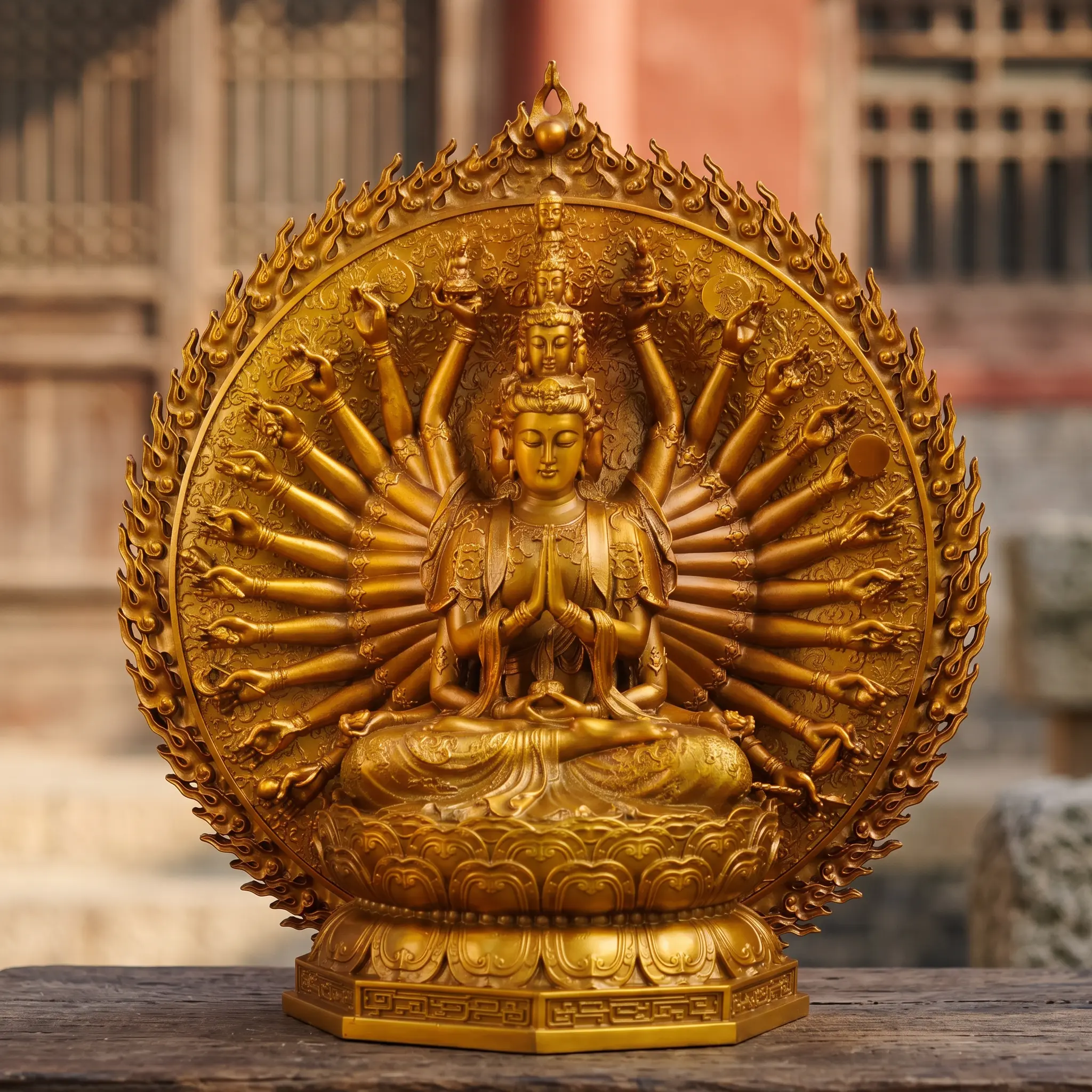
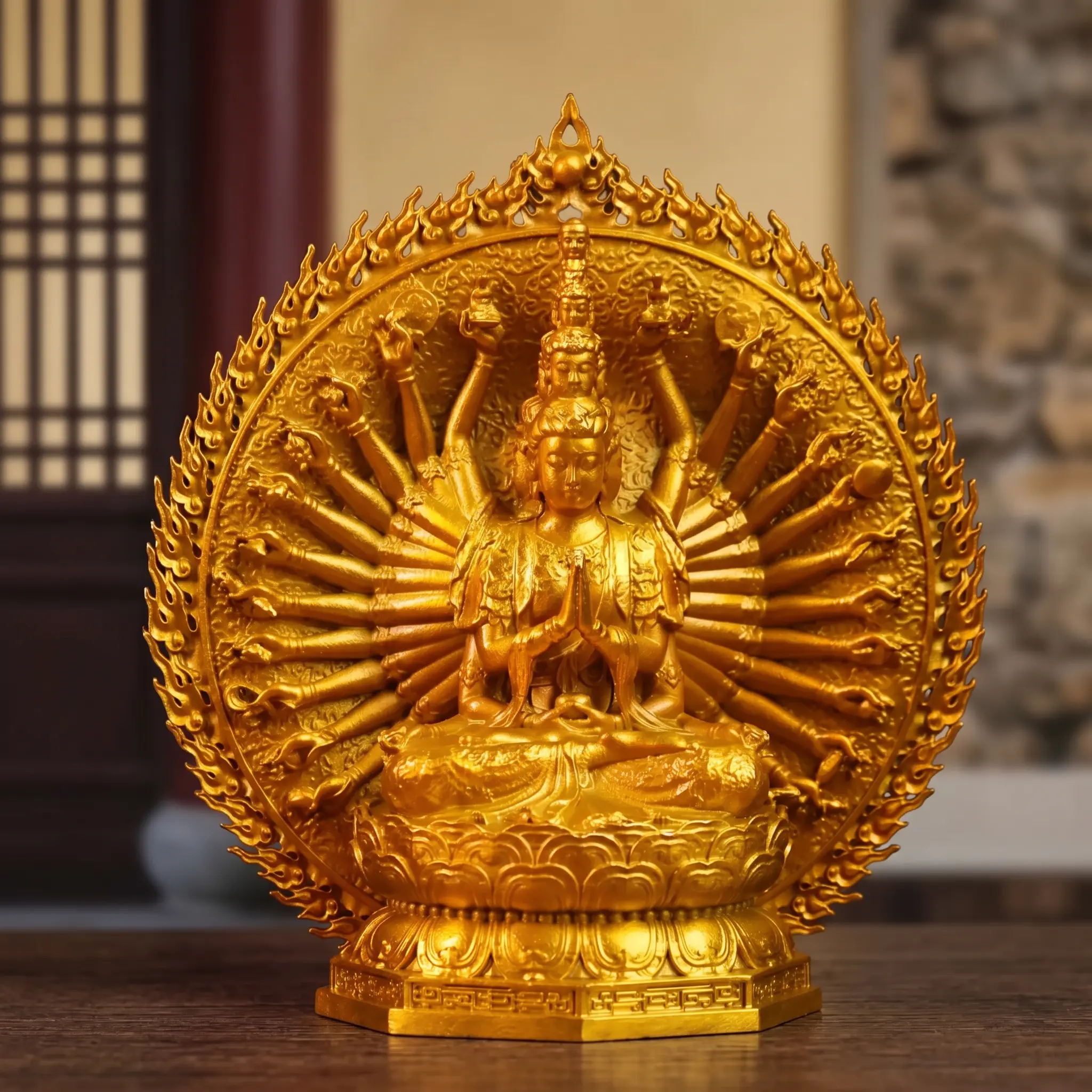
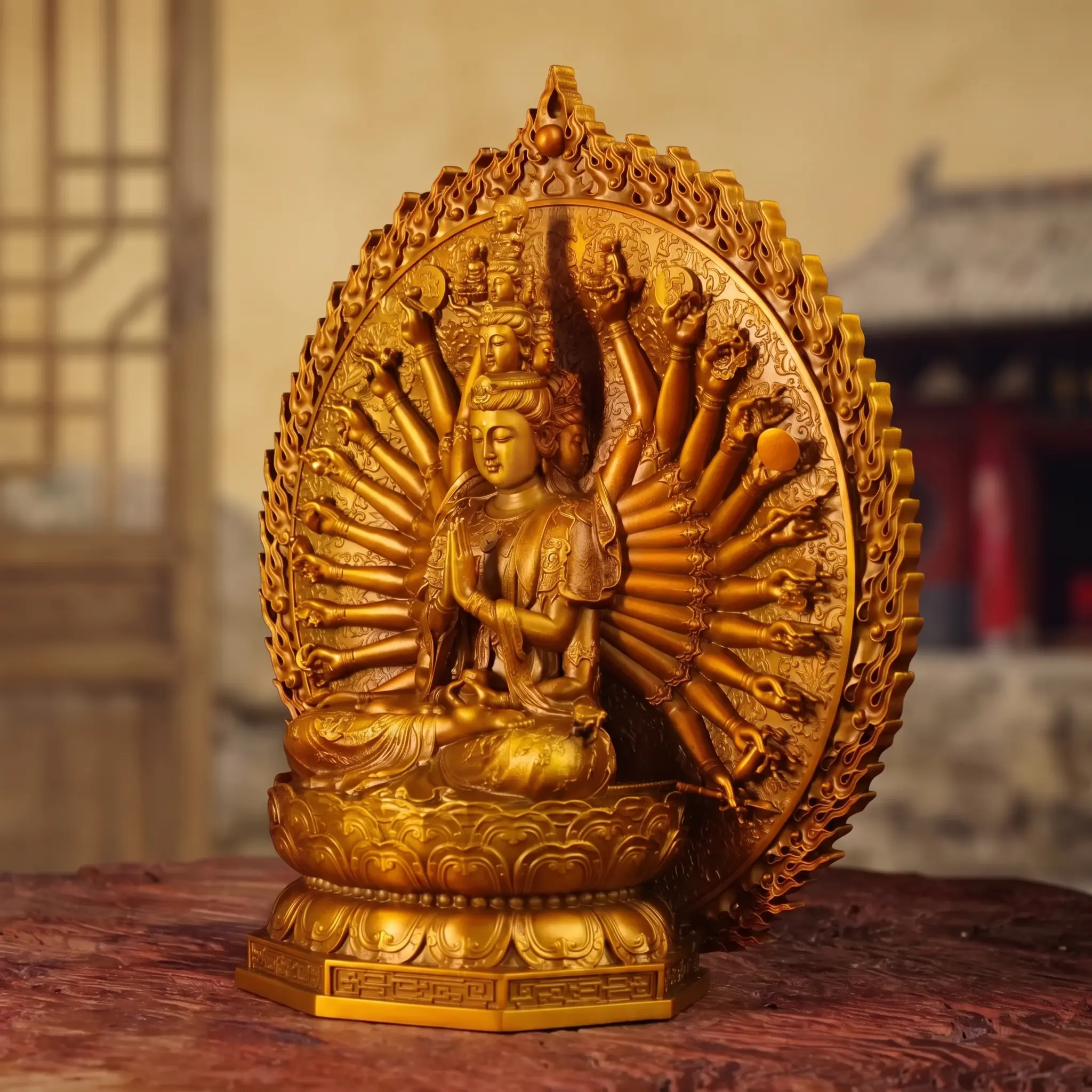
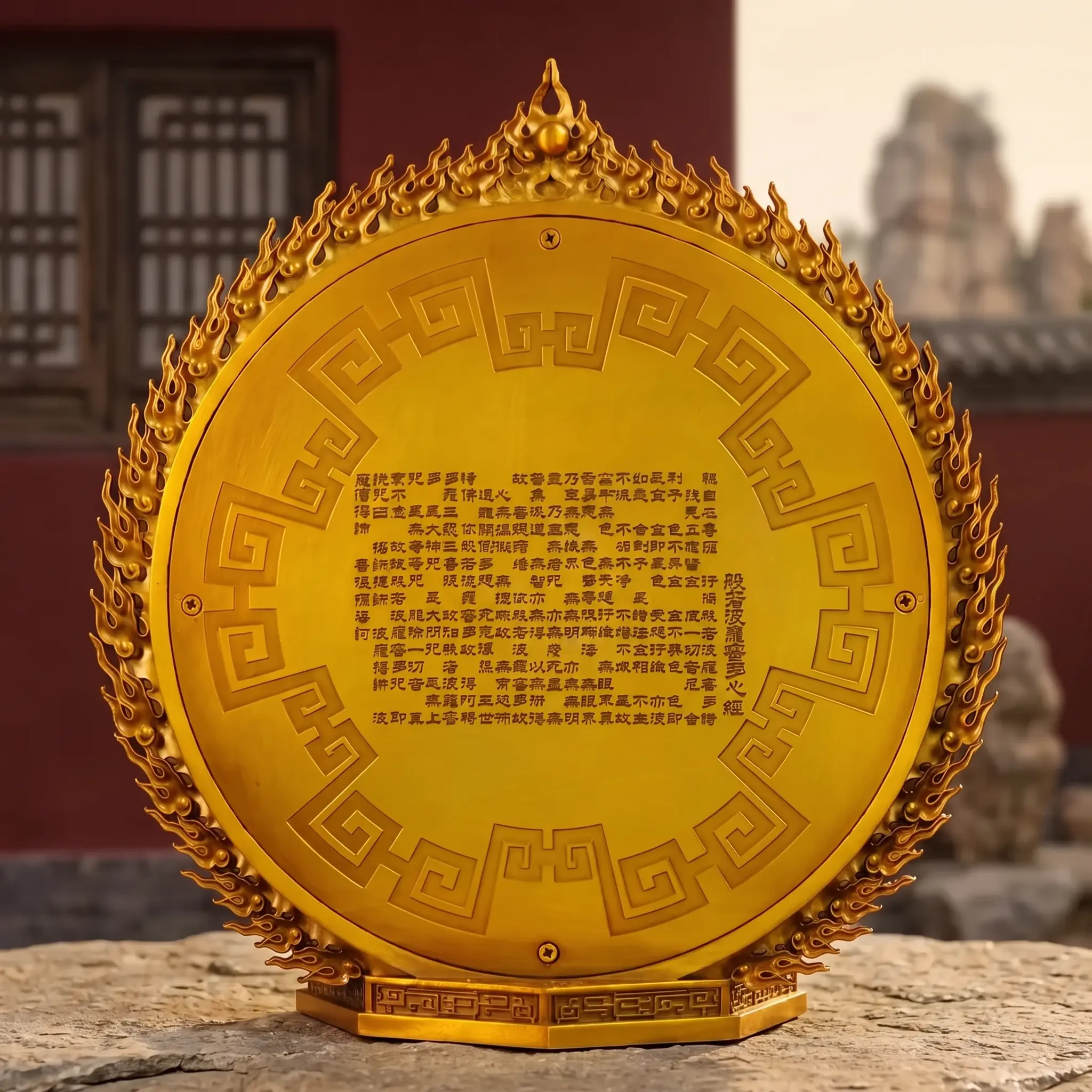
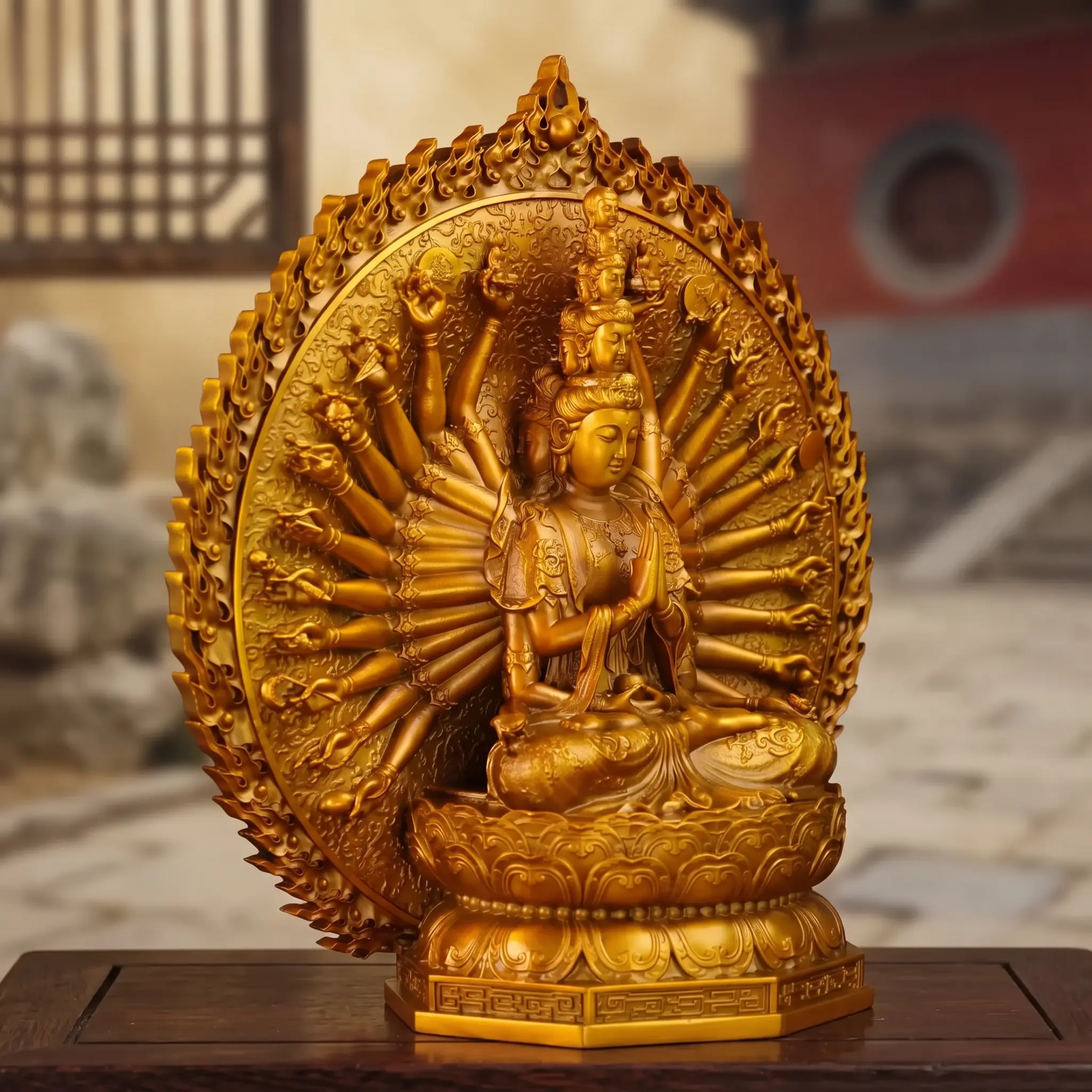
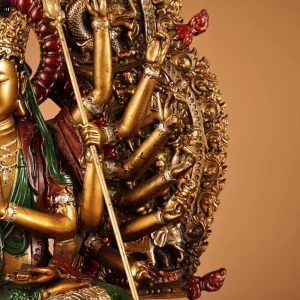
This Thousand-Armed Guanyin brass statue shows the bodhisattva of compassion seated in prayer, ringed by a radiating fan of arms. The complete Heart Sutra is engraved on the reverse. A heat-colored, hot-waxed finish gives the metal warm antique-gold tones. Choose the Small for your desk or the Large for your altar.
What the Thousand Arms and Eyes Mean
Guanyin is the East Asian name for Avalokiteshvara, the bodhisattva of compassion. In the full thousand-armed form, every hand holds an eye in its palm and carries a tool for helping others. Museum paintings, such as a Ming-dynasty scroll at the Smithsonian, show this clearly.
Compassion works best when it sees clearly and acts with skill.
Why “thousand” is symbolic
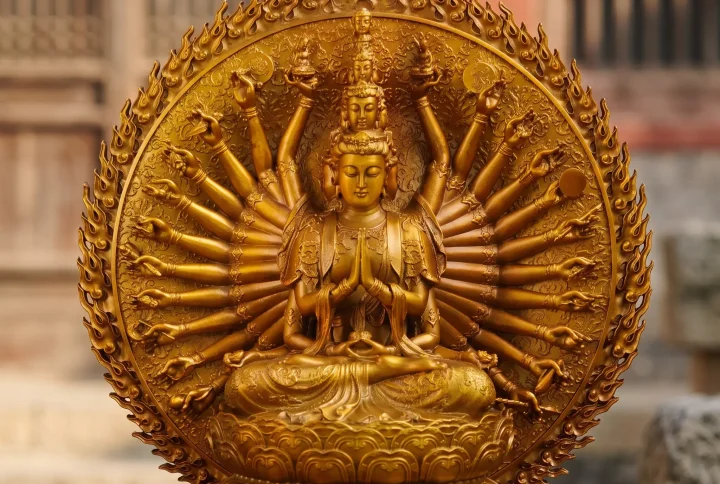
You may wonder if the statue really has 1,000 arms. Most traditional images do not. The JAANUS art dictionary explains the usual count as 42 arms: two hands joined in prayer and 40 others. Each of the 40 is said to save beings in 25 worlds, and 40 × 25 gives 1,000.
This statue shows that idea as a radiating halo of arms, so help seems to reach in every direction.
The legend in brief
One popular story says Avalokiteshvara vowed to free all beings. The suffering was so vast that the bodhisattva’s body shattered. In many tellings, Amitabha Buddha then gave the bodhisattva eleven heads to hear every cry and a thousand arms to help. Read it as a teaching story. The tiered faces above the crown on this statue echo it.
Reading This Statue: Every Detail Has a Purpose
- Prayer hands at the heart: reverence and stillness at the center of all that activity.
- Radiating arms: many ways of helping, each hand holding a different sacred implement.
- Tiered crown of faces: attention in every direction.
- Engraved halo and flame aureole: the radiance of awakened mind, with fine floral scrollwork across the disc.
- Lotus throne: purity rising from muddy water.
- Octagonal base with key-fret border: a classic Chinese pattern that frames the whole figure.
You may also see this figure called Guanshiyin, Quan Yin, Kannon or Chenrezig. This is a Chinese-style Qianshou Guanyin (千手观音). Guanyin appears as male in early Indian art and more often as female in Chinese art from the Song dynasty onward. In doctrine, a bodhisattva sits beyond fixed gender.
The Heart Sutra on the Back
Turn the statue around and you will find the entire Heart Sutra engraved across the reverse. There is a reason for that. The sutra opens with Avalokiteshvara, so Guanyin is its speaker. Wikipedia describes it as the most recited, copied and studied scripture in East Asian Buddhism. Xuanzang’s standard Chinese version, dated 649 CE, runs just 260 characters, which is why it fits on the back of a statue.
Form is emptiness, emptiness is form.
Here is a detail most sellers skip. The text linked to the thousand-armed form is the Great Compassion Dharani. The Heart Sutra adds something different. Compassion faces you from the front, and wisdom waits behind it. Chan (Zen) practice values both.
Display tip: turn the statue now and then, or place a small mirror behind it, so the inscription stays in view.
Shaolin Roots, Chan Spirit
Shaolin Temple was founded in 495 CE on Mount Song in Henan. Tradition holds that Bodhidharma brought Chan (Zen) practice there, and the temple’s surrounding monuments are UNESCO World Heritage listed. At shaolinstore, we choose mindful objects and Spiritual Jewelry in that same spirit: simple, grounded and made for daily use.
This statue fits. Pair it with a mala or bracelet from our Spiritual Jewelry collection to complete a small meditation corner.
How It’s Made: Carving, Heat Coloring and Hot Wax
Solid brass
Brass is a copper-zinc alloy. Bronze is copper-tin. Many listings mix up the names, so we say it plainly: this statue is brass. The metal holds fine detail well, which suits the dense scrollwork here.
Hand carving
Carving shapes the faces, fingers and the radial arm structure. Small differences between pieces are marks of handwork.
High-temperature heat coloring
Heat forms a thin oxide layer on the surface. It gives the warm antique-gold highlights and the darker recesses that add depth. Because this color lives in the surface, avoid abrasive polish.
Hot-wax finish
A hot-wax coat adds a soft sheen and extra depth to the aged-metal look. It also helps slow tarnish.
Small or Large? Choose Your Size
| Small | Large | |
|---|---|---|
| Size | 3.54 × 1.97 × 3.94 in (9 × 5 × 10 cm) |
7.09 × 3.54 × 7.87 in (18 × 9 × 20 cm) |
| Weight | 6.70 oz (190 g) | 2.27 lb (1,030 g) |
| Best seen from | Arm’s length | Across the room |
| Ideal spot | Desk, bedside shelf, small apartment | Altar table, bookcase, entry console |
The Large weighs about five times as much as the Small, so give it a sturdy shelf. The Small is a true miniature. Its arms and halo read as a fine pattern, and the engraving is best enjoyed up close.
Respectful Placement and Display
- Choose a clean, stable surface at about chest-to-eye height. Skip the floor, bathrooms and spots near shoes.
- Facing into the room is a common default. No single direction rule applies across Buddhist traditions.
- Keep the halo clear of curtains and crowded shelves.
- Place it above or beside other sacred images, never below them.
- Anyone can keep a Guanyin statue when it is treated with respect.
Caring for the Finish
- Dust with a soft brush, working from the top down.
- Skip metal polish, vinegar, lemon and sprays. They strip the wax and the heat color.
- Every 6 to 12 months, apply a thin coat of microcrystalline wax and buff gently.
- Keep it out of direct sun, damp rooms and heavy incense soot.
Gradual darkening over time is natural patina, and it adds to the aged look.
Is This Statue Right for You?
It is a great match if you want a focal point for meditation, a study or an office desk. It also suits collectors of Chinese Buddhist metalwork and anyone shopping for a thoughtful gift for a person who values Buddhist art. We make no promises about luck, health or fortune. Its value lies in what it represents and the pause it gives you each day.
Frequently Asked Questions
What does the Thousand-Armed Guanyin symbolize?
It stands for compassion that sees clearly and acts with skill. The eye in each palm represents wisdom, and the many arms represent countless ways of helping.
Does it really have 1,000 arms?
The number is symbolic. Traditional images usually show 42 arms: two in prayer and 40 others, each said to save beings in 25 worlds (40 × 25 = 1,000).
Why is the Heart Sutra engraved on the back?
Avalokiteshvara is the speaker of the sutra. The engraving pairs the compassion on the front with the wisdom of the text on the back.
Is this statue brass or bronze?
It is brass, a copper-zinc alloy. The piece is hand-carved, heat-colored at high temperature and finished with hot wax.
Which size should I choose?
Choose the Small (about 3.9 in tall) for desks and close viewing. Choose the Large (about 7.9 in tall) as a focal point for an altar or shelf.
Where should I place it, and which way should it face?
Use a clean, stable surface at chest-to-eye height. Facing into the room is a common default, and no universal direction rule exists.
Can non-Buddhists keep or gift this statue?
Yes. Treat it as a sacred image, give it a respectful spot and avoid using it as a prop or novelty.
How do I clean it without harming the finish?
Use a soft brush. Skip metal polish, vinegar and sprays. Add a thin coat of microcrystalline wax every 6 to 12 months.
Will the color change over time?
Slowly, yes. The surface may darken into a natural patina. The hot-wax coat helps slow that change.
| size | Large (7.87 in H), Small (3.94 in) |
|---|
Related Products
Aged Copper Meditating Buddha Statue with Mud-Gold Finish
Original price was: $350.95.$298.95Current price is: $298.95.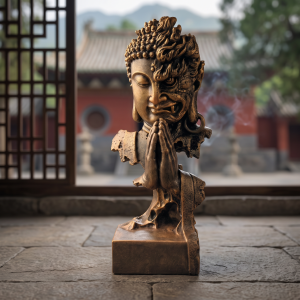
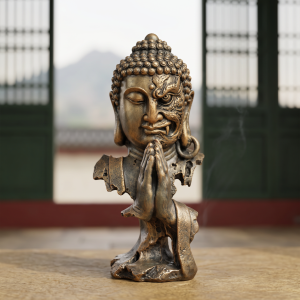
One Thought Buddha & Demon Statue | Solid Sandstone Half Buddha Half Demon Meditation Sculpture
Original price was: $235.95.$205.95Current price is: $205.95.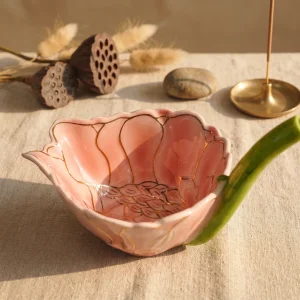
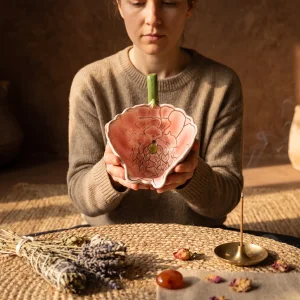
Handcrafted Lotus Stem Straw Cup: Pink Ceramic Lotus Sipping Cup with Gold Detailing (4.6 oz)
Original price was: $250.95.$230.95Current price is: $230.95.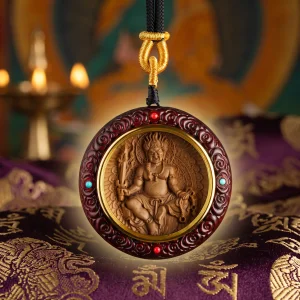
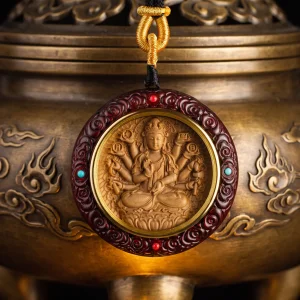
Zodiac Guardian Buddha Pendant: Hand-Carved Red Sandalwood Birth-Year Patron
Original price was: $96.95.$82.95Current price is: $82.95.Recently Viewed Products
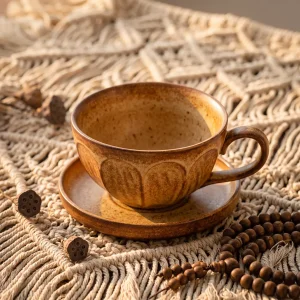
Petal Relief Ceramic Cup: Vintage-Glazed 8.8 oz Pottery Cup With Saucer Option
Original price was: $108.95.$89.95Current price is: $89.95.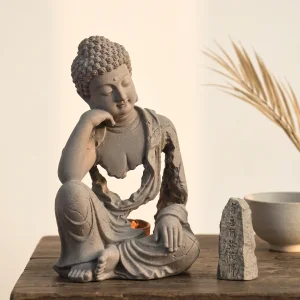
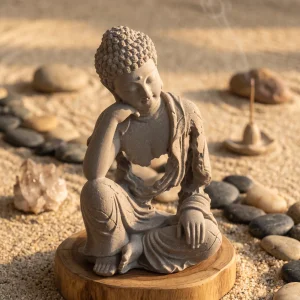
Sandstone Buddha Statue with Open-Center Tealight Display
Original price was: $120.95.$96.95Current price is: $96.95.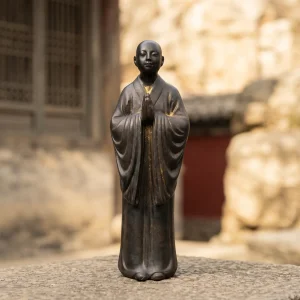
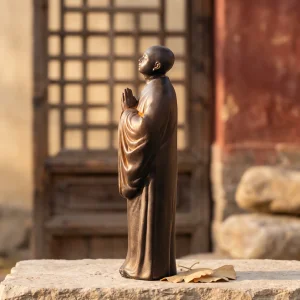
Iron Buddha Statue – Reclaimed Shaolin Iron for Mindfulness & Inner Peace
Original price was: $102.95.$88.95Current price is: $88.95.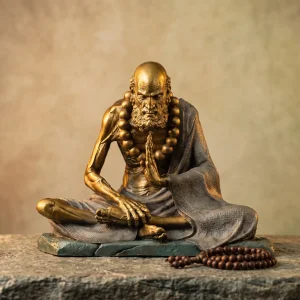
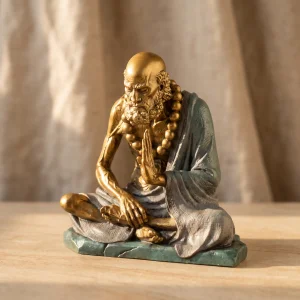
Bodhidharma Sculpture: Hand-Patinated Copper Damo
Original price was: $340.95.$320.95Current price is: $320.95.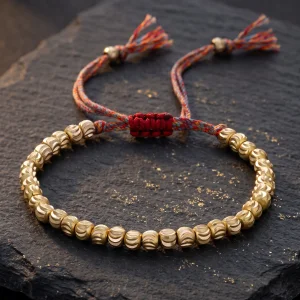
Copper Beads Tibetan Bracelet, Blessed by Shaolin Monks
Original price was: $66.95.$58.95Current price is: $58.95.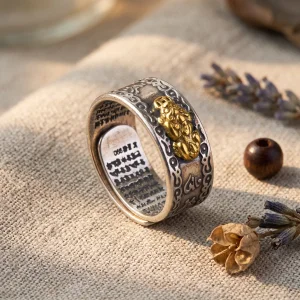
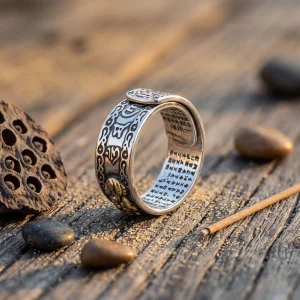
Feng Shui Pixiu Ring: 990 Silver Mantra Ring, Adjustable US 8–13
Original price was: $65.95.$46.95Current price is: $46.95.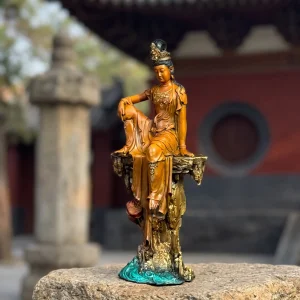
The "Royal Ease" Guanyin Sculpture | Handcrafted Solid Copper Art for Mindful Living
Original price was: $426.95.$388.95Current price is: $388.95.
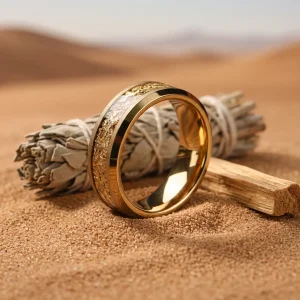
Sandblasted Tungsten Ring – Gold Leaf Good Luck Band
Original price was: $136.95.$122.95Current price is: $122.95.Handcrafted Lotus Stem Straw Cup: Pink Ceramic Lotus Sipping Cup with Gold Detailing (4.6 oz)
Original price was: $250.95.$230.95Current price is: $230.95.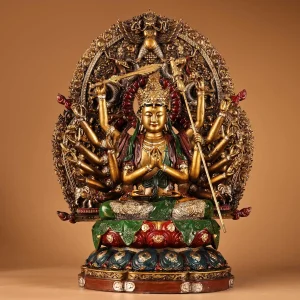
Reviews
There are no reviews yet.