
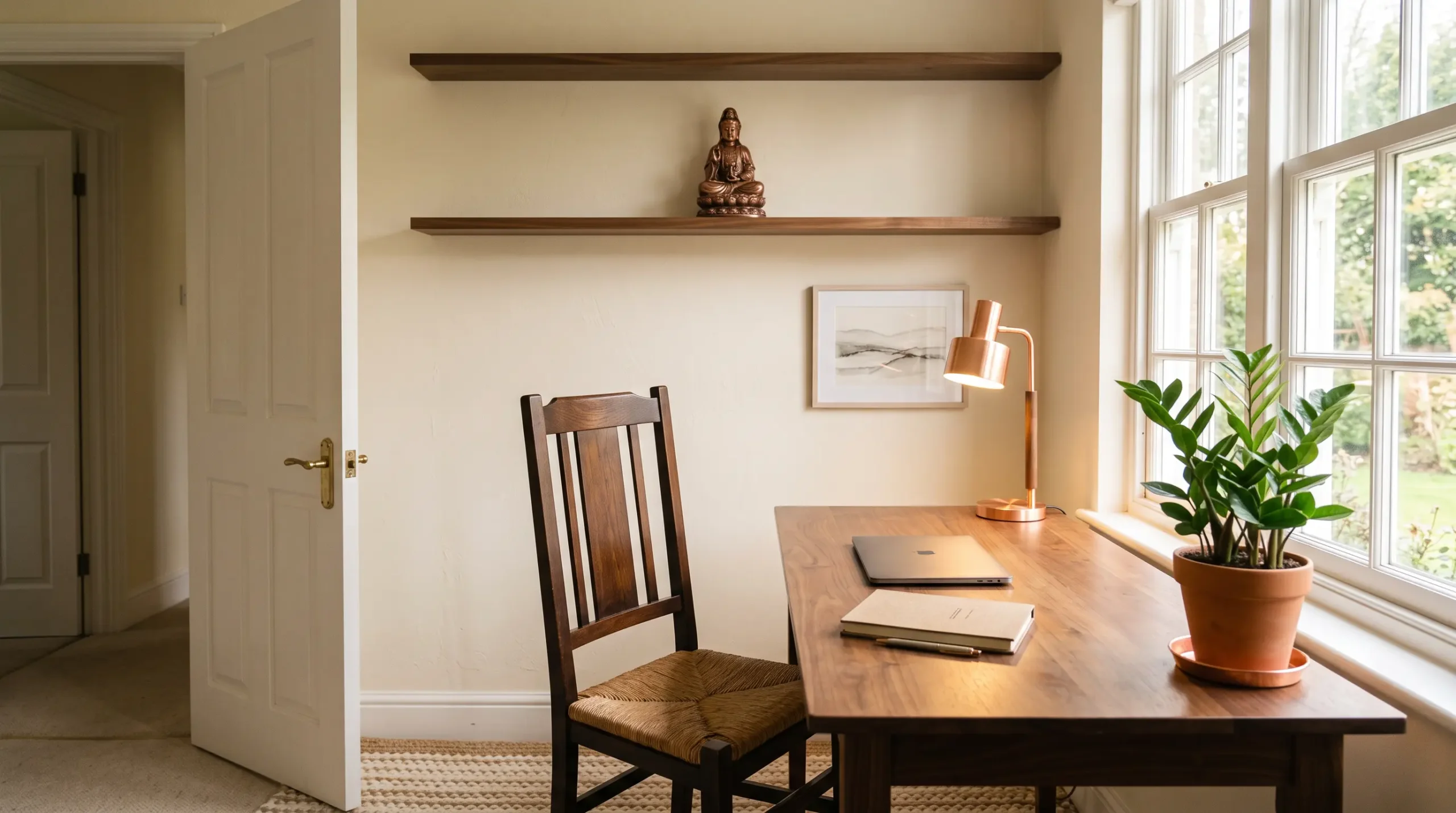
A feng shui home office works best with your desk in the command position. You can see the door, and a solid wall stands behind your chair. That one piece of desk placement matters more than any plant or ornament you add later.
You work from home, yet the room never feels settled. This guide shows what to move first, which plant to pick, and how to choose one calm piece of decor instead of ten.
At ShaoLin Store, we sell handcrafted statues and incense burners, so we have a stake in this topic. That is why we separate three things: what feng shui tradition teaches, what research supports, and what is only a symbol. For the basics beyond the office, start with our room-by-room feng shui guide for Western homes.
If you add only one object after reading, choose one that makes you pause. The decor section explains how.
⚠️ Important Note: Feng shui is a cultural and philosophical tradition. This guide describes how it is traditionally practiced. It does not promise wealth, health or success, and it is not medical advice. WebMD notes that there is no good scientific evidence to support feng shui for well-being.[4]
Command Position Explained: Where Your Chair Should Sit
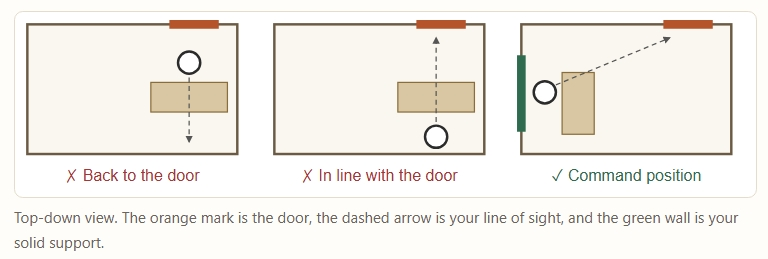
The command position is the spot where you can see the door from your desk without sitting directly in line with it. In feng shui tradition, that is usually the corner diagonal to the entrance. A solid wall sits behind your chair, so nothing can approach you unseen while you work.
Architect Cliff Tan, author of Feng Shui Modern, describes it as a spot where whatever stands behind you is sturdy and makes you feel in charge of the space.[2] Environmental psychologists describe a similar preference called prospect-refuge theory. People tend to feel safer when they can survey a room with their back covered.
What Is the Command Position for a Desk?
The command position for a desk meets three conditions: you see the door, you are not in line with it, and a wall supports your back. Set the desk on a diagonal from the entrance when the room allows. Sitting directly in line with the door puts you in the path of incoming energy, which practitioners read as constant pressure.
What If Your Room Will Not Allow It?
Most rooms break at least one rule, and that is normal. Rank the rules instead of chasing all three: see the door first, get a solid wall behind you second, and worry about the exact angle last.
If the desk cannot move, many practitioners suggest a small mirror that shows the door. A high-back chair, a bookshelf or a folding screen can stand in for the missing wall. Place the mirror on the desk or a side wall, never aimed straight at the door.
Which Direction Should Your Office Desk Face?
Face the door if you can, keep a window at your side, and soften a blank wall with depth.
| Desk layout | Traditional reading | Practical effect | Easy fix |
|---|---|---|---|
| Facing the door (diagonal) | Best. You see what approaches. | Door in view, wall at your back | None needed |
| Window at your side | Good. Your energy stays with your work. | Soft side light, less screen glare | Keep blinds adjustable |
| Facing a window | Not ideal. Qi is said to flow out of the room. | Glare and distraction | Turn the desk 90 degrees |
| Facing a blank wall | Limited. The outlook feels closed. | Few distractions, little depth | Add art with depth or a small plant |
| Back to the door | Weakest. You cannot see who arrives. | You may startle when someone enters | Mirror on the desk, high-back chair, screen |
Door, Window or Wall: Why the Ranking Looks This Way
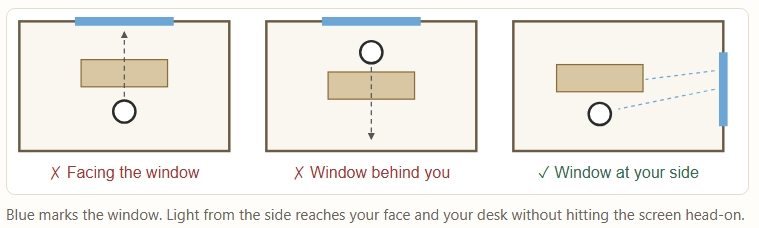
The door layout ranks first because it solves two problems at once. You see arrivals, and a wall supports you. The window layout gives you a view but splits your attention. The wall layout focuses your attention but gives your eyes nothing to rest on.
The window view feels like a reward. It is also the layout that breaks the most rules at once: screen glare for you and, in feng shui terms, energy leaving the room.
Should My Desk Face the Window According to Feng Shui?
No. Most practitioners advise placing the desk so the window sits to your side, not in front of you. Feng shui expert Anjie Cho, co-author of Mindful Living, says a desk facing a window sends your energy out of the room instead of keeping it with your work. Her fix is simple: “try turning it so that the window is to your side.”[3] You still enjoy the view during breaks.
A window behind you is no better. It throws glare on your screen and leaves you in silhouette on video calls.
Chair, Light and Clutter: The Support System Behind a Calm Workspace
A well-placed desk still feels unsettled without back support, soft light and a clear surface. These three supports finish what the desk position starts.
Why a High-Back Chair Matters
A high, solid-back chair works as your portable “mountain” in feng shui. It supports your spine and gives you the feeling of a wall behind you. Choose a back that rises at least to your shoulders, and avoid open slats, because tradition values solid backing. If your chair is low or open, place a bookshelf or cabinet behind it.
Light From the Side, Not Behind the Screen
Soft, even light from the side supports focus better than one harsh overhead bulb. Cliff Tan recommends several indirect light sources and bulbs that share one color temperature, between 2700 and 3000 kelvins, for a cozy glow.[2] Put a task lamp beside your screen, not behind it. Then open the blinds enough to let daylight reach your face, not your monitor.
How Clear Should Your Desk Be?
Keep only what today’s task needs within arm’s reach, and store the rest. In feng shui, a crowded surface is said to hold stagnant energy. In practice, it gives your eyes too many things to process.
Tan’s advice for any room applies here: fix the worst problem first. For most desks, that is the pile of paper nearest your keyboard. Lucky charms count as clutter too, which is why the decor section limits you to one object.
What Is the Best Feng Shui Plant for an Office Desk?
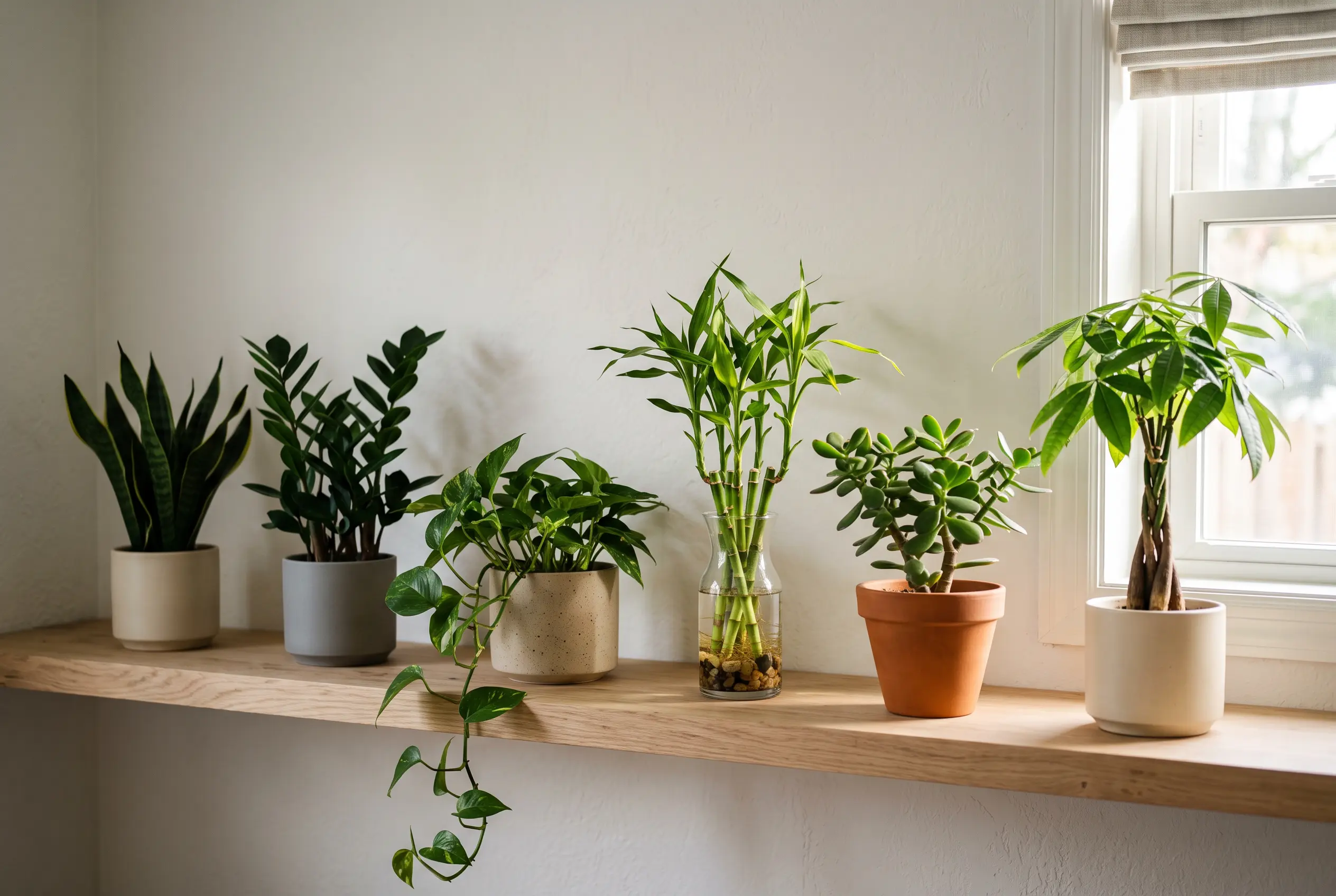
The best office plant is the one that survives your light. Choose for light first and symbolism second. These six work on most desks:
- Snake plant: upright leaves; tolerates low light and missed waterings.
- ZZ plant: glossy stems; copes with dim rooms.
- Pothos: trailing vine; softens sharp desk corners.
- Lucky bamboo: grows in water; a popular luck symbol in feng shui.
- Jade plant: thick leaves; traditionally linked to prosperity; wants bright, indirect light.
- Money tree: braided trunk; traditionally linked to prosperity; wants bright, indirect light.
Low-Light Picks vs. Bright-Window Picks
Low-light desks suit snake plant, ZZ plant, pothos and lucky bamboo, while bright, indirect spots suit jade plant and money tree.
| Light at your desk | Best picks | What to expect |
|---|---|---|
| Low light (interior wall, no direct sun) | Snake plant, ZZ plant, pothos, lucky bamboo | Slow growth, forgiving care |
| Bright, indirect light (near a window, away from harsh midday sun) | Jade plant, money tree | Fuller growth, check the soil more often |
Some practitioners keep spiky plants such as cacti away from the seat, because sharp tips are read as “poison arrows.” If you love one, place it where it does not point at your chair.
Where Should Office Plants Go?
Place your plant where you can see it from your chair, and keep it under 12 inches tall so it never blocks your screen. In BTB feng shui, the far-left corner of your desk as you sit is the Wealth area, and a green, wood-element plant is the traditional match. Treat that as tradition, not a guarantee, and move the plant if the corner gets too little light.
What Does the Research Actually Show?
One randomized crossover study found that actively handling a houseplant lowered diastolic blood pressure compared with computer work. In the 2015 study by Lee and colleagues, 24 young men spent 15 minutes transplanting a Peperomia on one day and 15 minutes on a computer task on another. Diastolic pressure averaged 65.26 mmHg after the plant task versus 71.75 mmHg after the computer task.[1]
Participants also felt more comfortable, soothed and natural after handling the plant. The limits matter. All 24 participants were healthy male university students with a mean age of 24.9, the control was a mental task, and the effect appeared near the end of the 15 minutes. The study tested hands-on care, not a plant sitting on a shelf.
That makes watering and repotting a small stress break, which is a better reason to own a plant than a promise of luck. A plant is no substitute for rest, fresh air, or professional support when work stress feels heavy.
Calm Decor: Choose One Focal Object, Not Ten
The calmest desks hold one meaningful object in your line of sight, not a crowd of lucky charms. Every extra ornament competes for attention and becomes clutter of its own.
Why One Statue Beats a Shelf of Charms
One statue beats a shelf of charms because a single figure on a clear surface gives your eyes one place to rest. Ten objects give them ten places to wander. Leave empty space around your focal piece and keep the rest of the desk plain.
Tradition treats objects as reminders, not switches. A figure on your desk will not change your workload, but it can change what you notice when you look up.
Where Should a Guanyin or Buddha Statue Go on a Desk?
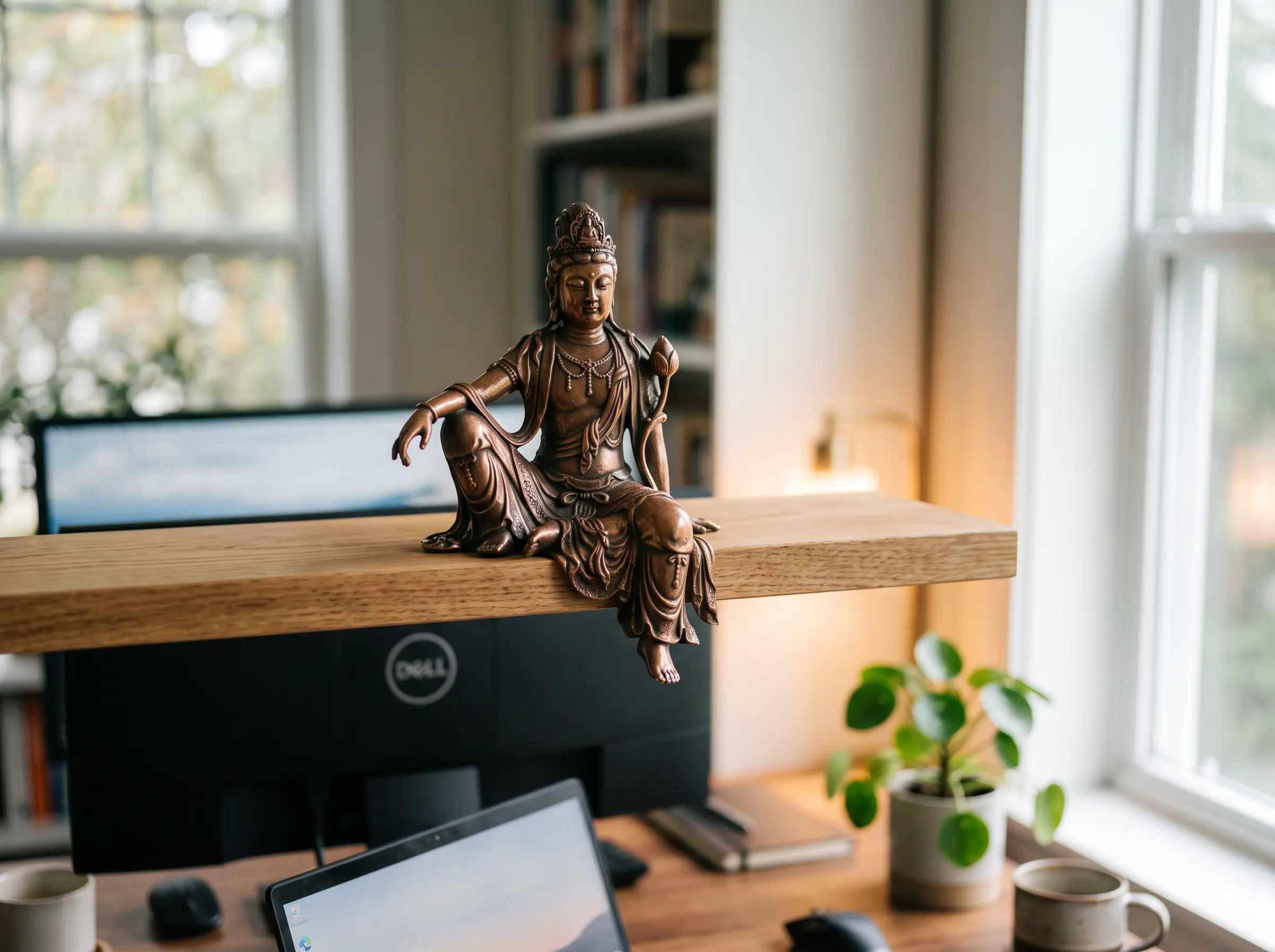
Place the statue at eye level or higher, on a clean and quiet surface, facing into the room. Many traditions suggest keeping it about 3 ft (90 cm) off the floor at minimum, and away from bathrooms and kitchens. If your work area is cramped, a shelf above the desk works better than the desk surface itself.
For a desk-scale piece, we recommend the 8.9-inch solid copper Royal Ease Guanyin statue from ShaoLin Store. It stands 8.9 in (22.6 cm) tall, weighs 2.16 lb (980 g), and has a footprint of 4.3 × 2.7 in. That size fits a shelf above your monitor without crowding the desk. The solid copper gives it real weight, and its warm finish deepens in tone over time.
The Royal Ease pose pairs a relaxed seat with readiness: one knee raised, one arm resting, Guanyin at rest yet ready to rise. Museum collections, including the Princeton University Art Museum, link the pose to Guanyin from the late ninth century. At a desk, it reads as a reminder to be calm and useful at the same time.
ShaoLin Store pick for a calm desk
The “Royal Ease” Guanyin Sculpture, Handcrafted Solid Copper
$388.95 $426.95 · 8.9 in tall · 2.16 lb · Free shipping · 60-day returnsSee the Royal Ease Guanyin
The product page describes the statue as blessed by Shaolin monks. We read that as an expression of good intention. It is a gift of comfort and a reminder of compassion, not a promise of luck.
Is it respectful to display Guanyin if you are not Buddhist? Yes, when you choose it on purpose and place it with care rather than as a novelty.
Using Incense as a Start-of-Work Signal
Lighting one stick of incense before your first task can act as a repeatable cue that work has started. Use a burner or holder that catches ash, set it on a heat-safe surface, and keep it away from paper. Never leave burning incense unattended, and open a window for ventilation. ShaoLin Store’s handmade incense burners and holders run from $38.95 to $76.95 and include backflow burners and a stick holder.
A 15-Minute Feng Shui Home Office Reset
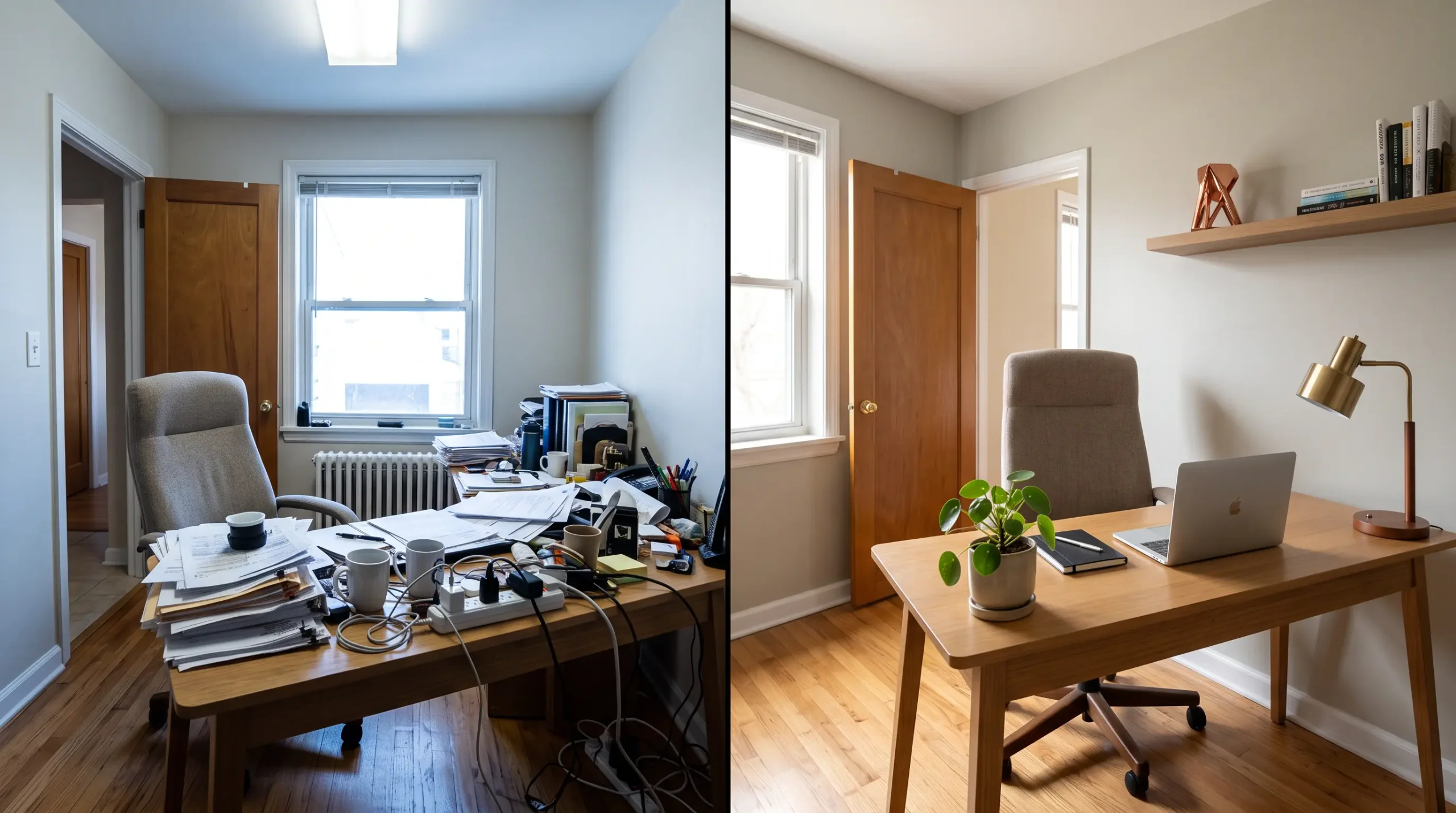
You can reset a home office in 15 minutes. Move the chair first, then the light, then the surface.
- Find the command position (3 minutes). Sit where you can see the door. If the desk cannot move, set a small mirror that shows the door.
- Turn the window to your side (2 minutes). Rotate the desk or chair so daylight comes from the side, not from in front or behind.
- Clear the surface (3 minutes). Keep today’s task within reach and put everything else in a drawer.
- Soften the light (2 minutes). Match your bulbs at 2700-3000K and place one lamp to the side.
- Place one plant (2 minutes). Choose for your light, and set it where you see it from your chair.
- Set one focal object (2 minutes). Put it at eye level, facing into the room, with empty space around it.
- Close the day (1 minute). Switch off the lamp, then mark the end of work with one ring of a bowl or by snuffing out a candle.
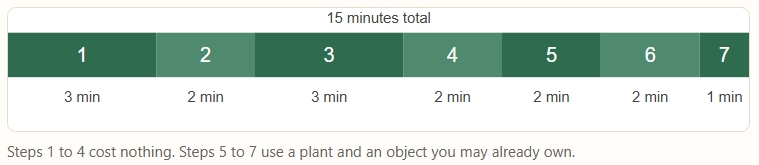
Time, Tools and Supplies
The whole reset takes 15 minutes and needs no purchases. Gather a lamp with a warm bulb, one plant, one focal object, and a small mirror if the desk cannot move. Buy nothing new until you finish steps 1 to 4, because those four steps are free.
Adapting the Reset for a Bedroom or Living-Room Nook
In a shared room, give the desk its own zone and close it at night. Use a folding screen, a low bookshelf or a curtain to separate work from rest. When the workday ends, shut the laptop and clear or cover the desk so the room can switch back to rest.
The bottom line: a feng shui home office comes down to four moves. Sit in the command position, keep the window at your side, match a plant to your light, and keep one calm object in view. Everything else is optional.
Ready to finish your calm workspace?
Pair your reset with one handcrafted piece and a closing ritual. ShaoLin Store ships free on every order, with 60-day returns. Start with one clear tone to end the workday.
Shop handcrafted singing bowls
Prefer a smaller start? Try a handmade incense burner from $38.95.
❓ Frequently Asked Questions
Start with the command position: see the door, avoid sitting in line with it, and keep a wall behind you. Then put the window to your side, clear the desk surface, and add one plant and one calm object.
Tradition sets no fixed number. One to three healthy plants you can keep alive beat a crowded windowsill, because a struggling plant reads as neglect. Match each plant to your light first.
Some schools assign directions using a personal Kua number, but the BTB method needs no compass. Seeing the door matters more than the compass bearing, so treat direction as fine-tuning after the basics.
Choose a single focal object that makes you pause, then leave space around it. A handmade incense burner from $38.95 is an easy first step, and the Royal Ease statue above suits a bigger budget.
📚 References
- Plants and stress: Lee MS, Lee J, Park BJ, Miyazaki Y. “Interaction with indoor plants may reduce psychological and physiological stress,” Journal of Physiological Anthropology, 2015. Source of the 24-participant crossover data. PubMed Central
- Command position and lighting: NPR Life Kit, “6 design tricks to transform your home, according to a feng shui expert” (Cliff Tan), originally published 07/19/2024. NPR
- Desk and window placement: Better Homes & Gardens, “9 Feng Shui Faux Pas” (Anjie Cho). Better Homes & Gardens via AOL
- Evidence status: WebMD Natural Medicines overview of feng shui, which finds no good scientific evidence to support its use. WebMD