
Choose a herbal bracelet if you want to smell your calm. Choose a crystal bracelet if you want to see your intention. That is the short answer. The rest of this guide helps you decide based on materials, scent, care and meaning.
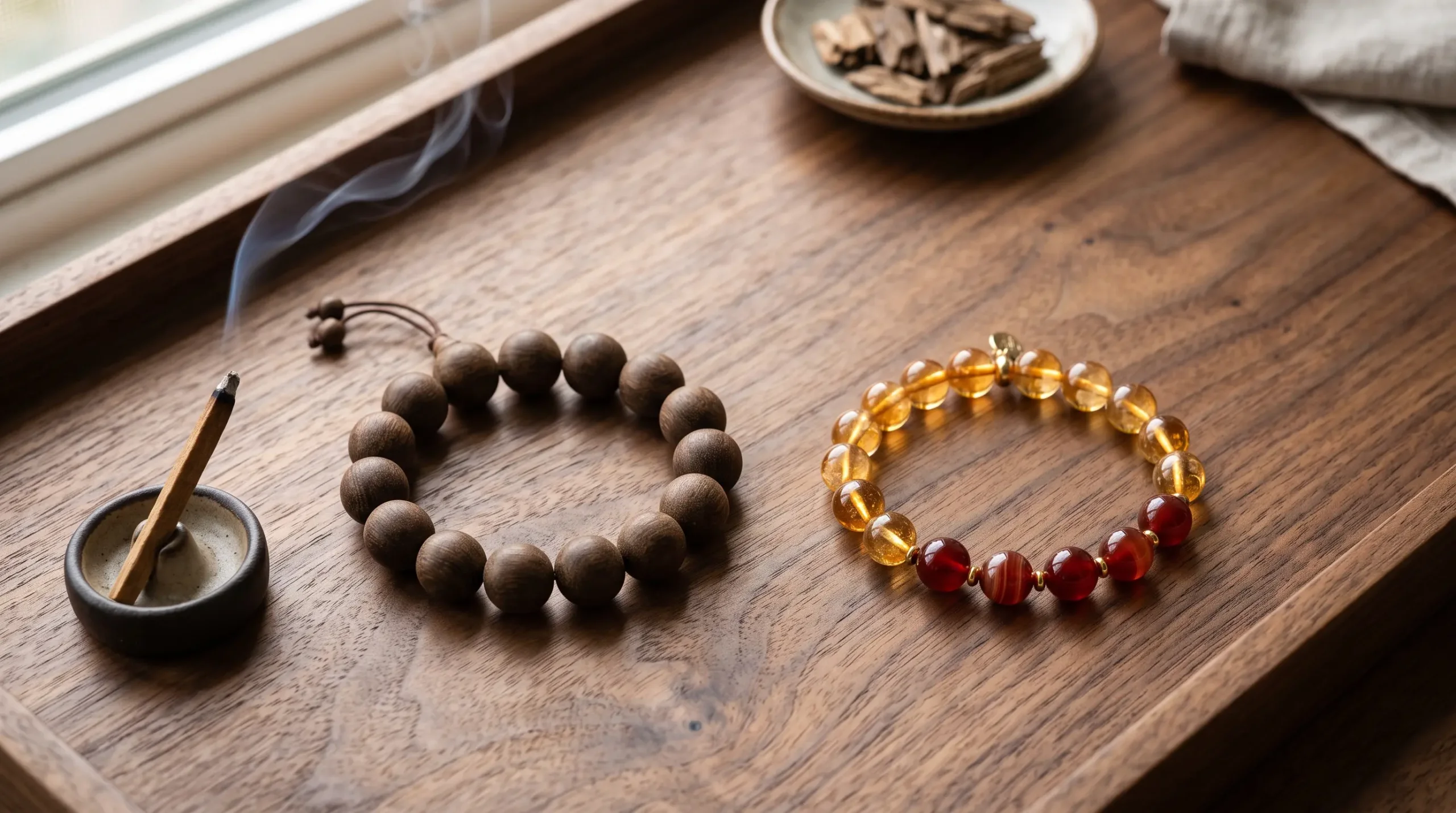
A herbal bracelet, also called a herbal incense bead bracelet, is strung with hand-pressed beads of agarwood, sandalwood and botanicals. It gives off a soft natural aroma. A crystal bracelet, also called a gemstone bead bracelet, uses mineral beads such as amethyst, citrine or agate. It has no scent, but it keeps its color and shape for years.
Both are sold as mindfulness and “energy” jewelry, so the real differences are easy to miss. This ShaoLin Store comparison sticks to facts you can check: GIA guidance on treated gemstones, Mohs hardness, a 4-step test for dyed beads and a dated price check. If scent is your priority, start with our handmade herbal incense bead bracelets.
Herbal vs Crystal Bracelet at a Glance: Which One Fits You?
A herbal bracelet is made from hand-pressed beads of agarwood, sandalwood and other botanicals, so it carries a soft natural scent that fades over months. A crystal bracelet is strung from mineral beads like amethyst or citrine, which are unscented, harder (Mohs 7 for quartz) and valued for color and traditional symbolism.
What is the difference between a herbal bracelet and a crystal bracelet?
The difference is the material and the way you experience it. Herbal beads come from plants and work through your sense of smell. Crystal beads come from minerals and work through color, weight and touch.
Both change over time, but for different reasons. A herbal bracelet softens as its aroma fades. A crystal bracelet can fade too, but only from strong sunlight or unstable dye.
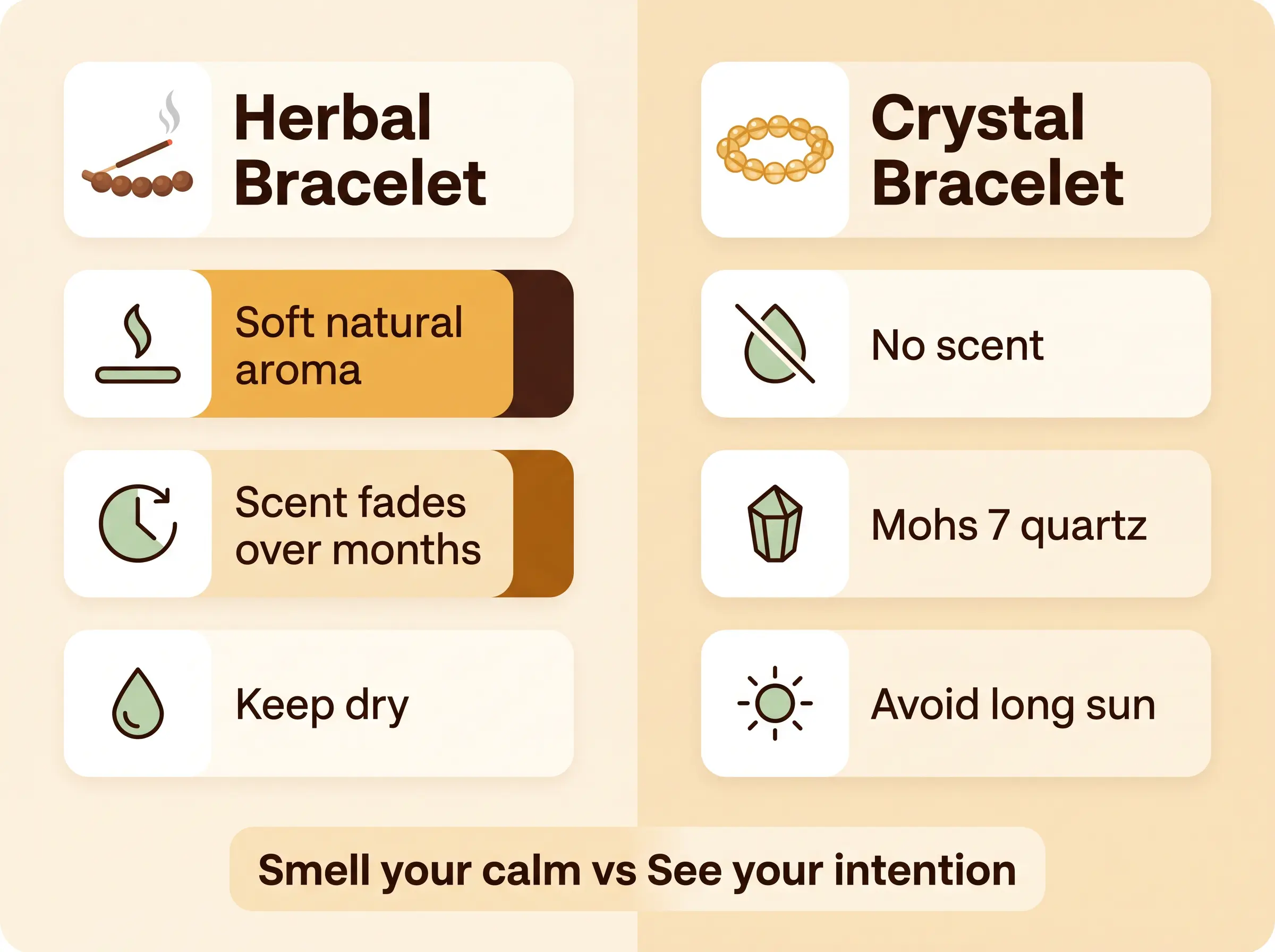
Quick Comparison Table: Material, Scent, Durability, Care and Price
| Feature | Herbal Bracelet | Crystal Bracelet |
|---|---|---|
| Material | Agarwood, sandalwood and herbal powder pressed with a plant-based binder | Quartz-family and other mineral beads (amethyst, citrine, agate) |
| Scent | Soft natural aroma, stronger on warm skin, fades over months | None (unscented) |
| Durability | Softer beads; aroma fades; must stay dry | Mohs 7 for quartz; the elastic cord is the weak point |
| Typical bead size | 12, 15 or 18 mm (0.47, 0.59 or 0.71 in) | 8 or 10 mm (0.31 or 0.39 in) |
| Care | Keep dry; rest in a sealed pouch | Avoid long sun, acetone and salt water |
| Authenticity risk | Synthetic fragrance can imitate botanicals | Dyed or heat-treated beads sold without disclosure |
| Price benchmark (10/30/2026) | About $109 to $133 on competing herbal bracelets we checked | $76.95 for the citrine and red agate bracelet featured below |
| Best for | Scent lovers and daily ritual | Color, durability and symbolism |
What Are Incense Beads Made Of? Agarwood, Sandalwood and Botanicals
Herbal incense beads are made by grinding aromatic woods and dried botanicals, typically agarwood, sandalwood and herbs like mugwort or clove, into fine powder, then hand-pressing it with a plant-based binder into wearable beads. The aroma comes from the bead itself, not from a spray.
That matters for you. Because the scent is built into the material, it feels gentle and personal. It will not fill a room the way perfume does.
Which Herbs Are Commonly Used in Herbal Bracelets and Why?
Agarwood and sandalwood usually form the base. Both are traditionally used for a warm, woody aroma that many people link with quiet, focused moments.
Other botanicals add character to the scent profile:
- Mugwort and atractylodes: traditionally used for earthy, herbal notes.
- Clove: adds a warm, spicy edge.
- Borneol: adds a cool, camphor-like note. Expect it to smell sharp at first.
- Lavender and floral botanicals: soften the blend with a lighter aroma.
These uses are traditional, not clinical. Choose a blend by what you enjoy smelling, not by a promised effect.
How Are Herbal Incense Beads Made by Hand?
Hand-made beads follow five basic steps:
- Grind: reduce woods and dried herbs to fine powder.
- Sift: remove coarse bits so the beads press evenly.
- Blend: mix the botanicals into the scent profile.
- Press: bind the powder with a plant-based binder and shape each bead.
- Dry and polish: let the beads set, then smooth the surface.
Each bead varies slightly in color and aroma. That is normal for hand-pressed work. Perfectly identical beads at a very low price are a reason to ask what the maker used.
Gemstone Beads Under the Loupe: Natural, Heat-Treated or Dyed?
Most crystal bracelets use quartz-family beads such as amethyst, citrine or agate, and many on the market are heat-treated or dyed. Treatment is not a scam when the seller discloses it. It does change how you should care for the bracelet.
How can I tell if my amethyst is real or dyed quartz?
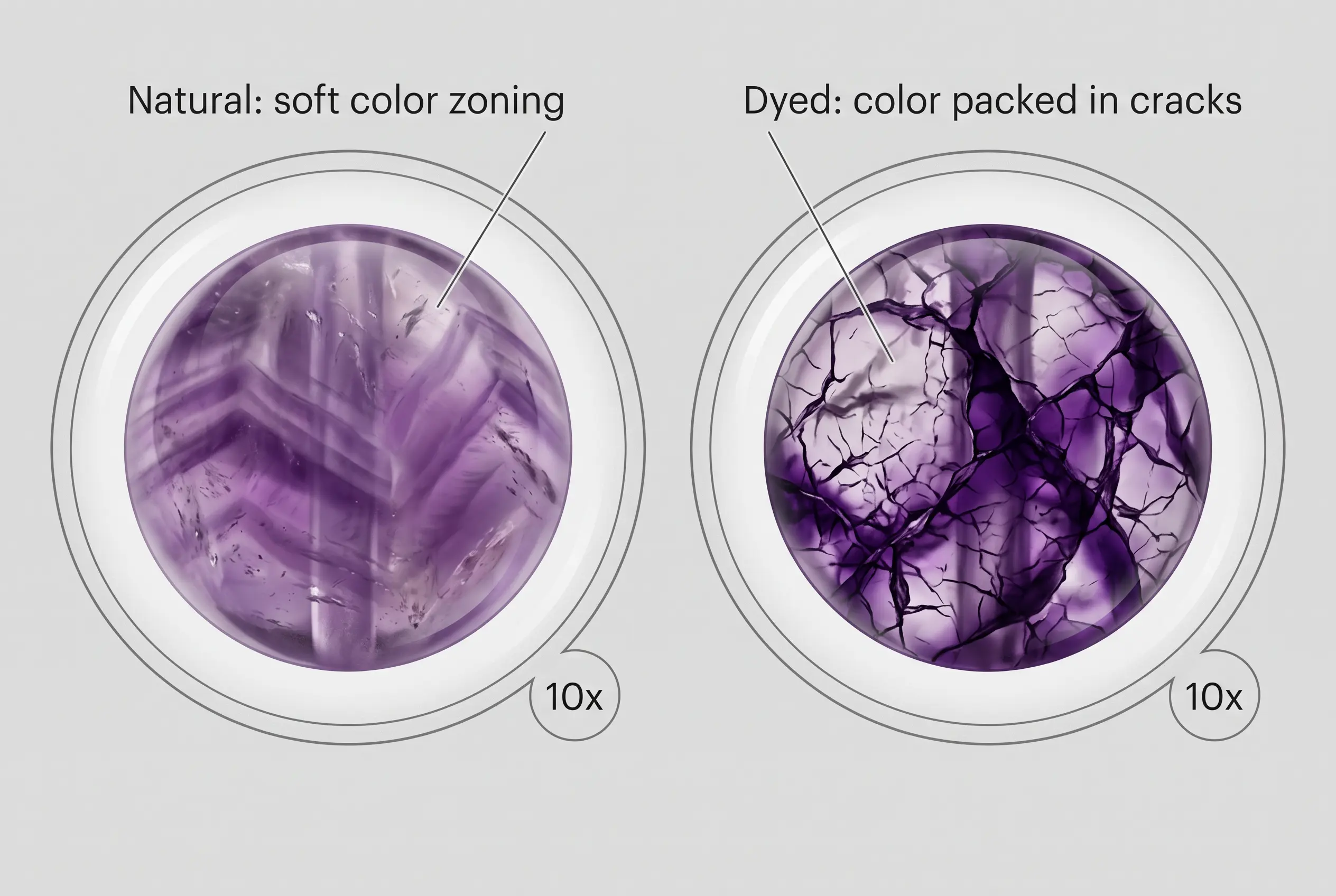
Run these four checks before you buy, or when your bracelet arrives:
- Check color zoning: natural amethyst usually shows lighter and darker bands. A perfectly uniform purple deserves a question.
- Inspect cracks with a 10x loupe: dye pools in fractures. Deep color packed into cracks suggests dyeing.
- Wipe one bead with a damp white cloth: visible color transfer suggests dye. Never test with acetone or alcohol.
- Feel the weight and temperature: stone beads feel cool and heavier than plastic. Glass also feels cool, so treat this as a hint only.
These steps are a home checklist, not a lab result. Only a gemological laboratory can confirm treatment. If the bracelet is expensive or meant as a meaningful gift, ask the seller for written disclosure first.
Why Most “Citrine” on the Market Is Heat-Treated Amethyst
Natural citrine is rare and usually pale yellow. Most commercial citrine is made by heating amethyst or smoky quartz, which turns it deep yellow to orange. If a bracelet looks bright orange, assume heat treatment unless the seller says otherwise.
Heat-treated citrine is still real quartz. You just deserve to know what you are paying for. Quartz is also commonly treated by irradiation and dyeing, so disclosure matters across the whole category.
Care matters here too. GIA advises that dyed gemstones should avoid acetone and alcohol, and that dyed gemstones fade under prolonged sunlight, such as on a sunny window ledge.
For a clear starting point, ShaoLin Store lists a Natural Citrine & Red Agate wealth blessing bracelet at $76.95, down from $96.95 (price checked 10/30/2026). Read the product page for treatment details before you order, and ask the store if anything is unclear.
Can I put my crystal bracelet in water?
A quick rinse will not hurt quartz beads, but water is hard on the elastic cord and metal parts. Salt water is the worst choice. Moisture wears elastic cord out faster than almost any other daily exposure.
Skip sunny windowsill “charging” too. Sunlight can fade dyed stones, and some retailers warn that amethyst and citrine may lighten after long exposure. Dry the bracelet with a soft cloth and store it out of direct sun.
Scent vs No Scent: How Long Does the Aroma Last?
Expect a well-made herbal bracelet to smell noticeable for several months, softening gradually with wear. Sellers’ claims range from a few weeks to over a year, so treat any single number with caution.
How long does the aroma from herbal bracelets last?
Scent duration depends on the bead, and sellers often present agarwood-heavy blends as the longer-lasting option. No independent test backs one fixed number, which is why published estimates conflict.
Four things shift the result:
- Bead size: a 18 mm bead (0.71 in) has more material than a 12 mm bead (0.47 in).
- Blend: dense woods usually release scent more slowly than light florals.
- Moisture: sweat and hand washing dull the aroma and age the cord.
- Body warmth: warm skin brings out the scent now but speeds up the fade.
The most common mistake is wearing herbal beads in the shower or while washing hands. Take the bracelet off first and the aroma lasts longer.
How do I take care of my herbal bracelet?
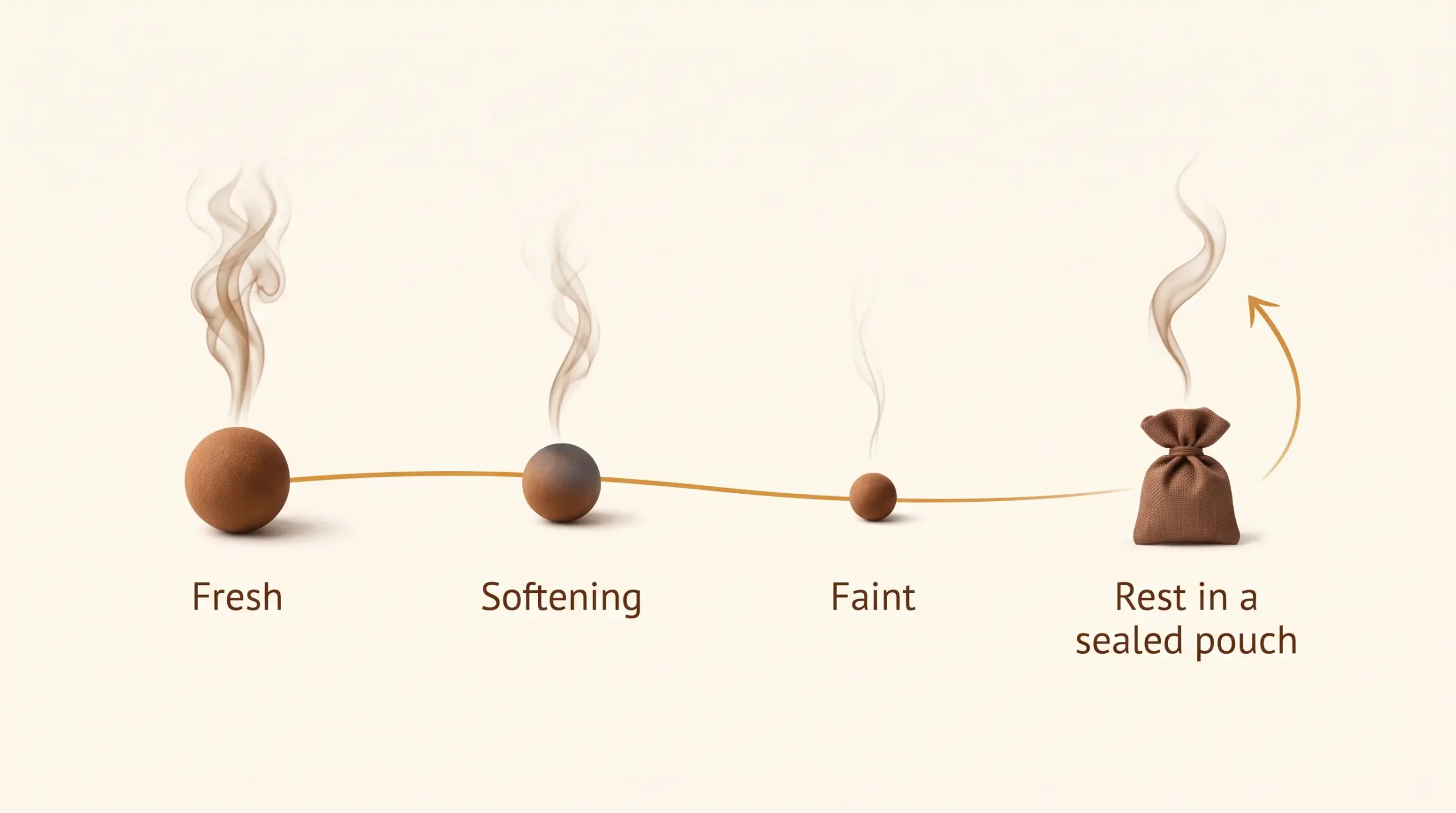
Keep it dry, rest it in a sealed pouch when you are not wearing it, and keep it away from perfume and lotion. Many sellers say a few days in a sealed pouch helps a faded bracelet smell stronger again.
Your skin matters too. If you have fragrance allergies or sensitive skin, wear the bracelet for a few hours first. Stop wearing it if you notice irritation.
Do Crystal Bracelets Have a Scent?
No. Natural mineral beads are unscented, so a crystal bracelet gives you color and weight instead of aroma. If you want both, layer a crystal strand with a herbal bracelet, or add handmade incense made from natural aromatics to your routine.
Meaning and Symbolism: Tradition, Intention and What the Evidence Says
Herbal bracelets draw meaning from Chinese incense and meditation traditions, while crystal bracelets carry symbolism tied to each stone’s color and lore. Neither has scientific evidence of healing effects, but many people find them useful reminders for mindfulness.
Do crystal bracelets really work?
There is no peer-reviewed scientific evidence that crystal healing has any effect, and the practice is classed as pseudoscience. In a 2001 study reported by Wikipedia, 80 volunteers meditated while holding either real quartz or look-alike placebo stones. Results showed no benefit beyond a placebo effect.
That does not make the bracelet pointless. A visible stone can serve as a cue to pause, breathe and set an intention. The value lives in the habit, not in a measurable energy field.
⚠️ Important Note: The information about spiritual and energy properties is based on traditional beliefs and user experiences, not scientific evidence. This content is for educational purposes and should not replace professional medical advice.
What Does a Herbal Bracelet Symbolize in Chinese Incense Culture?
In Chinese incense culture, blended aromatics have been used for centuries in meditation and ritual settings. A herbal bracelet carries that tradition onto the wrist as a portable scent cue. Some practitioners also link botanicals with the Five Elements (Wu Xing), though that framework is cultural, not scientific.
ShaoLin Store describes some of its pieces as blessed by Shaolin monks. That is the store’s own statement, not an independent certification.
Crystals have their own lore. Citrine is traditionally associated with prosperity in Feng Shui. Some traditions map stones to chakras, but treat that as symbolism, not a prescription.
Herbal or Crystal: Which Bracelet Should You Choose?
Choose a herbal bracelet if you want a sensory, scent-led ritual and don’t mind refreshing or replacing it. Choose a crystal bracelet if you want long-lasting color, durability and stone symbolism. In summary, scent points to herbal and daily wear points to crystal.
Which bracelet is better for beginners?
A crystal bracelet is the easier first buy. Quartz at Mohs 7 resists everyday scratches, care is simple and the entry price is lower. Our check on 10/30/2026 found a $76.95 citrine and red agate bracelet at the store, against about $109 to $133 for competing herbal bracelets.
Choosing your first one feels like a big decision, and that is normal. Start with the sense you enjoy most, scent or color, and buy from a seller that discloses materials and treatments.
Which bracelet is better for meditation?
Both work, because they anchor attention in different ways. A herbal bracelet gives you an aroma cue to pair with your breathing. A crystal bracelet gives you a cool, weighted touch cue. Many people layer the two for a sensory and tactile routine.
Pros, Cons and Our Verdict
| Bracelet | Pros | Cons |
|---|---|---|
| Herbal | Natural aroma built into the beads; gentle and personal; no daily care beyond keeping it dry | Aroma fades; not for water; may bother people with fragrance allergies |
| Crystal | Hard, long-lasting beads; stable color; lower entry price | No scent; treated or dyed beads are common; elastic cord can wear out |
Our verdict: pick herbal if you want to smell your routine, pick crystal if you want to wear your intention every day without worrying about fading scent. Ready to compare in person? Browse the full natural stone and herbal bracelet collection.
Find the Bracelet That Fits Your Routine
Shop herbal incense bead bracelets for scent, or natural stone bracelets for color and durability. ShaoLin Store lists free shipping on all orders and a 60-day return window.Shop Herbal Bracelets →Shop Crystal Bracelets →
Frequently Asked Questions
Yes. Many people stack a scented herbal bracelet with a crystal strand to combine a sensory cue with a visual one. Keep the herbal beads away from water and perfume so the aroma lasts longer.
Many people find a familiar calming scent such as lavender or sandalwood part of a relaxing bedtime routine. There is no reliable clinical evidence that a bracelet improves sleep. If you have ongoing sleep problems, talk to a healthcare provider.
Traditions vary. Some Feng Shui practices suggest the left wrist for “receiving,” but there is no rule you must follow. Wear it where it feels comfortable and where you will notice it during the day.
Yes. Both bracelet types make meaningful gifts, especially around Thanksgiving and Black Friday. Choose by the receiver’s habits: herbal for scent lovers, crystal for color lovers, and check the store’s 60-day return window before you buy.
📚 References
- Gem treatment basics and care: GIA overview of common gemstone treatments, including dye and its care limits. GIA, An Introduction to Gem Treatments
- Treatments by gem type: GIA chart listing commercially available treatments, including those used on quartz. GIA, Chart of Commercially Available Gem Treatments
- Citrine origin and heat treatment: Reference entry on natural citrine and heated amethyst. Wikipedia, Citrine
- Evidence on crystal healing: Summary of scientific findings and the placebo-controlled study discussed above. Wikipedia, Crystal healing