
Most of what movies show about Shaolin kung fu is legend, not record. Bodhidharma did not invent it, historians find no solid evidence that the Qing dynasty burned the monastery, and Shaolin monks fought mostly with staffs before the 1500s. This guide checks seven popular claims about Shaolin monks and Chan Buddhism against academic history, so you can separate the tradition from the screenplay.
Film critic Ng Ho noted in 1980 that more than half of Hong Kong and Taiwan kung fu and wuxia films touch on Shaolin legends, according to the South China Morning Post. No wonder the movie version has replaced the real one. At ShaoLin Store, we built this guide by checking each claim against Meir Shahar’s university research, Britannica, and UNESCO, and we flag every point where historians still disagree.
The 7 myths at a glance:
- Myth 1: Bodhidharma invented kung fu at Shaolin.
- Myth 2: Shaolin monks fought mainly with their fists.
- Myth 3: The Qing dynasty burned Shaolin to the ground.
- Myth 4: Shaolin monks only fought in self-defense.
- Myth 5: Every Shaolin monk is a warrior monk.
- Myth 6: Shaolin masters have superhuman powers.
- Myth 7: What you see on screen is real Shaolin kung fu.
Training-minded? After you read, browse our Shaolin kung fu supplies collection for real training.
How to read this guide: Shaolin history mixes documented record, tradition, and legend. We label which is which, and we use cautious wording where the evidence is thin.
Did Bodhidharma Really Create Shaolin Kung Fu?
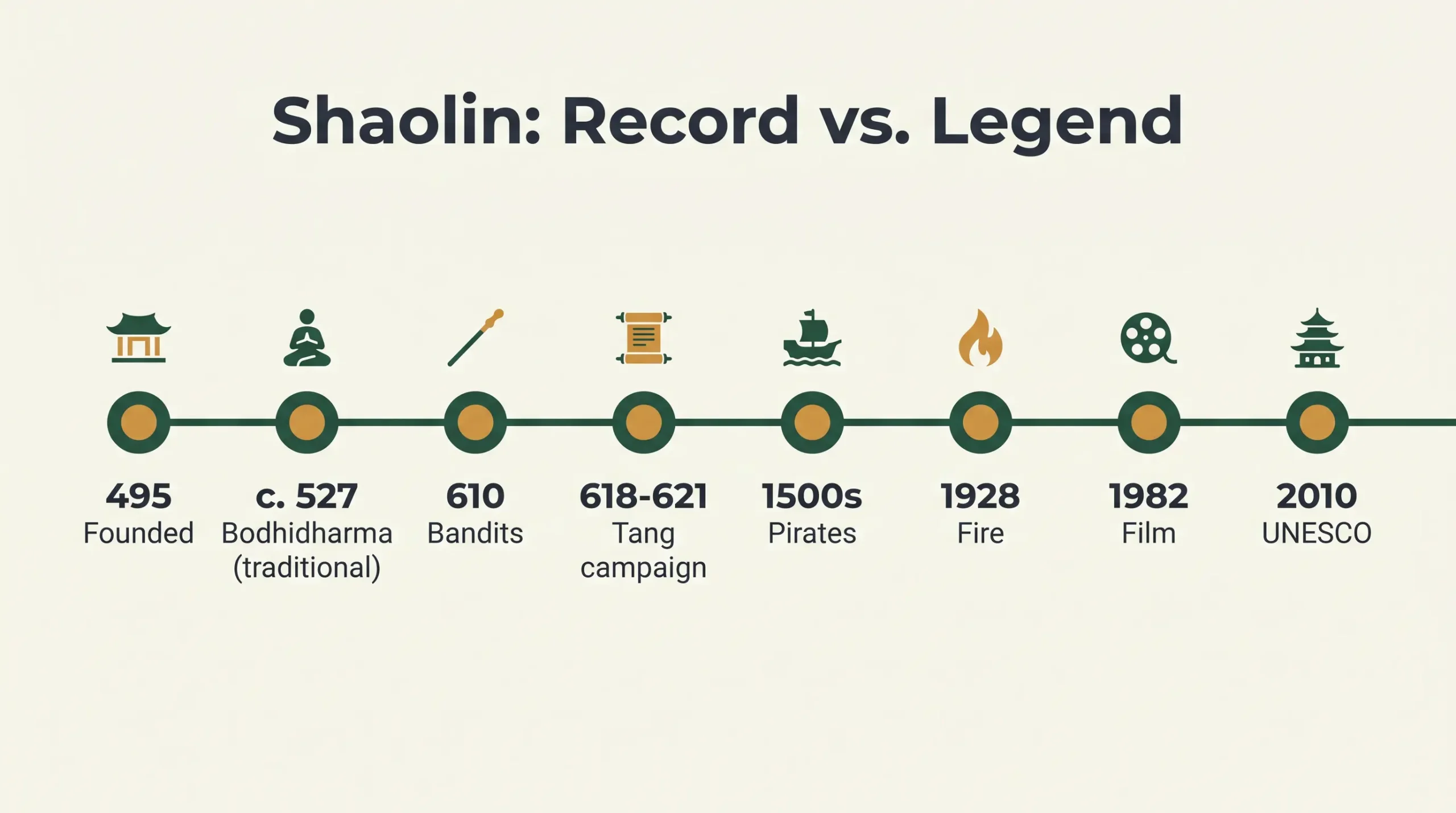
No. Shaolin honors Bodhidharma as the patriarch of Chan (Zen) Buddhism, but historian Stanley Henning traces his link to martial arts to a novel serialized in 1904 to 1907, The Travels of Lao Ts’an. The monastery itself dates to 495 CE, and its first martial fame came from the staff.
Who Founded the Shaolin Monastery, and When?
The Indian monk Batuo, also called Buddhabhadra, founded the Shaolin Monastery in 495 CE under the Northern Wei dynasty. It stands on Mount Song in Dengfeng, Henan. Bodhidharma’s tradition is religious: he is credited with bringing Chan Buddhism, a meditation school, to China, with his arrival traditionally dated to around 527. That puts him at an existing monastery, not at a martial academy.
Myth #1: Bodhidharma Invented Kung Fu
Historians date the Bodhidharma and kung fu connection to the early 1900s, not the 500s. We expected to find an ancient source for the story. We found a 20th century novel instead.
The monks themselves credited their staff art to Vajrapani, a guardian deity, according to Shahar’s research. The Yijin Jing, a training manual often tied to Bodhidharma, is treated by historians as a later attribution. Read any origin story built on it with caution.
Myth #2: Shaolin Monks Fought Mainly With Their Fists
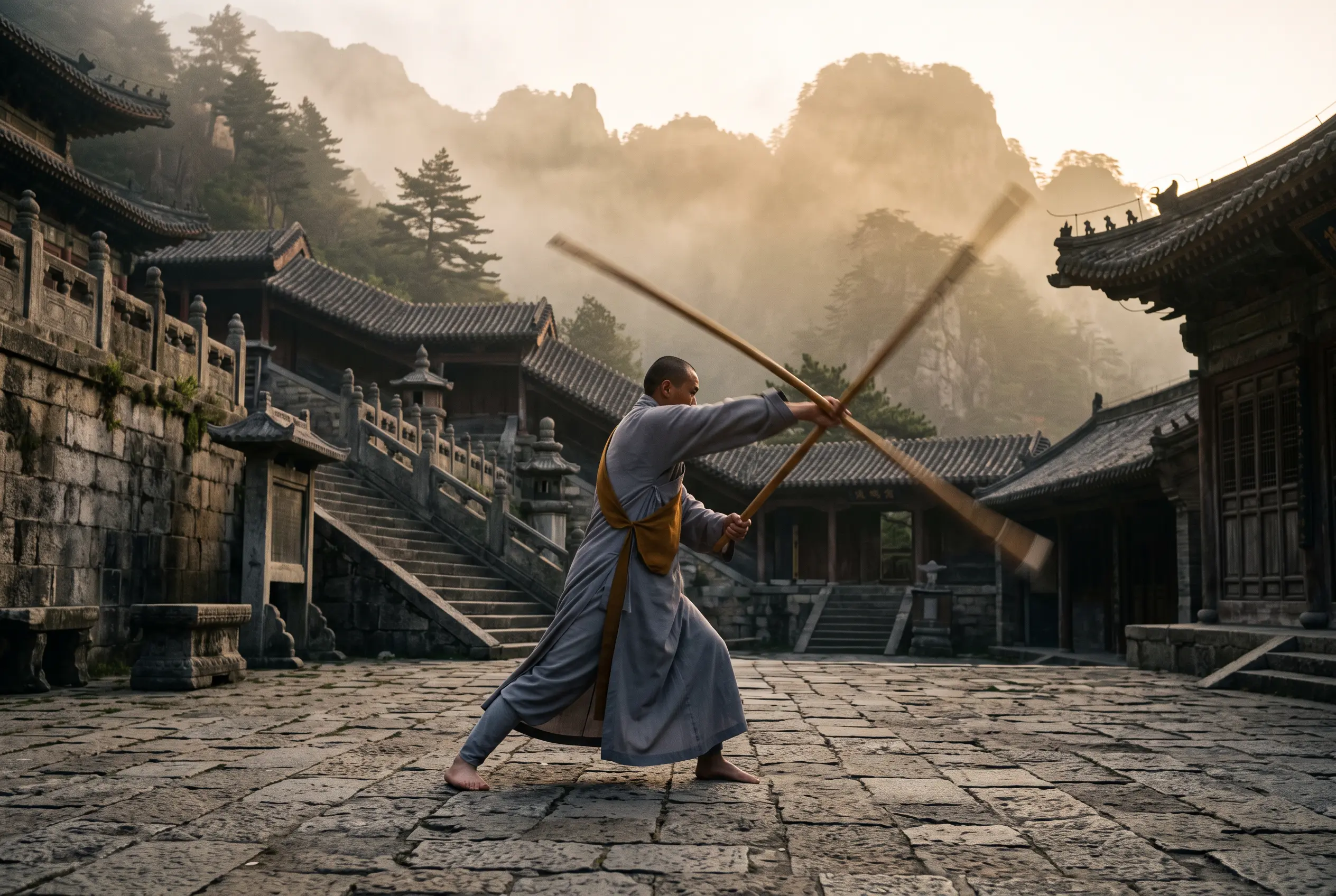
Before the 16th century, Shaolin monks were known for the staff, not the fist. Shahar’s research, as reported by the South China Morning Post, says the monks trained in spear fighting and unarmed combat but specialized in the staff. Empty-hand systems took shape later, and historians date their organization to the 17th century.
Was the Shaolin Temple Really Burned Down?
Yes, but not by the Qing. Historians Tang Hao and Stanley Henning consider the Qing burning story likely fictional, and the South China Morning Post notes there is no evidence a Southern Shaolin Temple existed. The documented disaster came in 1928, when troops under warlord Shi Yousan set a fire that burned for over 40 days.
Myth #3: The Qing Dynasty Burned Shaolin to the Ground
The legend cannot agree on a date, which is the first warning sign. Tellings place the burning in 1647, 1674, 1732, or 1736. Tang Hao and Henning found that the story appears only at the very end of the Qing period, in novels and sensational literature.
The same tradition gave us the Southern Shaolin Temple in Fujian, the Five Elders, and Pai Mei, who turns up in Executioners from Shaolin and Kill Bill. We assumed the Qing story would be well documented. It reads instead like folklore that novels spread.
What Actually Happened in 1928?
Warlord Shi Yousan’s forces burned the monastery in 1928, and the fire lasted more than 40 days. By one encyclopedia account, about 90 percent of the buildings were destroyed, along with many manuscripts in the temple library.
That loss matters for anyone chasing “ancient Shaolin manuals.” Because the library burned, parts of the early record are reconstructed, and some conclusions remain open to debate. Treat any dramatic claim about lost secret scrolls with healthy skepticism.
Did the Monks Actually Go to War?
They did, and more than once. A stele dated 728 records monks fighting bandits in 610 and helping the future Tang emperor defeat the warlord Wang Shichong around 621. In the 16th century, Shahar reports, 120 monks killed over 100 pirates and suffered only four casualties.
Myth #4: Shaolin Monks Only Fought in Self-Defense
The self-defense image comes from film, not from the record. Movies such as Shaolin Temple (1982) present the martial arts as protective and peaceful. The documented history shows organized military service: bandit fighting in 610, the Tang campaign between 618 and 621, and pirate fighting in the 16th century.
What surprised us was the casualty ratio. Four losses against more than a hundred opponents suggests trained, disciplined fighters, not wandering pacifists.
One caution: the popular detail that thirteen staff monks rescued the future emperor is debated. Treat it as tradition, not established fact.
How Did the Tang Court Recognize the Monks?
The Tang court’s recognition is preserved in the 728 stele, which also gives us the earliest written evidence of the monks’ fighting. That is why historians take the 610 and early Tang episodes seriously while treating individual heroics as legend.
Are All Shaolin Monks Warrior Monks?
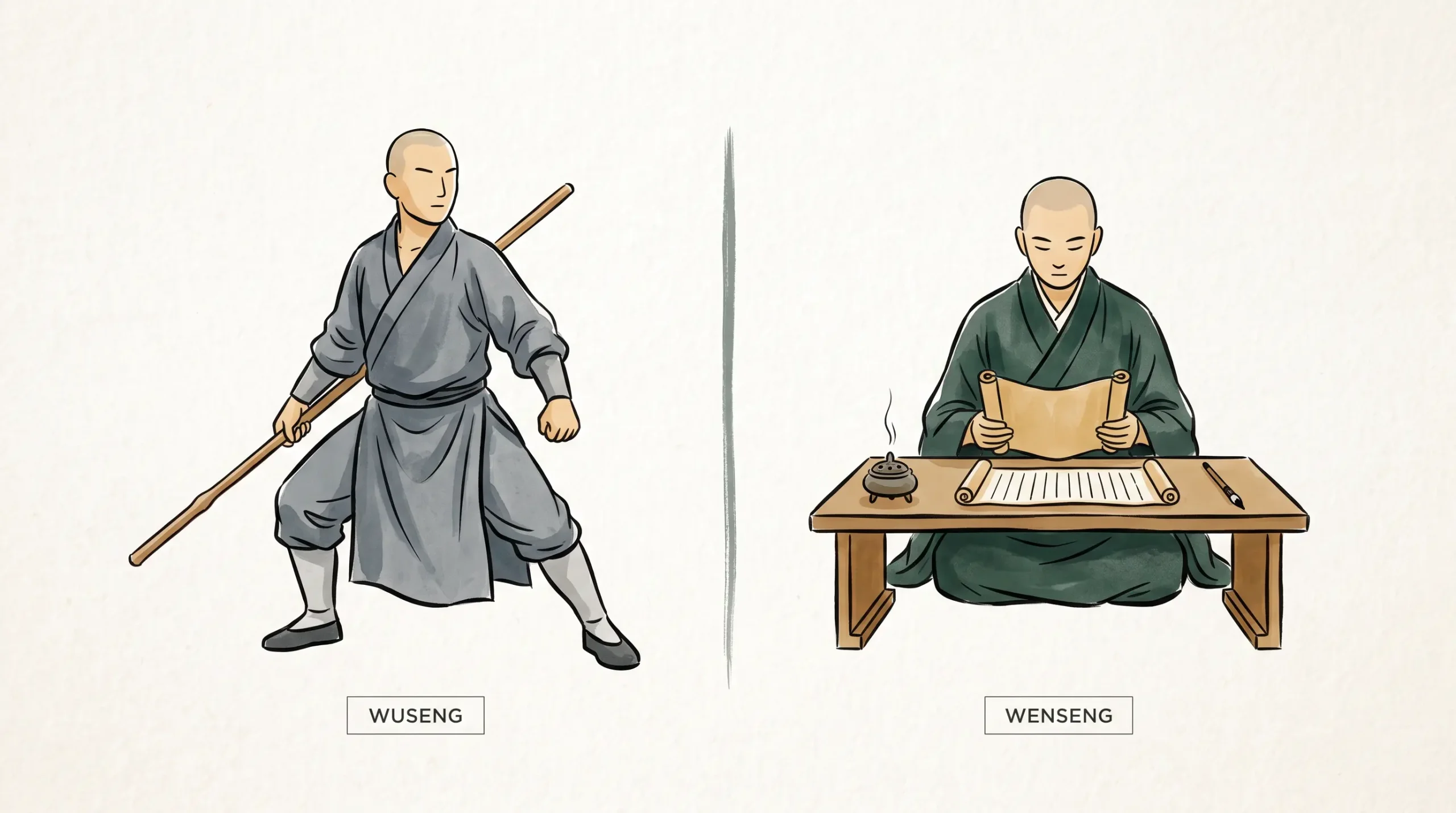
No. Shaolin distinguishes warrior monks (wuseng) from scholar monks (wenseng), and many residents spend more time on Chan meditation, chanting, and temple duties than on combat. Inside the temple the diet is traditionally vegetarian, though warrior monks have been described as following looser rules.
| Feature | Warrior monks (wuseng) | Scholar monks (wenseng) |
|---|---|---|
| Main focus | Martial training alongside Buddhist practice | Scripture study, ritual, and temple duties |
| Daily practice | Staff and empty-hand forms, conditioning, meditation | Sutra study, chanting, meditation |
| Diet tradition | Vegetarian in the temple; some accounts describe looser rules | Vegetarian under Buddhist precepts |
Role descriptions draw partly on training-academy sources, so read them as general patterns, not strict rules.
Myth #5: Every Shaolin Monk Is a Warrior Monk
Films turn every robe into a fighter, but the temple is a Buddhist monastery first. Meditation sits at the center of daily life, which is why Chan remains Shaolin’s religious identity. If you picture a monastery where everyone trains staff drills all day, you are picturing a set.
Do Shaolin Monks Eat Meat?
Inside the monastery, monks traditionally follow a vegetarian diet under Buddhist precepts. Some accounts describe warrior monks as more flexible, and community discussions on the topic are mixed. We treat that flexibility as tradition and hearsay, not settled law.
The real Shaolin skill is stillness. Start with Chan meditation supplies for your own daily sitting practice.
Movie Kung Fu vs. the Real Training Inside the Monastery
Mostly not the same thing. Shi Yanneng, a 32nd-generation Shaolin disciple, told Malay Mail on 07/09/2026 that films such as Jet Li’s Shaolin Temple drew more on modern competitive wushu than on the traditional martial arts practiced at the temple.
| Myth | Movie version | Historical record | Date | Source |
|---|---|---|---|---|
| 1. Bodhidharma invented kung fu | A wandering sage teaches monks to fight | He is tied to Chan Buddhism; the martial link spread through a novel | c. 527 arrival; novel serialized 1904 to 1907 | Henning; Shahar |
| 2. Fists came first | Bare-hand masters | The staff was the signature skill | Before the 16th century | Shahar via SCMP |
| 3. Qing burned the temple | Imperial troops raze Shaolin | No solid evidence; the documented fire was in 1928 | 1928 | Tang Hao; Henning; SCMP |
| 4. Self-defense only | Peaceful monks forced to fight | Organized fighting against bandits, rivals of the Tang, and pirates | 610; 618 to 621; 16th century | 728 stele; Shahar via SCMP |
| 5. Every monk fights | A temple full of warriors | Warrior and scholar monks have distinct roles | Long-standing tradition | Temple-affiliated academies |
| 6. Superhuman powers | Floating, impact-proof masters | Conditioning plus film staging, not supernatural ability | Modern cinema | Editorial assessment |
| 7. Screen style is Shaolin style | One flashy system on screen | Films lean on modern competitive wushu | 2026 interview | Shi Yanneng via Malay Mail |
Myth 6 is our own summary of the cinema record, not a quote from a single source.
Myth #6: Shaolin Masters Have Superhuman Powers
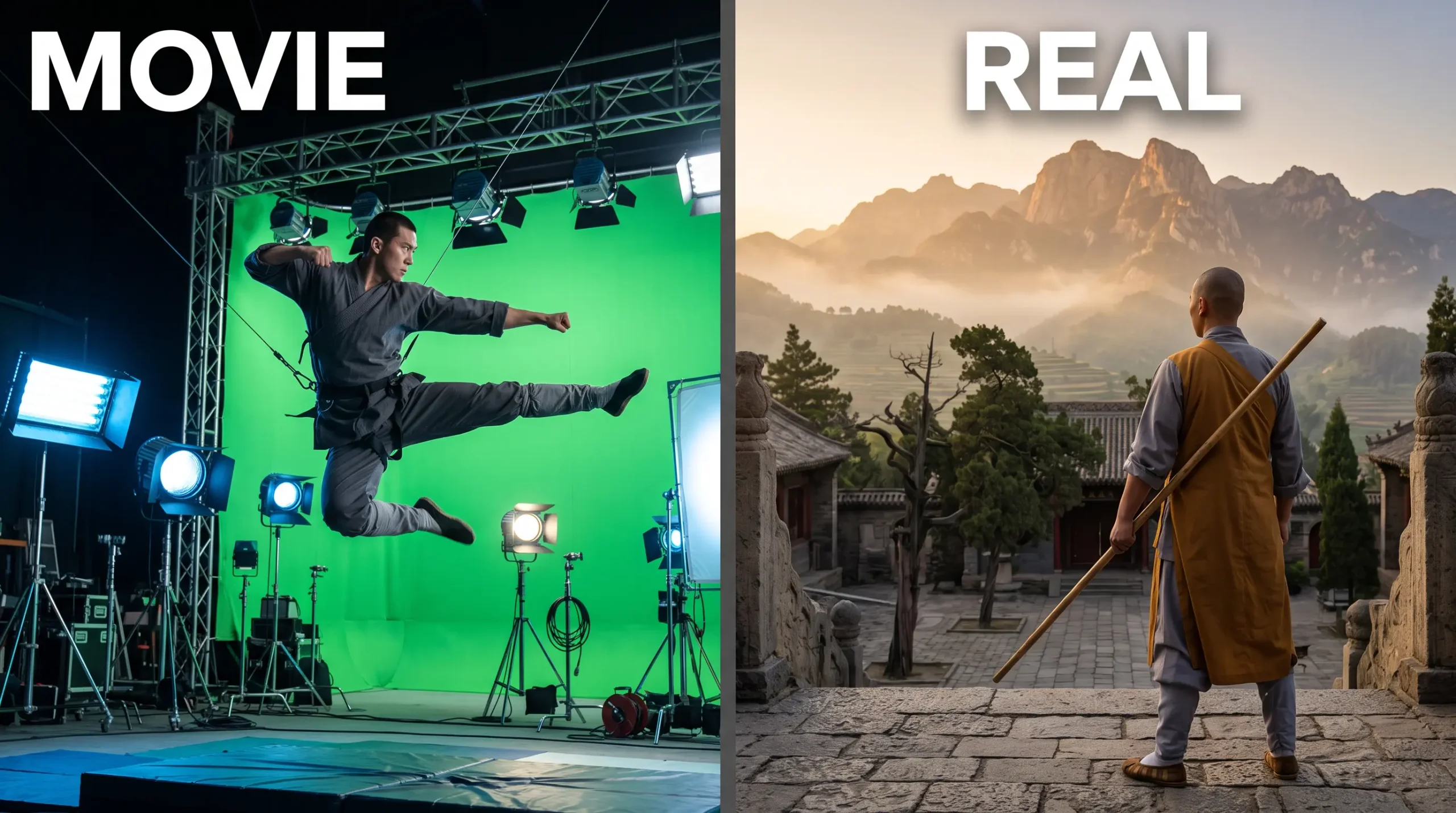
Screen feats rely on wires, mats, editing, and years of conditioning, not supernatural ability. Wire work gave the “wire-fu” genre its floating fights, and the audience never sees the rehearsals.
Please do not copy iron-head or board-breaking stunts from films. Film crews rehearse and use safety rigging that you will not have at home. If you want to train, find a qualified instructor first.
Myth #7: What You See on Screen Is Real Shaolin Kung Fu
Shi Yanneng says no action film has fully and authentically presented the Shaolin martial arts system. The 1982 film Shaolin Temple, starring Jet Li, helped bring worldwide attention to the monastery, but that attention came through a competitive-wushu lens. Enjoy the films as entertainment, and look elsewhere for the history.
The Counter-Myth: “Shaolin Is Fake Now”
Some popular videos, including one by martial artist Michael Jai White, argue that modern Shaolin performers are fake. That claim overcorrects. The buildings burned in 1928, but the monastery was rebuilt, historians such as Shahar document the tradition across centuries, and Chan practice continues there today.
Both statements can be true at once: modern wushu shows differ from older practice, and the monastery is still a real Buddhist institution.
How to Honor Shaolin Kung Fu Culture Without the Hollywood Filter
Start with the real history, then build a small daily practice. Read a serious academic account, learn about the UNESCO-listed Dengfeng monuments, and sit for 10 minutes of seated meditation before you attempt any martial arts.
Where Can You See Real Shaolin History?
Read Meir Shahar’s The Shaolin Monastery (University of Hawai’i Press, 2008) for the academic account. The documentary The Real Shaolin (2008) is a good companion for viewing. UNESCO inscribed the Historic Monuments of Dengfeng in 2010, a site that includes the Shaolin complex and its Pagoda Forest.
Choosing Shaolin-Inspired Pieces With Honest Claims
Ask for materials, sizes, and return terms before you buy anything Shaolin-inspired. If a seller claims official temple endorsement, ask for proof.
At ShaoLin Store, the Sterling Silver Dragon Ring shows how honest specs look. It is stamped 925 sterling silver, so you can verify the material instead of wondering about plating. Its adjustable open band fits US sizes 3.5 to 12, so gifting it needs no ring-size guesswork. It was priced at $169.95 on 10/31/2026 (regular $189.95). Orders ship free, arrive in the US in 5 to 10 business days, and come with a 60-day return window, which keeps the risk of trying a culture-inspired piece low.
For a desk or meditation corner, the Royal Ease Guanyin statue is solid copper and stands 8.9 inches tall. It gives a quiet visual anchor for sitting practice. ShaoLin Store describes the blessing on its pieces as a gesture of good intention, not a promise of luck, and not as official endorsement by the Shaolin Monastery.
In summary, Shaolin kung fu is a real tradition shaped by staffs, Chan meditation, and a hard history, and movies keep only the dramatic parts. Knowing the dates is the best defense against the next myth you hear.
Bring the real story home
Explore ShaoLin Store’s handmade Buddha and Guanyin statues for a meditation corner with honest specs.
Looking for something to wear? See the 925 sterling silver Chinese dragon ring blessed by Shaolin monks.
Frequently Asked Questions About Shaolin Kung Fu
Yes. The Shaolin Monastery was founded in 495 CE on Mount Song in Henan, and its documented martial history reaches back to at least 610. Movies exaggerate the style and the superpowers, not the tradition itself.
The staff. Historians, including Meir Shahar, note that Shaolin monks specialized in staff fighting until the 16th century, when empty-hand methods began to take over.
Yes. It was inscribed in 2010 as part of the Historic Monuments of Dengfeng in “The Centre of Heaven and Earth,” along with the nearby Pagoda Forest and other monuments.
Start with 10 minutes of seated meditation, the Chan core of Shaolin, before you attempt any acrobatics. Many beginners rush the physical side first, which is a common mistake. Pick one quiet spot at home and sit there every day for two weeks before adding anything else.
References
- The Shaolin Monastery: History, Religion, and the Chinese Martial Arts: Meir Shahar’s academic history of the monastery, covering the staff tradition and the origins of its martial reputation. University of Hawai’i Press
- Shaolin Temple: Encyclopedia overview of the monastery’s founding, history, and martial tradition. Encyclopaedia Britannica
- Historic Monuments of Dengfeng in “The Centre of Heaven and Earth”: Official World Heritage listing, inscribed in 2010. UNESCO World Heritage Centre
- Review of The Shaolin Monastery by Meir Shahar: Scholarly review of Shahar’s book and its argument about Shaolin’s martial history. Project MUSE