
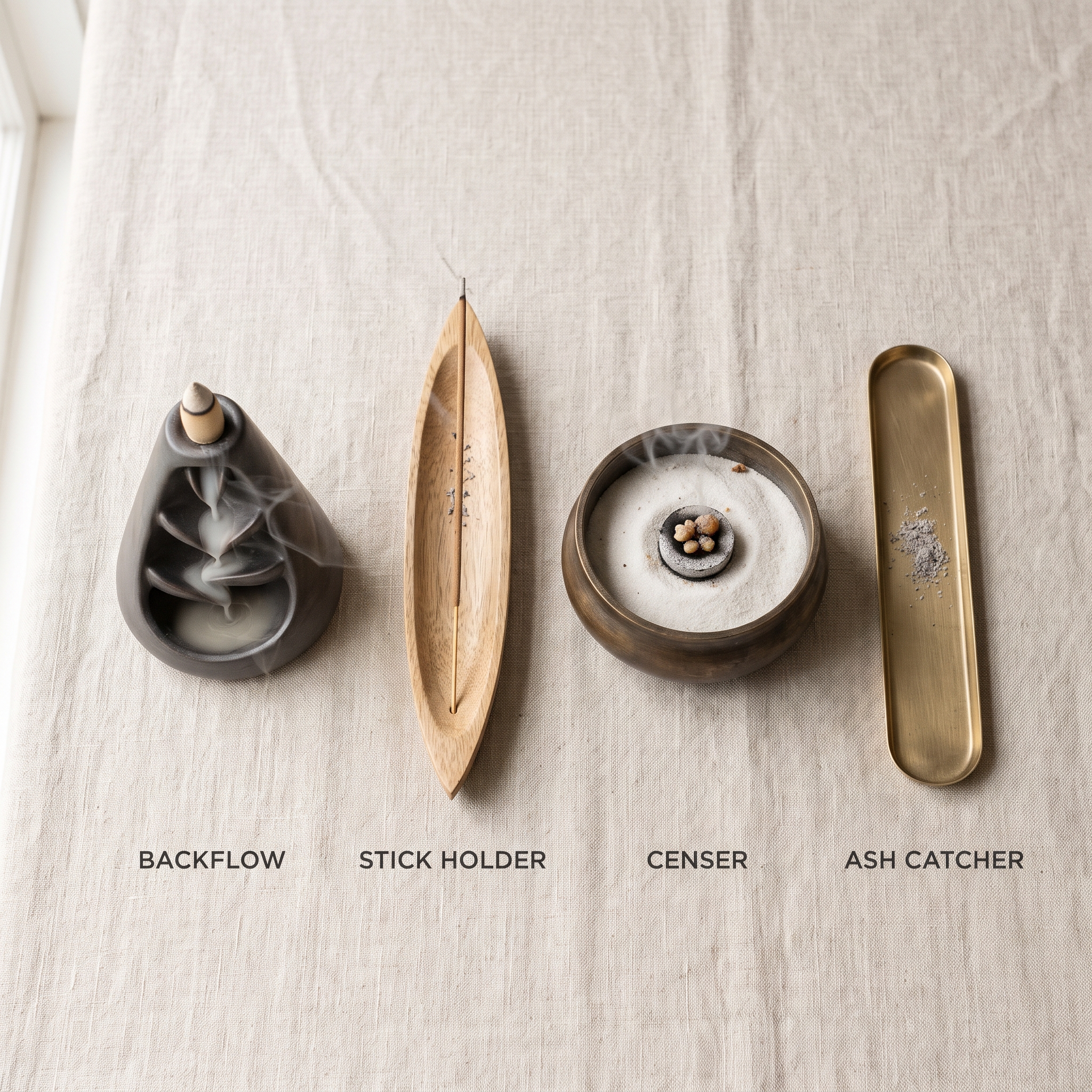
Pick your incense burner by the incense you burn. Backflow burners hold hollow cones, stick holders grip sticks, censers burn resin and powder, and ash catchers collect ash under any holder.
Mismatches cause most of the frustration. A solid cone in a backflow burner sends smoke upward, and a short tray under a long stick leaves ash on your desk.
This guide compares all four types on smoke path, ash control, burn time, cleanup, and price. The numbers come from published retailer ranges and NFPA fire-safety guidance. If you already know what you burn, browse handmade backflow and stick incense burners at ShaoLin Store.
What Are the Main Types of Incense Burners?
The four main incense burner types are backflow burners, stick holders, censers, and ash catchers. Backflow burners pull smoke downward from hollow cones. Stick holders grip one stick over a tray. Censers burn resin or powder on sand or charcoal. Ash catchers collect falling ash under any holder.
The 4-Way Comparison Table at a Glance
| Attribute | Backflow burner | Stick holder | Censer | Ash catcher |
|---|---|---|---|---|
| Best for | Hollow backflow cones | Stick incense | Resin and powder; sticks or cones in a sand bed | Any holder that drops ash |
| Smoke path | Flows downward and pools like a waterfall | Rises straight up | Rises from the bowl or charcoal | Follows the holder above it |
| Burn time | 15 to 30 minutes per cone | 35 to 60 minutes per stick | Depends on resin amount and charcoal | Same as the incense above it |
| Ash control | Ash stays at the cone’s base | Depends on tray length | Sand or ash bed holds it | Catches ash that misses the holder |
| Cleanup effort | Moderate: clear the smoke channel | Low: empty the tray | Moderate: sift ash, refresh sand | Low: wipe the tray |
| Typical price | $14.99 to $19.99 | $4.99 to $7.99 | Varies by material and size | Low-cost add-on |
| Best room | Still, draft-free rooms | Desks and daily routines | Ventilated ritual spaces | Any room where ash lands outside the holder |
| Clearance | 12 in from anything that burns | 12 in from anything that burns | 12 in from anything that burns | 12 in from anything that burns |
Burn times and prices are published retailer ranges (Aroma Paradise, COOPEACE, California Incense), not lab tests. Expect variation by brand and stick thickness.
Incense Holder vs. Incense Burner: Is There a Difference?
In everyday shopping the terms overlap. A holder usually supports a single stick and catches its ash. A burner is the broader term for any heat-safe vessel that holds burning incense.
A censer is a vessel for burning incense, often with a lid or a sand bed. The Catholic thurible swings on chains, while the Chinese xianglu (香炉) sits on an altar or table.
How Each Type Handles Smoke and Ash
Each burner type controls two things differently: where smoke goes and where ash lands. Those two factors decide how much cleanup you face.
Backflow Burners: Downward “Smoke Waterfall”
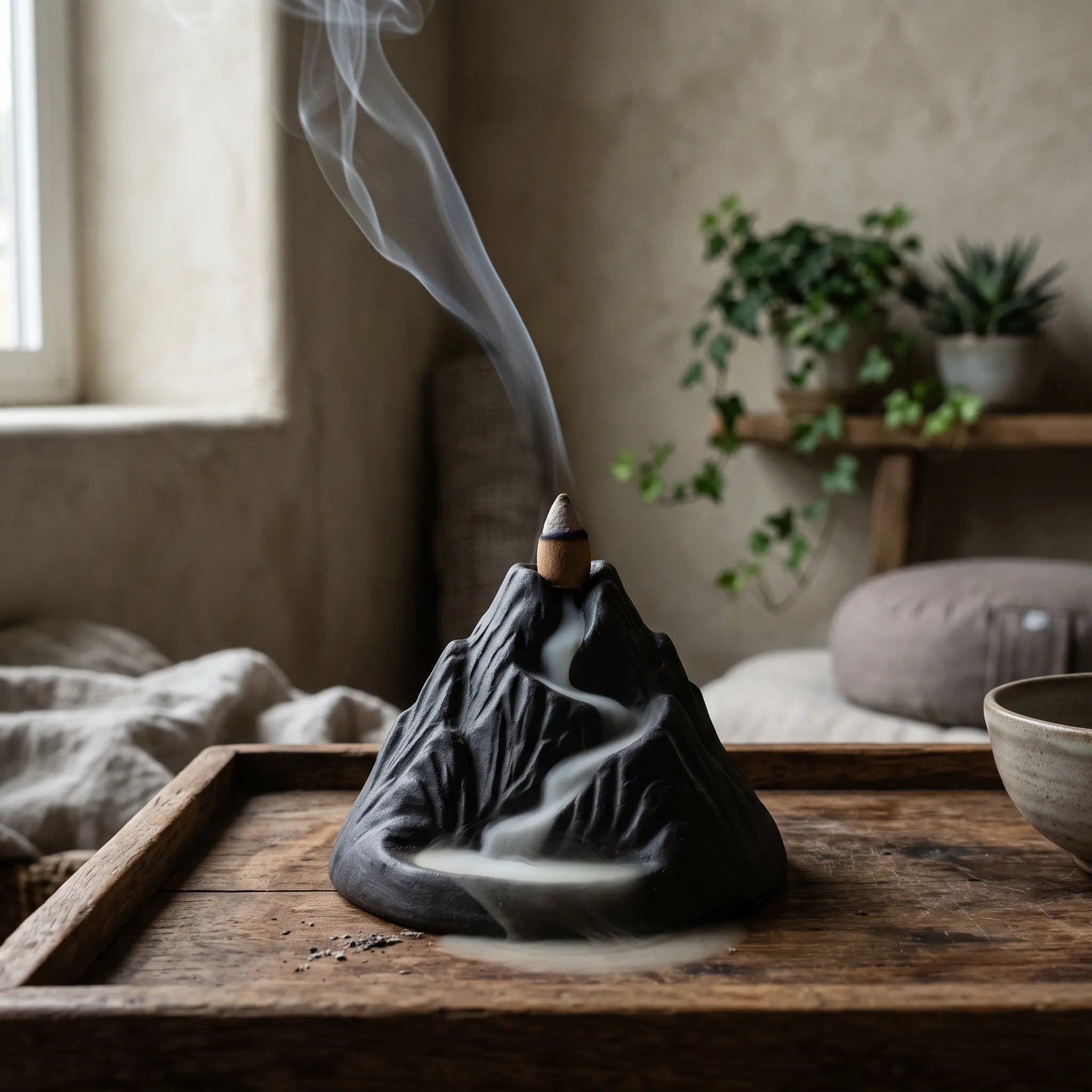
Backflow burners work only with backflow cones, which have a hollow channel that lets cooler smoke sink through the burner. The smoke then pools and spills over the edge like a waterfall. That slow, visible flow gives you a focal point that helps you settle into a meditation session.
A backflow cone burns 15 to 30 minutes and costs about $0.50 to $1.00 per cone. A stick costs about $0.20 to $0.50 (COOPEACE). You pay more per session for the visual effect.
The most common mistake is using a solid cone. Its smoke rises like any other cone, so you get no waterfall. Check that the package says “backflow” before you buy.
- Pro: a visible smoke effect that works as a decorative centerpiece.
- Pro: ash stays contained at the cone’s base.
- Con: smoke breaks easily in moving air, so it needs a still room.
- Con: it accepts only backflow cones. Browse our handmade incense collection and match the format to the burner.
Censers: Resin and Powder on Sand or Charcoal
Censers burn resin and powdered incense on a charcoal disc set in a bowl of sand or ash. The disc heats the resin without a flame, so the material releases its aroma slowly. A bowl censer needs about 2 inches of sand or natural ash as its base (Incense Warehouse).
One censer can also hold sticks or cones pushed into the sand. That flexibility means fewer holders to buy if you burn several incense formats.
- Pro: burns resin, powder, sticks, and cones in one vessel.
- Pro: the sand bed absorbs and holds ash.
- Con: charcoal discs get very hot. Set the censer on a heat-safe surface and handle discs with tongs.
- Con: the ash needs sifting, and the sand needs refreshing over time.
What Incense Burner Is Best for Sticks?
For stick incense, choose a holder whose ash catcher is at least as long as your stick, with a snug hole or clip that keeps the stick angled over the tray. Most sticks burn 35 to 60 minutes, and a basic stick holder costs $4.99 to $7.99.
Ash Catcher Length and Angle
An ash catcher is the tray or board under the stick that collects falling ash. Ash drops along the angle the stick leans, so a tray shorter than the stick can miss it. Your desk then collects the ash.
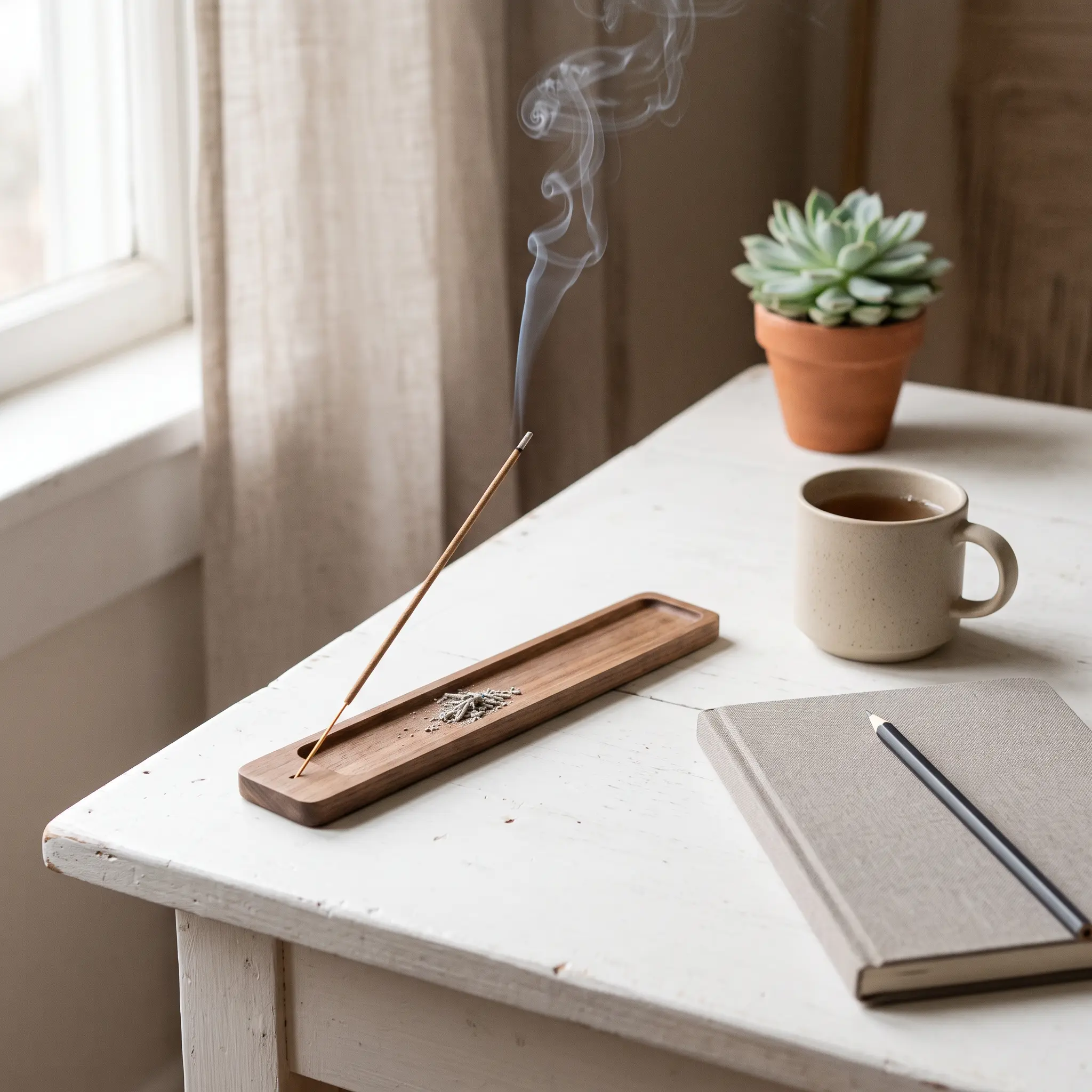
Hole fit matters as much as tray length. A loose hole lets the stick tip as it burns. A snug hole or clip holds the angle steady, so the ash lands on the tray.
One limitation: a tray that looks long enough in a product photo may be shorter than a full-length stick. Measure your sticks before you buy a holder.
Standalone Ash Catchers: A Low-Cost Upgrade
A standalone ash catcher is a narrow tray that sits under any holder. It fixes messy ash without replacing a holder you already like. Wood, brass, and ceramic versions all work, and each keeps hot ash off your furniture.
Which Burner Fits Your Space and Routine?
Match the burner to three things: the incense you already burn, how still the air is in that room, and how much cleanup you will do each week. Answer these three questions in order:
- What do you burn? Sticks point to a stick holder with an ash catcher. Hollow cones point to a backflow burner. Resin and powder point to a censer.
- How still is the air? A still room suits a backflow burner. A fan or open window breaks the smoke stream, so choose a stick holder or censer instead.
- How much cleanup will you do? Choose a stick holder with a long ash catcher for the least work. Accept some sifting if you want a censer.
| Scenario | Best type | Why it fits |
|---|---|---|
| Meditation corner | Backflow burner | The slow smoke flow gives you a visual focus. |
| Daily desk use | Stick holder with ash catcher | One stick lasts 35 to 60 minutes, and the tray keeps your desk clean. |
| Resin ritual | Censer | Charcoal heats resin and powder without a flame. |
| Gift | Ceramic backflow burner | The smoke effect is visible the moment it is lit. |
Meditation Corner and Yoga Space
A backflow burner suits a meditation corner because its smoke moves slowly and gives your eyes a place to rest. Keep the room free of fans and drafts so the stream holds. A stick holder is the easier choice if your space has moving air.
Pair your burner with meditation supplies for your practice corner to complete the setup.
Desk, Apartment, and Holiday Gifting
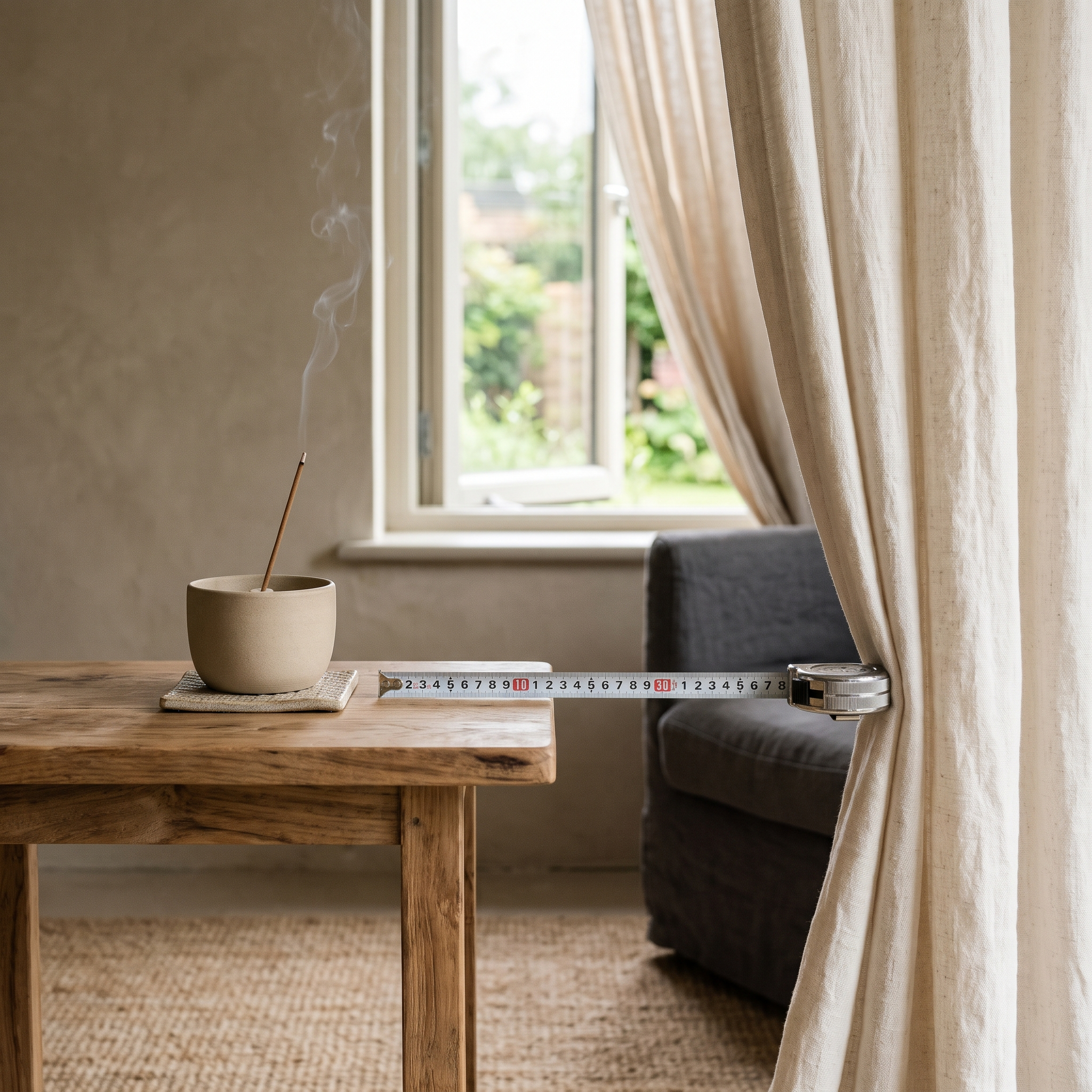
For a desk or small apartment, a stick holder with a long ash catcher gives the least cleanup. Crack a window, and keep the burner at least 12 inches from curtains and paper.
Hosting for Thanksgiving or shopping for a December gift? A ceramic backflow burner, typically $14.99 to $19.99 at retail, makes a gift that shows its effect right away.
Found your match? Shop handmade incense burners from ShaoLin Store, including backflow and stick styles.
Safety and Indoor Air: What to Know Before You Light
If you have kids, pets, or anyone with asthma at home, read this first: incense smoke releases fine particles, so ventilation and placement matter as much as the burner. These steps apply to every burner type.
Placement and Fire Safety Checklist
- Clearance: keep every burner at least 12 inches (30 cm) from anything that burns, such as curtains, paper, and bedding. NFPA’s candle safety guidance sets this spacing, and it is a sensible rule for incense too.
- Surface: use a stable, heat-safe surface. Ceramic and brass tolerate heat better than painted or thin wood.
- Supervision: put incense out before you leave the room or go to sleep.
- Kids and pets: place burners out of reach. Hot ash and charcoal can burn skin and paws.
Ventilation and Smoke Exposure
Burning incense adds fine particles (PM2.5) to indoor air. Jetter and colleagues tested 23 types of incense and reported emission rates from 7 to 202 mg per hour. They found indoor levels can climb well above the EPA’s outdoor air standard.
Crack a window or run an exhaust fan while you burn. In small rooms, burn one stick or cone at a time and keep sessions short. If you have a breathing condition, ask your doctor before burning incense indoors.
⚠️ Important Note: This guide covers burner types and general fire-safety practices. It is for educational purposes and is not medical advice. Burn times, prices, and emission figures vary by product and room.
Material, Care, and Cleanup
Ceramic and brass handle heat best for most home burners, while wood holders work for sticks but need a heat-safe tray under cones and resin. Your material choice also sets how often you clean.
Ceramic vs. Brass vs. Wood
- Ceramic: stable, tolerates heat well, and wipes clean. Browse handmade ceramic pieces for your incense setup.
- Brass: durable, but it conducts heat, so the outside can feel warm after a long burn.
- Wood: a good match for sticks. Place a heat-safe tray under any cone or resin.
Weekly Cleanup Routine
If you burn daily, clean weekly. Follow these steps:
- Cool down: wait until ash and charcoal are fully cool.
- Empty the tray: tip ash from the ash catcher into the trash.
- Clear the channel: on a backflow burner, wipe residue from the smoke channel with a dry cotton swab.
- Refresh the bed: sift a censer’s ash and top it up to about 2 inches.
The bottom line: Use a stick holder with an ash catcher for daily burning. Choose a backflow burner for a still room where the smoke effect is the point. Pick a censer for resin and powder. Add an ash catcher to any holder that spills. The right incense burner is the one that matches your incense, your room, and your cleanup habits.
Frequently Asked Questions
No. Regular cones are solid, so their smoke rises. Backflow cones have a hollow channel that lets cooler smoke sink through the burner, so buy cones labeled “backflow.”
A bowl censer filled with sand is the most versatile. It holds sticks, cones, and charcoal for resin. Backflow burners work only with backflow cones.
Studies show burning incense raises indoor fine-particle (PM2.5) levels. Burn it in a ventilated room, keep sessions short, and skip it around anyone with asthma or other breathing problems.
Start with the incense you already own. Sticks need a holder with a long ash catcher, and backflow cones need a backflow burner. Then explore our handmade incense burner collection to find one that fits your space.
Ready to Match Your Burner and Incense?
ShaoLin Store offers handmade incense to match every burner type in this guide.Shop Handmade Incense →
📚 References
- Characterization of emissions from burning incense: Jetter et al. (2002) measured particle and gas emissions from 23 incense types. Science of the Total Environment
- PM2.5 from incense burning in a California home: A residential study of particle emissions and how organic composition changes over time. PubMed Central
- Candle safety tips: NFPA guidance on clearance from combustibles and putting flames out before leaving a room. National Fire Protection Association
- Be safe with candles and incense: Local fire department advice on burning incense safely at home. Seattle Fire Department