

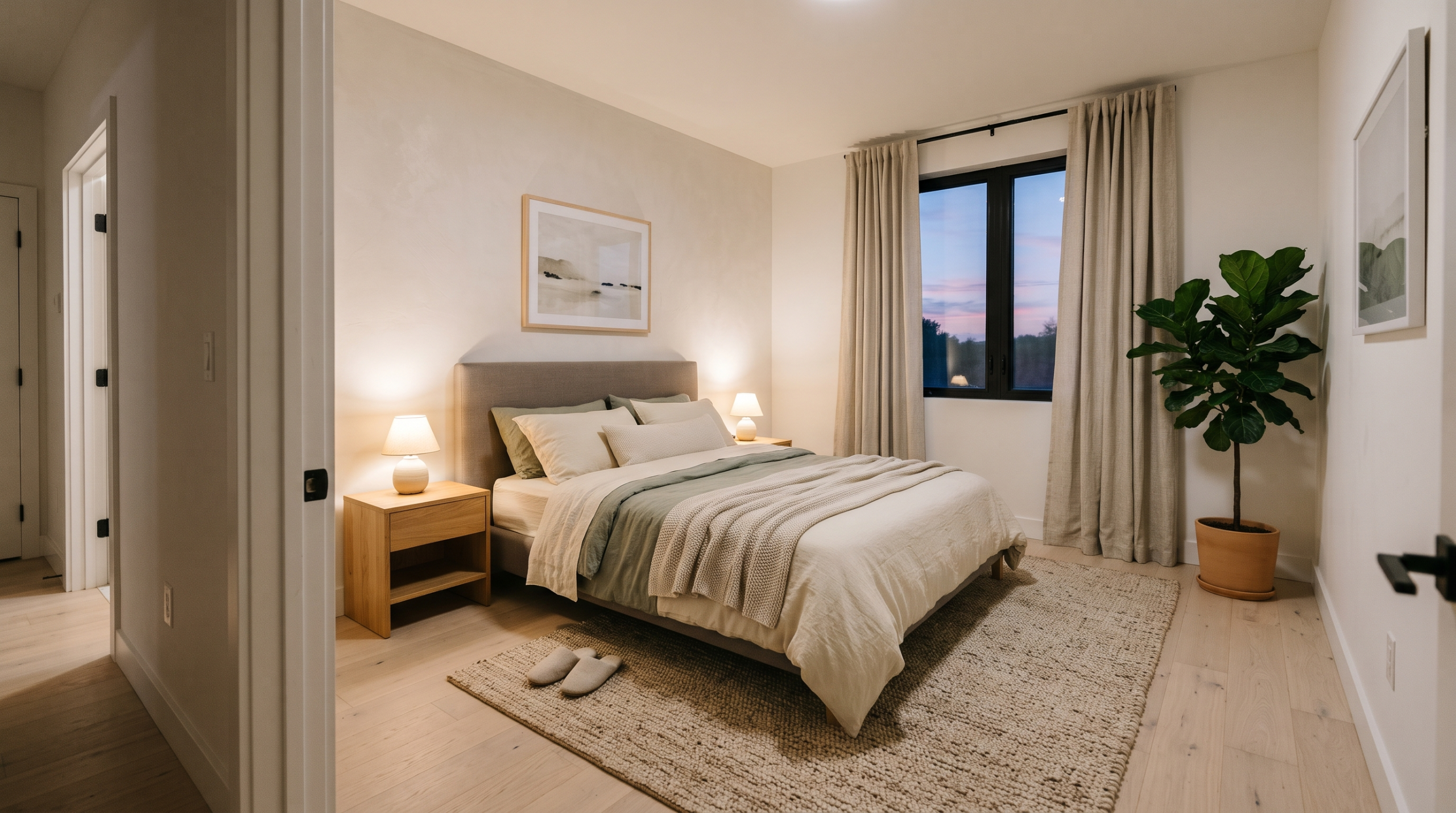
Your feng shui bedroom starts with one move: put the bed in the commanding position. That means diagonal from the door, with a solid wall behind your headboard. Feng shui, the traditional Chinese practice of arranging space for balance, treats this as the anchor for every other choice.
Below you’ll find 12 tips for a calmer, more restful sleep space, covering the bed, layout, color, light, and wind-down habits. You also get 3 popular myths you can ignore. Each tip includes a fix for rentals and small rooms, so you don’t have to rearrange everything.
At ShaoLin Store, we sell meditation tools, incense, and Buddhist statues, and we see how often online feng shui advice contradicts itself. So we sorted what the traditions agree on from what they argue about. Where feng shui and sleep science overlap, we say so. Where the evidence is thin, we say that too.
The term feng shui literally means “wind water.” Britannica traces it to the Book of Burial, attributed to Guo Pu (276 to 324 CE). It is a cultural practice, not a medical treatment.
The 12-tip checklist
- Put the bed in the commanding position.
- Back the headboard against a solid wall.
- Avoid the coffin position and heavy beams.
- Leave 18-24 inches beside the bed.
- Pair nightstands that sit lower than the mattress.
- Clear under the bed and move work gear out.
- Choose soft, earthy colors.
- Layer warm, dimmable light.
- Add natural materials and keep the room near 65°F.
- Light one stick of incense as a nightly signal.
- Keep one meaningful object, not a shelf of charms.
- Close the day with three minutes of stillness.
Estimated time: 1 to 2 hours for the layout changes, then about 5 minutes each evening. You’ll need: a tape measure, two warm-white bulbs, and a room thermometer.
Where Should Your Bed Go in Feng Shui?
In feng shui, the best bed placement is the commanding position: diagonal from the door, so you can see the entrance from your pillow without lying directly in line with it, with a solid headboard backed by a solid wall. The three tips below cover the bed, the wall behind it, and the foot of the bed.
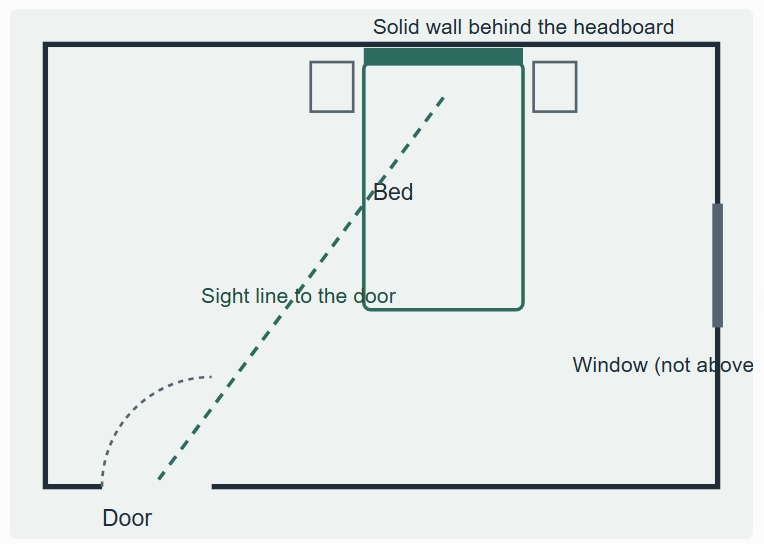
Tip 1: Put the Bed in the Commanding Position
Lie down and look up. If you can see the door without craning your neck, you’re in the commanding position. Your feet should not point straight out of it.
Traditionally, this spot is believed to feel safer because nothing approaches unseen. Sketch your room on paper and test two or three positions. Couples should check that both sides of the bed get the same view.
The most common mistake is angling the bed so it blocks a closet door. If the diagonal doesn’t fit, pick the spot where you can see the door and move on.
Tip 2: Back Your Headboard Against a Solid Wall
A solid wood or upholstered headboard set against a solid wall is the classic feng shui fix for feeling supported while you sleep. Traditional guidance favors solid headboards over slatted or open metal frames.
Keep the bed away from windows when you can. If the bed must sit under one, pick a headboard whose top sits below the window sill, and close heavy curtains at night.
Tip 3: Avoid the Coffin Position and Overhead Beams
Feet pointing straight out the door is called the “coffin position,” and most feng shui schools say to avoid it. They give the same advice for sleeping directly under a heavy ceiling beam. Practitioners say the name comes from the old custom of carrying the dead out feet first.
If you can’t move the bed, add a bench or footboard as a visual buffer. Under a beam, a fabric canopy softens the line overhead.
How to Arrange a Balanced Bedroom Layout
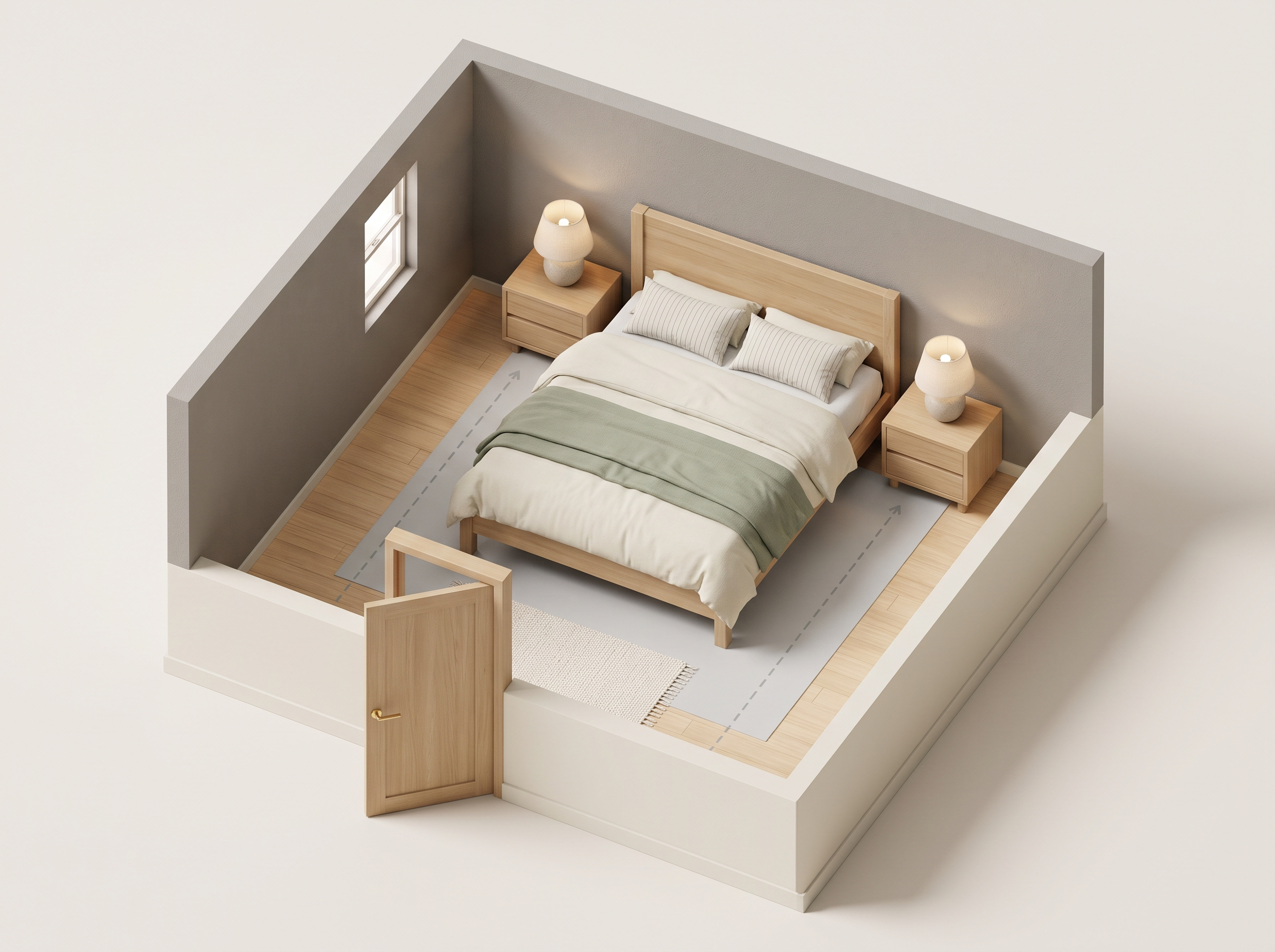
Three adjustments create a balanced layout around the bed:
- Side clearance: leave 18-24 inches of walkway on each side of the bed.
- Matching nightstands: use two similar tables, each lower than the mattress top.
- Clear floor: keep the space under the bed empty or limited to soft linens.
Tip 4: Leave 18-24 Inches on Both Sides of the Bed
Leave 18-24 inches of walkway on each side. Feng shui treats two open sides as a way to let energy, and both partners, move freely. Interior design guides give similar numbers, so this is also one of the easiest rules to follow.
In a small room, buy narrower nightstands before you push one side of the bed against the wall.
Tip 5: Pair Nightstands That Sit Lower Than the Mattress
Two bedside tables of similar size, each a little lower than the top of your mattress, create the visual symmetry feng shui associates with balance. Similar is enough. They don’t need to be identical.
Matching lamps help too. If you only have room for one table, add a wall sconce on the other side to even out the light.
Tip 6: Clear Under the Bed and Keep Work Gear Out
Feng shui practitioners treat the space under the bed as part of your sleep area, so keep it empty or limited to soft linens. Move laptops, treadmills, and paperwork out of the room if you can.
Charge your phone across the room or outside the bedroom. This also fits mainstream sleep-hygiene advice. If a desk must stay, hide it behind a screen or curtain at night. Clearing the floor before Thanksgiving guests arrive is a good excuse to start.
What Colors, Light, and Air Help a Room Feel Restful?
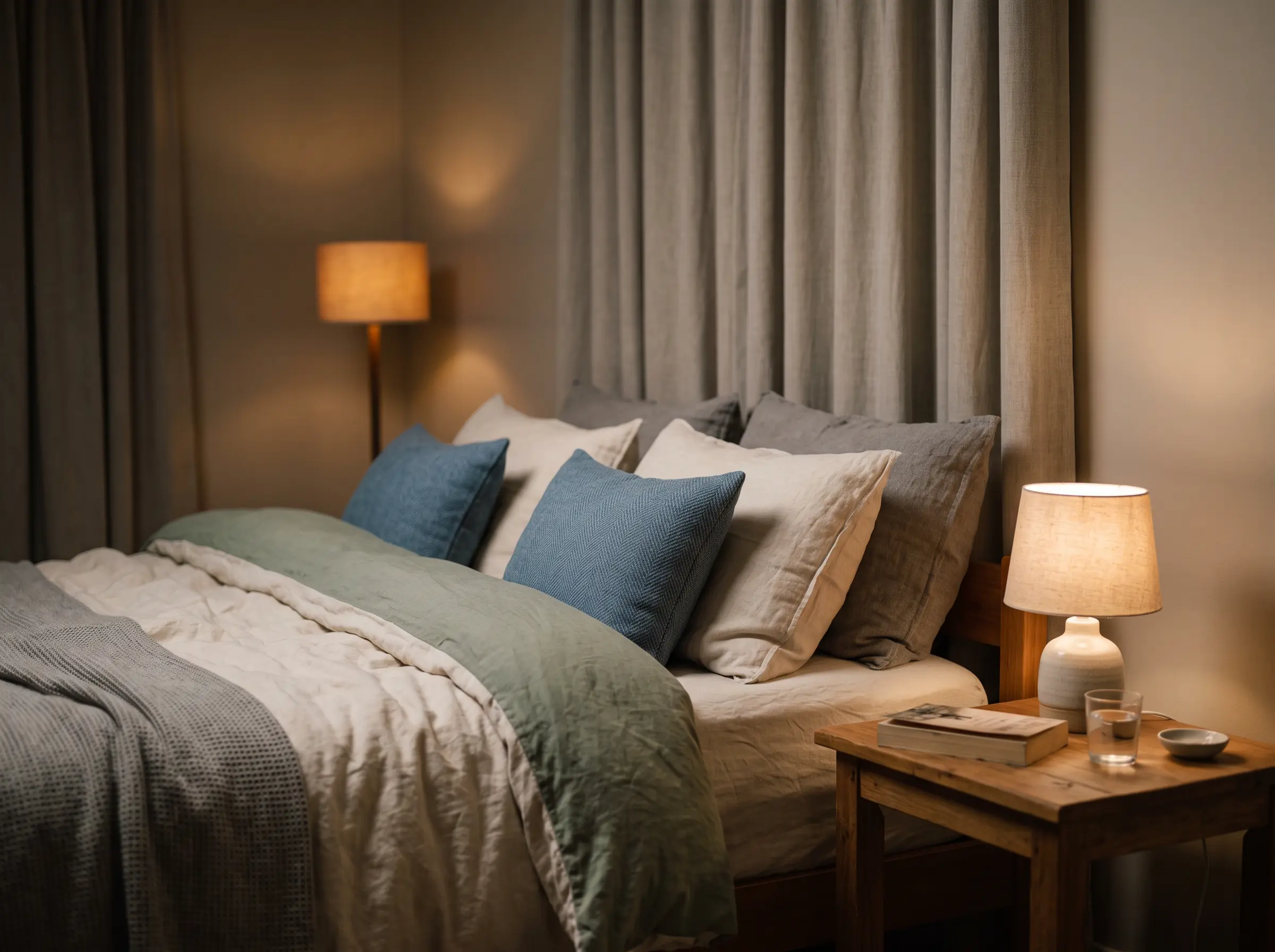
Feng shui favors a yin, restful bedroom built from soft earth tones, layered warm lighting, natural materials, and a cool room, and the Sleep Foundation puts the best sleep temperature at approximately 65°F (18.3°C). Yin is the quiet, dark, cool side of the traditional yin-yang pair.
Tip 7: Choose a Soft, Earthy Color Palette
Creams, warm grays, soft blues, and muted greens are the go-to feng shui bedroom colors because they read as calm, yin tones. Avoid big doses of bold red or black. A red throw pillow is fine, but a red wall is a lot.
Renting? Change the bedding and rug instead of the paint.
Tip 8: Layer Warm, Dimmable Light
Swap one bright overhead light for two or three low, warm-white sources, and add blackout curtains so the room gets truly dark at night. Soft lighting keeps the yin mood going after sunset.
The National Sleep Foundation recommends a dark, quiet, cool bedroom, so this tip lines up with sleep guidance as well as tradition. Put lamps on dimmers, or buy bulbs labeled warm white.
Tip 9: Bring In Natural Materials and Cool, Fresh Air
Natural textures such as wood, cotton, and linen echo feng shui’s five elements, and a room near 65°F helps your body cool down for sleep. The five elements are wood, fire, earth, metal, and water, the traditional categories feng shui uses to balance a space.
The Sleep Foundation says most doctors recommend a thermostat setting of 65 to 68°F. The National Sleep Foundation gives a range of 60 to 67°F. In winter, lower the thermostat at bedtime and open a window for a few minutes.
If you’ve had trouble sleeping for weeks, a room makeover is not a substitute for talking to a doctor.
How Can I Make My Bedroom Feel Calmer Before Sleep?
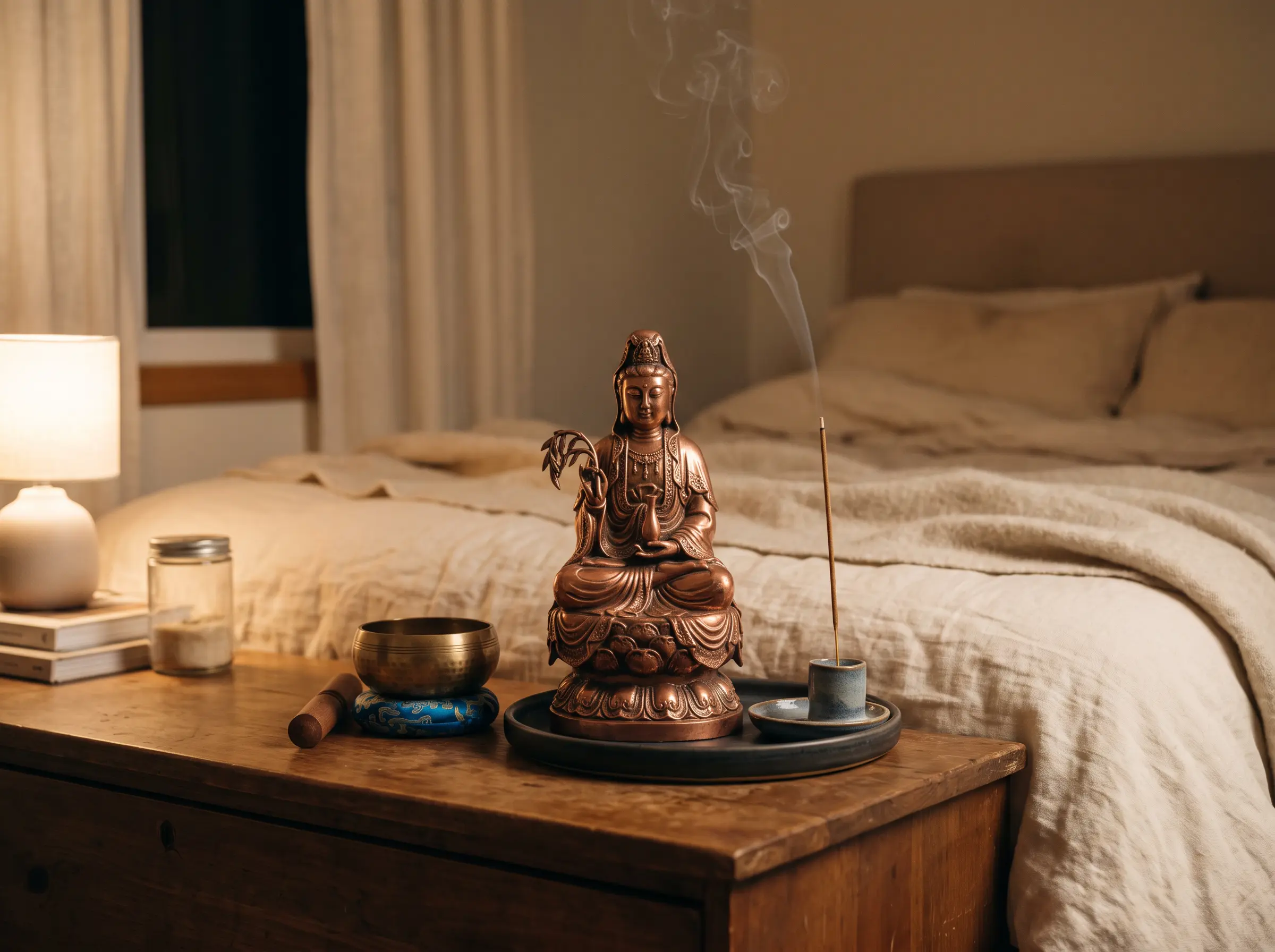
Feng shui arranges the room, and a short wind-down ritual helps you actually arrive in it. Buddhist meditation traditions, including Chan, commonly use simple cues like incense, a bell, and a few minutes of stillness to mark the shift from doing to resting. ShaoLin Store’s meditation collection for a quiet wind-down corner gathers these tools in one place.
Tip 10: Mark the End of the Day With One Stick of Incense
Light one stick while you tidy the nightstand, sit for three minutes, and put it out before you get into bed. Use handmade incense for a short evening ritual in a proper holder that catches the ash.
Treat it as a signal that the day is over, not as a cleanse. Never leave incense burning while you sleep, and skip it if anyone at home has asthma.
Tip 11: Keep One Meaningful Object, Not a Shelf of Charms
Instead of filling the room with lucky trinkets, choose one object that reminds you to slow down. A small Guanyin, the bodhisattva of compassion, is a traditional choice.
The 8.9-inch solid copper Royal Ease Guanyin statue weighs 2.16 lb and was priced at $388.95 at the time of writing. Real metal gives it a steady, grounded look. It fits on a dresser, so you get one quiet focal point without crowding the room.
The product notes suggest displaying it at eye level or on a shelf about 3 feet high, away from floors, bathrooms, and kitchens. The brand states each statue is blessed by Shaolin monks. A blessing is a gesture of good intention, not a promise of better sleep, luck, or health.
Tip 12: Close the Day With Three Minutes of Stillness
Sit on the edge of the bed, strike a singing bowl once, and let the sound fade before lights out. For a sound cue, browse singing bowls for a one-strike pause. Or skip the bowl and count ten slow breaths.
These rituals build a calm routine. They aren’t a treatment for insomnia or anxiety.
Start small. One stick of incense and one meaningful object are enough for a wind-down corner. Add the sound cue only if it feels natural.
3 Feng Shui Myths to Ignore
Three feng shui bedroom myths to ignore: all mirrors are bad, plants and water art ruin the room, and lucky objects fix sleep.
| Myth | What’s actually true | Source |
|---|---|---|
| Any mirror is bad | Most schools object only to a mirror that reflects the bed. The BTB school suggests one to show the door when the bed can’t face it. | Anjie Cho, Castlery |
| Plants and water paintings ruin the room | Plants matter only if they block light or movement. The traditional caution targets real water features. | Joey Yap (Tatler Asia), Marlyna Consulting |
| A lucky object fixes sleep | There is no evidence feng shui itself makes a bedroom healthier. | Medical News Today |
Myth 1: “Any Mirror in the Bedroom Is Bad Feng Shui”
Not quite: most schools only object to a mirror that reflects you in bed, and the BTB school actually recommends a mirror when your bed can’t sit in the commanding position. Anjie Cho, who teaches BTB feng shui, uses a mirror to show the door in that case.
Other practitioners prefer no mirrors at all. In practice, move the mirror inside a closet door or onto a side wall where it can’t reflect the bed.
Myth 2: “Plants and Water Paintings Ruin Bedroom Energy”
Feng shui consultant Joey Yap says plants don’t change a bedroom’s feng shui unless they block light or movement. The traditional caution about water applies to real water features, such as a fountain or fish tank. Yap advises keeping those out of the bedroom.
Schools disagree about pictures of water. If a framed seascape makes you uneasy, move it. Otherwise, a healthy plant that stays out of your walkway is fine.
Myth 3: “The Right Lucky Object Will Fix Your Sleep”
No object can do the work of a good layout and good sleep habits. Medical News Today notes there’s no evidence feng shui itself makes a bedroom healthier, and research on its effects is limited.
The Guanyin in Tip 11 is a reminder to slow down, not a charm. We sell it as a meaningful object, and we don’t promise results.
Quick Answers: Bedroom Energy Questions
Some schools match bed direction to your personal Kua number, but advice conflicts. Even popular sources disagree on north versus south. Get the commanding position right first. Direction is fine-tuning, not a must.
Prioritize the commanding position and at least one clear side of the bed, then cut visual clutter. Use narrow nightstands, wall-mounted lights, and nothing under the bed. Start with Tips 1, 4, and 6 tonight, because they make the biggest difference in tight spaces.
Common red flags are a bed in line with the door, a mirror reflecting the bed, clutter under the bed, and work or exercise gear in view. Fix the bed position first. Most other issues are quick swaps.
In summary, a calmer feng shui bedroom comes down to a few steady habits: the commanding position, clear space around the bed, soft color and light, and a short evening ritual. Pick one tip and try it tonight.
Build your wind-down corner
Pick one tip to try tonight, then explore meditation tools, incense, and statues for a quieter end to the day.Explore the Meditation collection
Important note: This article shares traditional feng shui practices and general sleep-environment guidance for informational purposes only. It is not medical advice. If you have ongoing sleep problems, anxiety, or other health concerns, talk to a licensed healthcare provider.
References
- Feng shui, definition and origins: overview of the term “wind water” and the Book of Burial. Encyclopaedia Britannica
- Best temperature for sleep: the 65°F (18.3°C) figure and the 65 to 68°F thermostat range. Sleep Foundation
- Sleep tips: guidance on a dark, quiet, cool bedroom and the 60 to 67°F range. National Sleep Foundation
- Feng shui tips for the bedroom: benefits, limits, and the state of the evidence. Medical News Today