
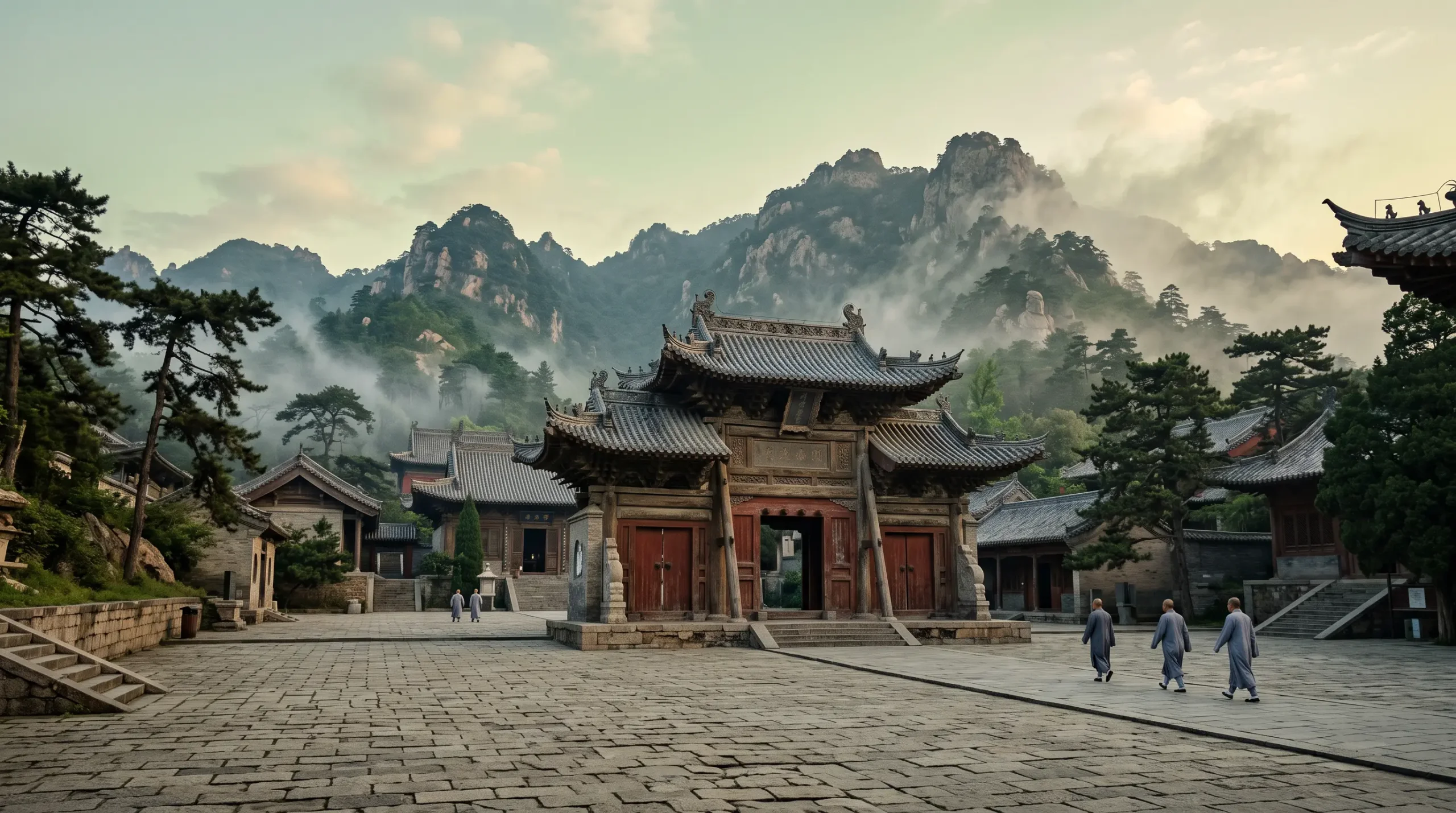
Shaolin Temple history spans 1,500 years. The monastery was founded in 495, burned in 1928, revived by a 1982 film, and shaken in 2026 when its former abbot was jailed. At ShaoLinStore, we checked the records so you can tell fact from legend. You will see which stories hold up, which do not, and what you can still visit today.
The short answer: Shaolin Temple history in seven dates
- 495Emperor Xiaowen founds the temple for the Indian monk Batuo.
- 621Monks help Li Shimin defeat the warlord Wang Shichong.
- 1553Warrior monks win a battle against coastal pirates.
- 1928Troops under Shi Yousan set the temple on fire.
- 1982Jet Li’s film The Shaolin Temple sparks a national craze.
- 2010UNESCO lists the temple complex as World Heritage.
- 2025–26Shi Yinle becomes abbot; his predecessor gets 24 years in prison.
What Is the Shaolin Temple, and Why Does Its History Matter?
The Shaolin Temple is a Chan Buddhist monastery at the foot of Mount Song in Henan, China. Chan is the meditation school that Japan calls Zen. Many people call Shaolin the birthplace of Chan and the cradle of Shaolin kung fu.
The name Shaolin means “Shaoshi Mountain woods.” The temple stands near the city of Dengfeng.
The history matters because much of what people “know” about Shaolin was written down centuries after the events. The key takeaway is that the documented record is shorter than the legends, and often more interesting.
| Entity | Attribute | Value |
|---|---|---|
| Shaolin Temple | Chinese name | 少林寺 (Shàolín Sì) |
| Shaolin Temple | Tradition | Chan (Zen) Buddhism |
| Shaolin Temple | Location | Mount Song, near Dengfeng, Henan |
| Shaolin Temple | Founded | 495 CE |
When and Why Was the Shaolin Temple Founded?
The Shaolin Temple was founded in 495 CE when Emperor Xiaowen of the Northern Wei dynasty ordered a monastery built for the Indian monk Batuo. Batuo, also known as Buddhabhadra, became its first abbot (the head monk).
The purpose was scholarly, not martial. Batuo’s community translated and taught Buddhist scriptures. Two of his early students, Huiguang and Sengchou, became well-known monks. Some sources credit both with unusual physical skill.
| Entity | Attribute | Value |
|---|---|---|
| Emperor Xiaowen | Role | Patron who ordered construction |
| Batuo | Role | First abbot, scripture teacher |
| Shaolin Temple | Year founded | 495 CE |
| Shaolin Temple | Original purpose | Translation, meditation, teaching |
Was Shaolin Founded in 477, 495, or 497 CE?
Most historians date the founding to 495 CE, and that is the date this guide uses. You may also see 477 or 497 online. Those dates lack the same documentary support, so treat them as variants rather than rivals. The monk-biographer Daoxuan recorded the temple’s origins in a collection of monk biographies in 645.
What Did Bodhidharma Actually Do at Shaolin?
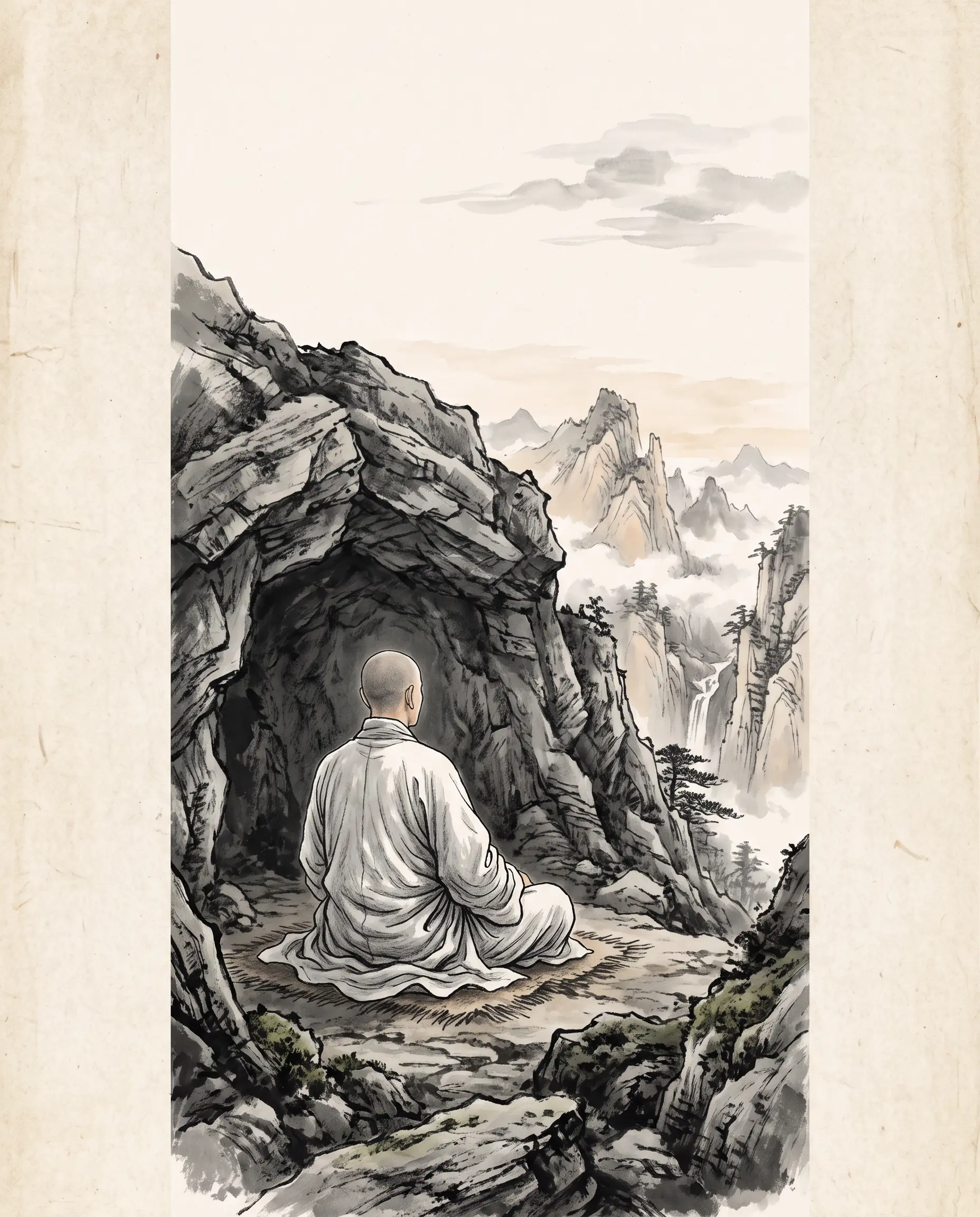
According to tradition, Bodhidharma reached Shaolin around 527 CE and meditated facing a cave wall for nine years. He was an Indian monk later honored as the first patriarch (founding teacher) of Chan in China. His cave sits on Wuru Peak, above the temple.
Here is what you need to know: this story is tradition, not proven history. The surviving accounts were written long after his lifetime. Still, the link is old. A stele dated 728 places “Da Mo,” his Chinese name, on Mount Song. A stele is a carved stone tablet.
| Entity | Attribute | Value |
|---|---|---|
| Bodhidharma | Traditional arrival | About 527 CE |
| Bodhidharma | Wall meditation | 9 years |
| Bodhidharma | Title | First Chan patriarch in China |
| Damo Cave | Location | Wuru Peak, above the temple |
Who Was Huike, and Why Did He Cut Off His Arm?
Huike, the Second Patriarch of Chan, is said to have cut off his left arm to prove he was serious about learning from Bodhidharma. In the usual telling, Bodhidharma first refused him. The act won him a place as a student.
The Japanese painter Sesshū Tōyō painted the scene in 1496 on a hanging scroll nearly 2 m tall. Japan ranks the work a National Treasure. It shows how far the legend traveled.
Did Bodhidharma Really Invent Shaolin Kung Fu?
Almost certainly not. The earliest text that links Bodhidharma to martial arts was written in 1624, more than a thousand years after he lived.
That text is the Yijin Jing (“Sinews Changing Classic”), a health-exercise manual. A Daoist writing under a pen name claimed to have discovered it. Scholars have long noted its errors.
The idea spread widely after a novel, The Travels of Lao Ts’an, ran as a serial from 1904 to 1907. Writings from at least 250 years earlier mention both Bodhidharma and martial arts, yet never connect them.
To put it simply, the “Bodhidharma invented kung fu” story is a later invention. The link between Chan practice and martial training is real, but it grew inside the monastery much later.
How Did Shaolin Monks Become Warrior Monks?
Shaolin monks first appear fighting in 621 CE, when they helped the future Tang emperor Li Shimin defeat the warlord Wang Shichong. A stele dated 728 is the oldest evidence.
The stele records two events. Around 610, monks defended the monastery from bandits. In 621, they retook the Cypress Valley Estate, a farm holding the temple had lost, and captured Wang’s nephew. The Tang court then granted Shaolin its patronage.
| Entity | Attribute | Value |
|---|---|---|
| Shaolin Monastery Stele | Erected | 728 CE |
| Bandit defense | Year | About 610 CE |
| Aid to Li Shimin | Year | 621 CE |
| Result | Reward | Tang royal patronage |
Is the Story of the Thirteen Shaolin Monks True?
Partly. The 728 stele confirms that Shaolin monks fought in 610 and 621, but it says nothing about martial training or a Shaolin fighting style. Tradition counts thirteen monks who helped Li Shimin. The 1982 film dramatized this episode.
Historian Meir Shahar adds an important point. Between the 8th and 15th centuries, no surviving source documents Shaolin monks in combat.
Why Was the Ming Dynasty Shaolin’s Martial Golden Age?
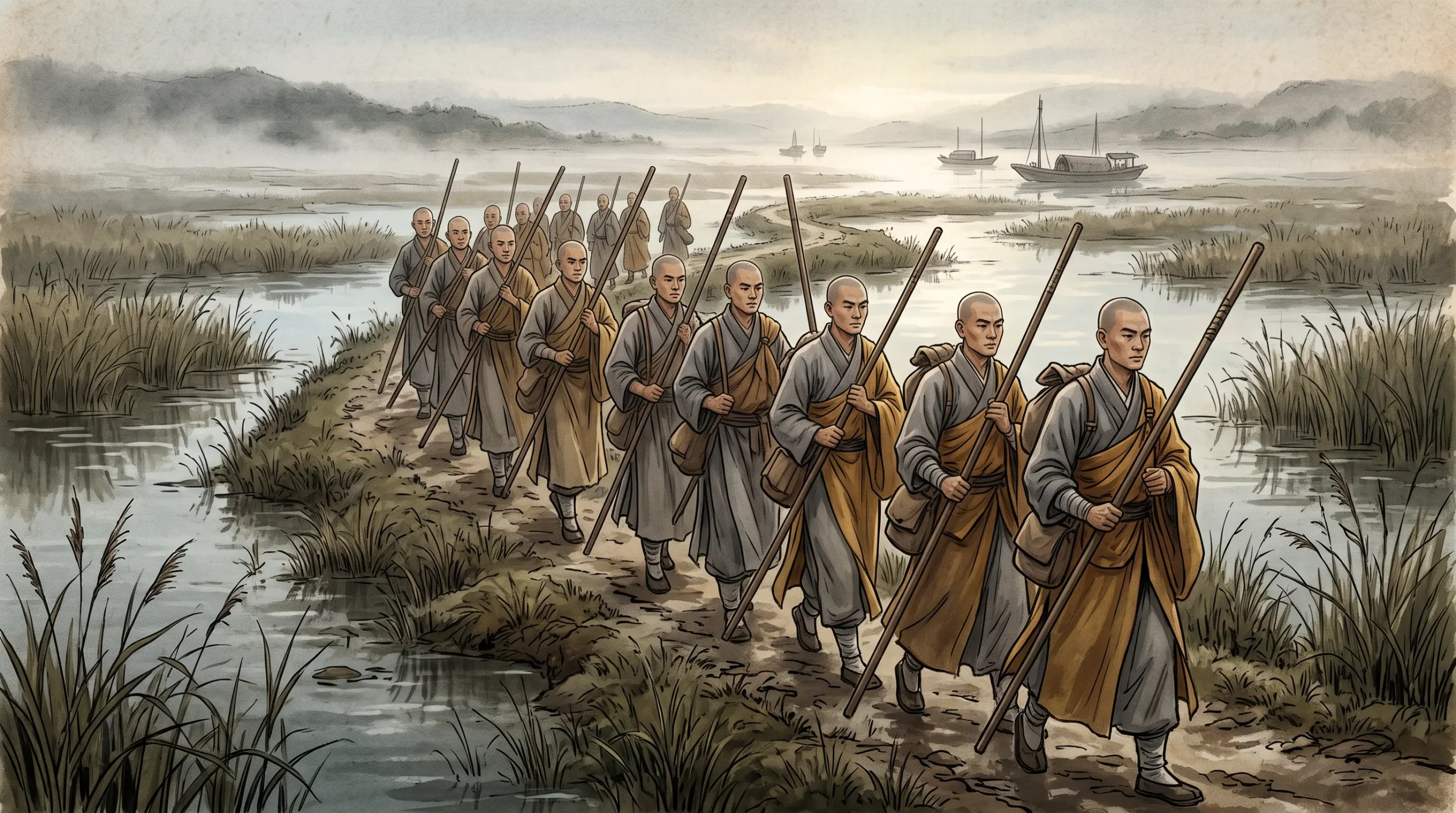
Shaolin’s martial fame took shape in the Ming dynasty (1368–1644). At least 40 surviving sources from the 16th and 17th centuries describe monks practicing martial arts.
The best-known event is the battle of Wengjiagang on 21 July 1553. There, 120 warrior monks led by the monk Tianyuan defeated a band of wokou, the pirates who raided China’s coast. Sources report more than 100 pirate casualties against four monk losses.
Around 1560, the general Yu Dayou visited Shaolin and found its fighting disappointing. He took two monks south and taught them staff fighting for three years. Shaolin’s first surviving fighting manual, on the staff, was written around 1610 and published in 1621.
| Entity | Attribute | Value |
|---|---|---|
| Battle of Wengjiagang | Date | 21 July 1553 |
| Wengjiagang monks | Number / leader | 120 monks / Tianyuan |
| Yu Dayou’s visit | Year | About 1560 |
| Shaolin staff manual | Written / published | About 1610 / 1621 |
The alliance with the Ming had a cost. Rebel forces led by Li Zicheng sacked the monastery in 1641.
What Happened to the Shaolin Temple Under the Qing Dynasty?
Under the Qing dynasty (1644–1911), Shaolin received imperial honors, such as the Kangxi Emperor’s 1704 tablet bearing the temple’s name. Yet the court still distrusted armed monks. Shahar notes that Qing rulers suspected the monks of rebellion.
Bottom line: the Qing era mixed royal favor with political suspicion. The temple survived, but its fighting reputation faded from official view.
Did the Qing Really Burn the Shaolin Temple?
No reliable historical record confirms that the Qing burned Shaolin. The tale of five surviving “Elders” and a Southern Shaolin temple in Fujian is legend. Its dates and places change from one telling to the next.
The story matters anyway. Several southern kung fu lineages, such as Hung Gar and Wing Chun, trace their roots to it. Treat those claims as lineage lore, not as evidence about the Henan monastery.
How Was the Shaolin Temple Destroyed in the 20th Century?
On 15 March 1928, troops under the warlord Shi Yousan set fire to the Shaolin Temple. The blaze reportedly burned for more than 40 days and destroyed much of the complex and its library.
The loss still shapes the story today. Many early records are gone, so historians must reconstruct parts of Shaolin’s past from stone tablets and outside sources. When the temple was rebuilt, architects interviewed elders who remembered the old layout. The Cultural Revolution (1966–1976) brought further hardship.
| Entity | Attribute | Value |
|---|---|---|
| Shaolin Temple fire | Date | 15 March 1928 |
| Shi Yousan’s troops | Role | Set the fire |
| Fire | Duration (reported) | 40+ days |
How Did a 1982 Jet Li Film Revive the Shaolin Temple?
The 1982 film The Shaolin Temple, starring a young Jet Li, turned a quiet monastery into a national tourist destination. Tickets cost about 10 fen (CNY 0.1), and mainland box office reached roughly CNY 161 million. Estimates of how many people saw it range from about 300 million to 500 million.
Visitors poured in, and martial-arts schools grew nearby. The best known is the Tagou Martial Arts School, founded in 1978. In 1983, the national government listed Shaolin among China’s key Buddhist temples.
In summary, one film did what centuries of royal patronage had not. It made Shaolin a household name.
What Is the Modern Shaolin Monastery Like Today?
Today’s Shaolin Temple is a working Chan monastery led by Abbot Shi Yinle, who took office on 29 July 2025. He replaced Shi Yongxin, abbot since 1999, who was nicknamed the “CEO Monk” for running the temple like a business.
The temple announced an investigation into Shi Yongxin on 27 July 2025. The Buddhist Association of China revoked his ordination certificate the next day. On 29 May 2026, the Xinxiang Intermediate People’s Court sentenced him to 24 years in prison and fined him CNY 3.5 million. The court found that he embezzled more than CNY 131 million between 2003 and 2025. He said he would not appeal.
| Entity | Attribute | Value |
|---|---|---|
| Shi Yongxin | Abbot tenure | 1999–2025 |
| Shi Yongxin | Sentence | 24 years; CNY 3.5 million fine (29 May 2026) |
| Shi Yinle | Became abbot | 29 July 2025 |
| Shi Yinle | Previous post | Abbot of White Horse Temple, Luoyang |
Who Is the Abbot of the Shaolin Temple Now?
Shi Yinle, formerly abbot of Luoyang’s White Horse Temple, has led Shaolin since 29 July 2025. Media reports say he scaled back commercial activity, though details vary by source.
Reports also conflict on whether kung fu shows still run. Check the temple’s official channels before you travel.
Which Parts of Shaolin Temple History Are Myth, and Which Are Documented?
The 495 founding, the 621 combat, the 1553 pirate battle and the 1928 fire are documented. Bodhidharma inventing kung fu and the Qing burning of Shaolin are legends.
| Claim | Verdict | Evidence |
|---|---|---|
| Founded in 495 for Batuo | Documented | Early biographies and later records |
| Bodhidharma meditated 9 years at Shaolin | Tradition | Accounts written centuries later |
| Bodhidharma invented kung fu | Myth | Earliest link is the 1624 Yijin Jing |
| Monks aided Li Shimin in 621 | Documented (combat only) | 728 stele |
| Monks fought pirates in 1553 | Documented | Ming-era sources, studied by Shahar |
| Qing burned Shaolin; Five Elders | Legend | No reliable record |
| 1928 fire | Documented | 15 March 1928; Shi Yousan’s troops |
The legends outgrew the records, and that is part of why Shaolin survived.
Bottom line: when you read a Shaolin story, ask which century wrote it down.
What Historic Sites Can You Still See at the Shaolin Temple?
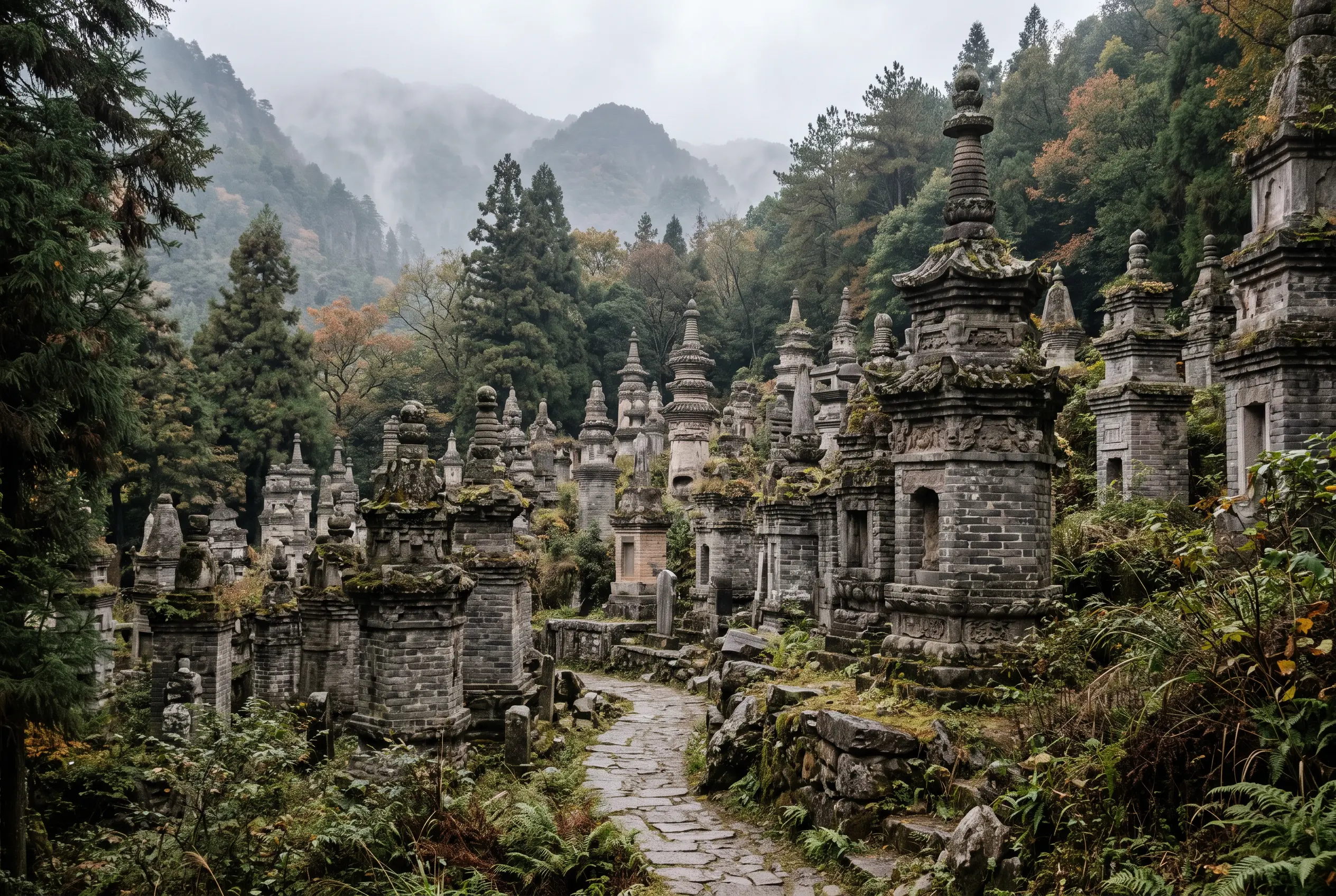
You can still see three parts of Shaolin that UNESCO lists as World Heritage: the Kernel Compound, Chuzu Temple and the Pagoda Forest. They were inscribed in 2010 as part of “Historic Monuments of Dengfeng in ‘The Centre of Heaven and Earth.’” That property covers eight clusters of buildings built over nine dynasties.
The Pagoda Forest holds the tomb pagodas of eminent monks. Counts vary, from about 230 to 250. One online tally lists about 241 pagodas, including 143 from the Ming. That fits the story above: the Ming was Shaolin’s peak. The oldest pagodas date to the Tang dynasty.
Chuzu Temple honors Bodhidharma. Its main hall dates to 1125, in the Northern Song dynasty.
| Entity | Attribute | Value |
|---|---|---|
| UNESCO property | Inscribed | 2010 (criteria iii and vi) |
| UNESCO property | Component sites | 8 clusters, built over 9 dynasties |
| Pagoda Forest | Pagodas | About 230–250 (counts vary) |
| Chuzu Temple main hall | Built | 1125 (Northern Song) |
How Should You Plan a Visit to the Shaolin Temple?
Plan a full day, arrive early, and budget about CNY 80 for the ticket that covers the temple and Pagoda Forest. Prices change, so confirm at the official ticket office. Dengfeng is about 1.5–2 hours by road from Zhengzhou or Luoyang.
The best seasons are spring and autumn. Summer is hot, and winter mornings are cold. Here is a simple route:
- Start at the Mountain Gate and walk the stele corridor.
- Pass through the Heavenly King Hall to the Mahavira Hall.
- Walk to the Pagoda Forest and see the tomb pagodas.
- Visit Chuzu Temple, then hike toward Damo Cave if you have energy.
Can You Train Kung Fu at the Shaolin Temple?
Most foreign students train at schools in Dengfeng near the temple, not inside the monastery itself. The Tagou Martial Arts School, founded in 1978, is one of the best known.
Before you enroll, ask four questions. How long is the visa stay? Do lessons include meditation as well as drills? Is English support provided? Is your coach an ordained monk or a lay instructor? If you are preparing for training, ShaoLinStore can help you choose gear that suits your practice.
What Does Shaolin Temple History Teach Us?
Shaolin Temple history is a 1,500-year cycle of patronage, destruction and reinvention. The temple was founded in 495, sacked in 1641, burned in 1928, and reborn after 1982. It is about 1,531 years old in 2026.
The most important thing to remember is that the facts are strong enough without the myths. A monastery built for translators became a symbol of Chan, then of kung fu, then of a global brand.
Ready for your next step? Plan a visit using the route above. Read Meir Shahar’s book, listed in the references below. Then explore ShaoLinStore when you want to bring the tradition into your own practice.
❓ Frequently Asked Questions
The Shaolin Temple was founded in 495 CE, so it is about 1,531 years old in 2026. Emperor Xiaowen of the Northern Wei dynasty ordered it built for the Indian monk Batuo.
Almost certainly not. The earliest text linking Bodhidharma to martial arts dates to 1624, and Shaolin’s documented fighting tradition took shape in the Ming dynasty.
Yes. Since 2010, the temple’s Kernel Compound, Chuzu Temple and Pagoda Forest have been part of the UNESCO property “Historic Monuments of Dengfeng in ‘The Centre of Heaven and Earth.’”
Shi Yinle has been abbot since 29 July 2025, replacing Shi Yongxin. A court sentenced Shi Yongxin to 24 years in prison on 29 May 2026 for embezzlement and bribery.
Yes. Shaolin is a working Chan monastery with resident monks. Many people in kung fu shows or nearby schools are performers or lay coaches, not ordained monks.
📚 References
- World Heritage listing: Official UNESCO description of the Dengfeng property, including the Shaolin components, criteria and dynasties. UNESCO World Heritage Centre
- Scholarly history: The standard academic study of Shaolin’s history and martial arts, by Meir Shahar. University of Hawai‘i Press
- Huike legend in art: Museum entry for Sesshū’s 1496 painting of Huike offering his arm to Bodhidharma. Kyoto National Museum
- 2026 sentencing: Report on Shi Yongxin’s sentence, fine and the court’s findings. People’s Government of Henan Province (China Daily)
- Kung fu origins and Ming evidence: Overview of the 728 stele, the Yijin Jing and the Wengjiagang battle, with scholarly citations. Wikipedia: Shaolin kung fu