
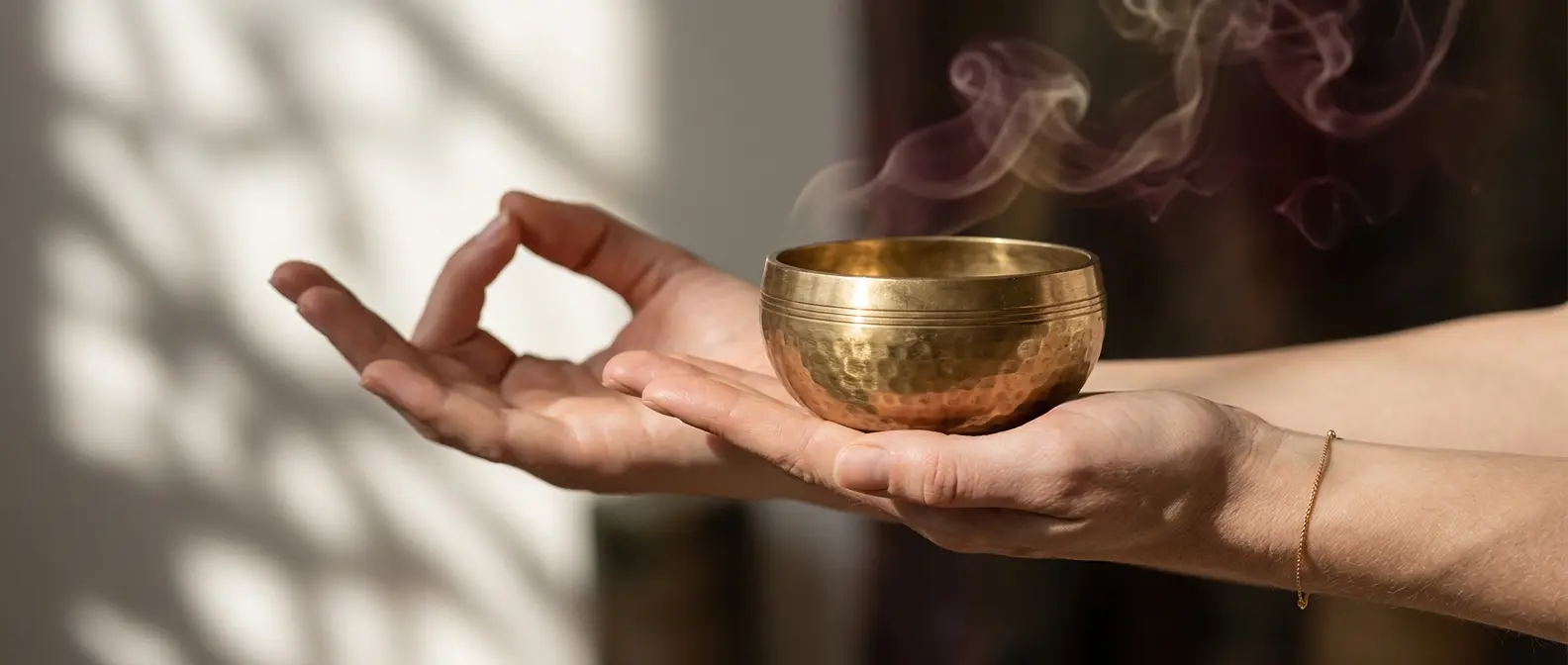
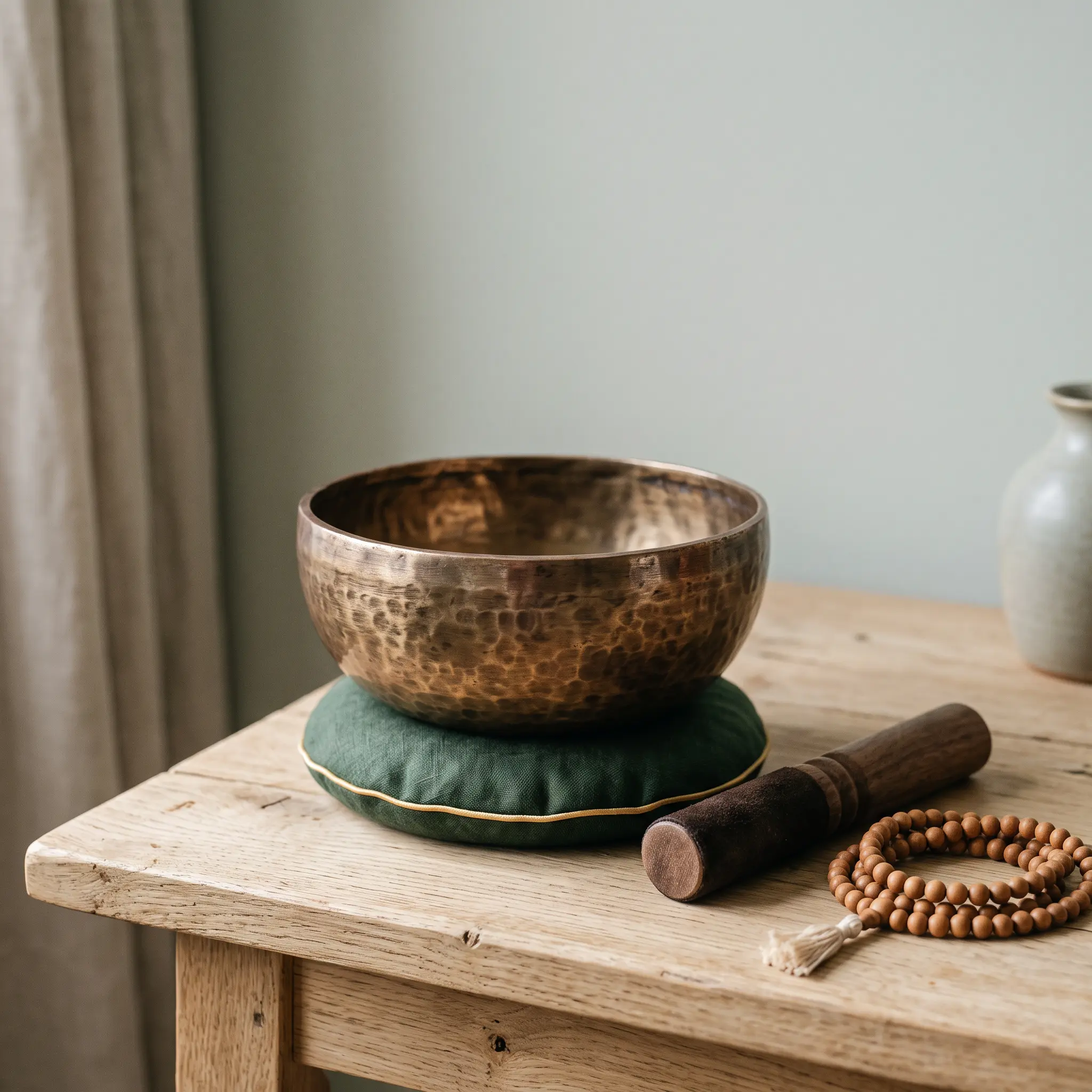
Start with a medium metal singing bowl, about 5–7 inches wide. Then clean your wooden mala beads with a barely damp cloth, never a soak.
At ShaoLinStore, we believe your first meditation tools should be easy to play and easy to look after. This guide covers your beginner singing bowl and your wooden bead care in one place, so you can start with confidence.
You do not need years of practice. In a 2017 observational study of 62 adults, newcomers to singing bowl meditation reported a bigger drop in tension than experienced participants. The study had no control group, so treat it as a promising sign, not proof.
Here’s what you need to know:
- Best first bowl: a medium metal bowl, 5–7 inches, with a cushion and mallet.
- Easiest start: tap near the rim, then try slow rim play.
- Cleaning wooden beads: dry cloth first, then a barely damp cloth with one drop of mild soap. Never soak.
- Oiling: a pea-sized dab of mineral oil every few months in dry climates, or yearly otherwise.
Which singing bowl is best for a beginner?
The best beginner singing bowl is a medium metal bowl, about 5–7 inches wide. A singing bowl is a bell-shaped bowl made of metal or crystal. It rings when you tap it or rub its rim with a mallet. Think of it as an upside-down bell.
Metal suits beginners because it is durable, affordable, and easy to play. A medium size stays steady on a cushion. It is also light enough to hold in your hand.
Judge any bowl on three things: size, material, and tone. Then check its sustain, which is how long the sound keeps ringing after a tap. A long, even sustain usually points to good craftsmanship.
Most starter kits include three items: a bowl, a cushion, and a mallet. The short answer is to buy one medium metal bowl as part of a kit like this.
Buying for someone else? Pick a complete kit with a cushion and mallet, so nothing is missing on day one. Small kits are easy to carry, which makes them popular gifts.
What size singing bowl should a beginner buy?
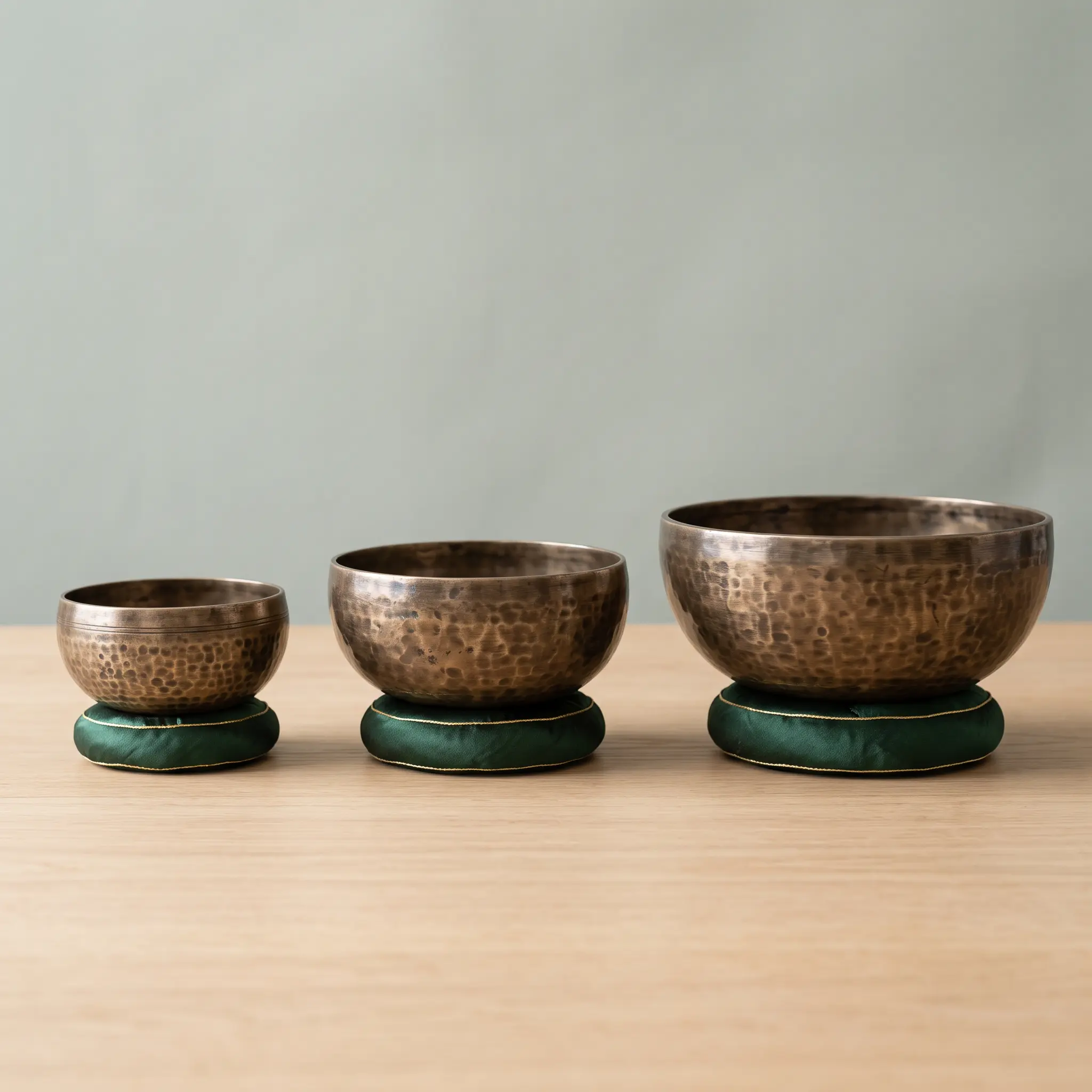
Choose a medium bowl (5–7 inches) if you want to learn rim play. Choose a small bowl if you need something portable.
| Size | Typical width | Best for | The catch |
|---|---|---|---|
| Small | 3.5–4.5 in | Travel and gentle tapping | Light, so rim play is harder |
| Medium | 5–7 in | Most beginners | Needs a little more room |
| Large | 9–12 in | Sound sessions and practitioners | Weighs 3–5 lb; usually tapped with a padded mallet |
Brands disagree here. Some say small bowls are best for beginners. Others say medium. The reason is simple: small bowls are easy to tap but hard to make “sing” by rim play, because the mallet needs precise speed and pressure.
Match the size to your space and your plan:
- Desk or travel: small, 3.5–4.5 inches.
- Home practice: medium, 5–7 inches.
- Group sessions: large, 9–12 inches, once you know the basics.
Check both width and weight before you buy, especially if you plan to carry the bowl.
A medium bowl is the best compromise. Size is only part of the sound, too. Weight and wall thickness shape the tone as well. The key takeaway is this: small for portability, medium for learning.
Metal or crystal singing bowl: which is easier for a beginner?
Metal is the safer first choice. Frosted crystal works only if you can protect it from drops and hard surfaces.
A crystal singing bowl is made from quartz. It is larger and more fragile than a typical metal bowl.
| Feature | Metal (Tibetan-style) | Frosted crystal |
|---|---|---|
| Beginner size | 5–7 in | 10–12 in, note F or C |
| Durability | Sturdy, though it can dent | Breakable; sits on a rubber ring |
| Ease of playing | Tap or rim play | Rough surface helps the mallet grip |
| Beginner verdict | Best first bowl | Better as a second bowl |
Frosted crystal is the easiest crystal type to play. Clear quartz needs more technique and gives uneven tones to new players.
Live with kids, pets, or a busy household? Metal is the safer pick, because it survives a bump that could crack crystal.
Bottom line: pick metal first. Add a frosted crystal bowl later, once you know the sound you love.
Do I need a singing bowl set, and is a “7-metal” bowl worth it?
One good bowl is enough to start. You do not need a seven-bowl set or a “seven-metal” label.
A single bowl teaches both core skills: tapping and rim play. Sets cost more and take up space before you know which tone you like.
The seven-metal idea is popular folklore. It says Himalayan bowls blend seven metals linked to seven planets. Some makers call it a marketing myth. Most traditional bowls are metal alloys, often bell-metal bronze, which is a copper-and-tin mix.
Check these three things instead:
- Sound: a tone you enjoy hearing every day.
- Sustain: a tone that rings on, not one that stops short.
- Build: an even wall with no cracks or deep dents.
To put it simply, one bowl you love beats seven you rarely use.
What mallet and accessories does a beginner need?
A suede- or leather-wrapped mallet and a cushion are the two accessories that matter most. A mallet, also called a striker, is the wooden stick you use to tap or rub the bowl.
Match the mallet to the job:
- Suede or leather mallet: best for rim play, because it grips the rim and keeps the tone smooth.
- Bare wooden mallet: fine for light taps, but a hard hit can sound sharp and piercing.
- Cushion: keeps the bowl off a hard surface so it rings freely.
Size matters too. A mallet that is too big or too soft makes a small bowl sound very quiet. The most important thing to remember is to use the mallet that is matched to your bowl.
If you choose a 10–12 inch crystal bowl, add a rubber ring under it. Playing on a hard surface without one can break the bowl. Shopping for a kit? Compare medium metal bowls with a cushion and mallet in the singing bowl collection at ShaoLinStore.
How do I play a singing bowl for the first time?
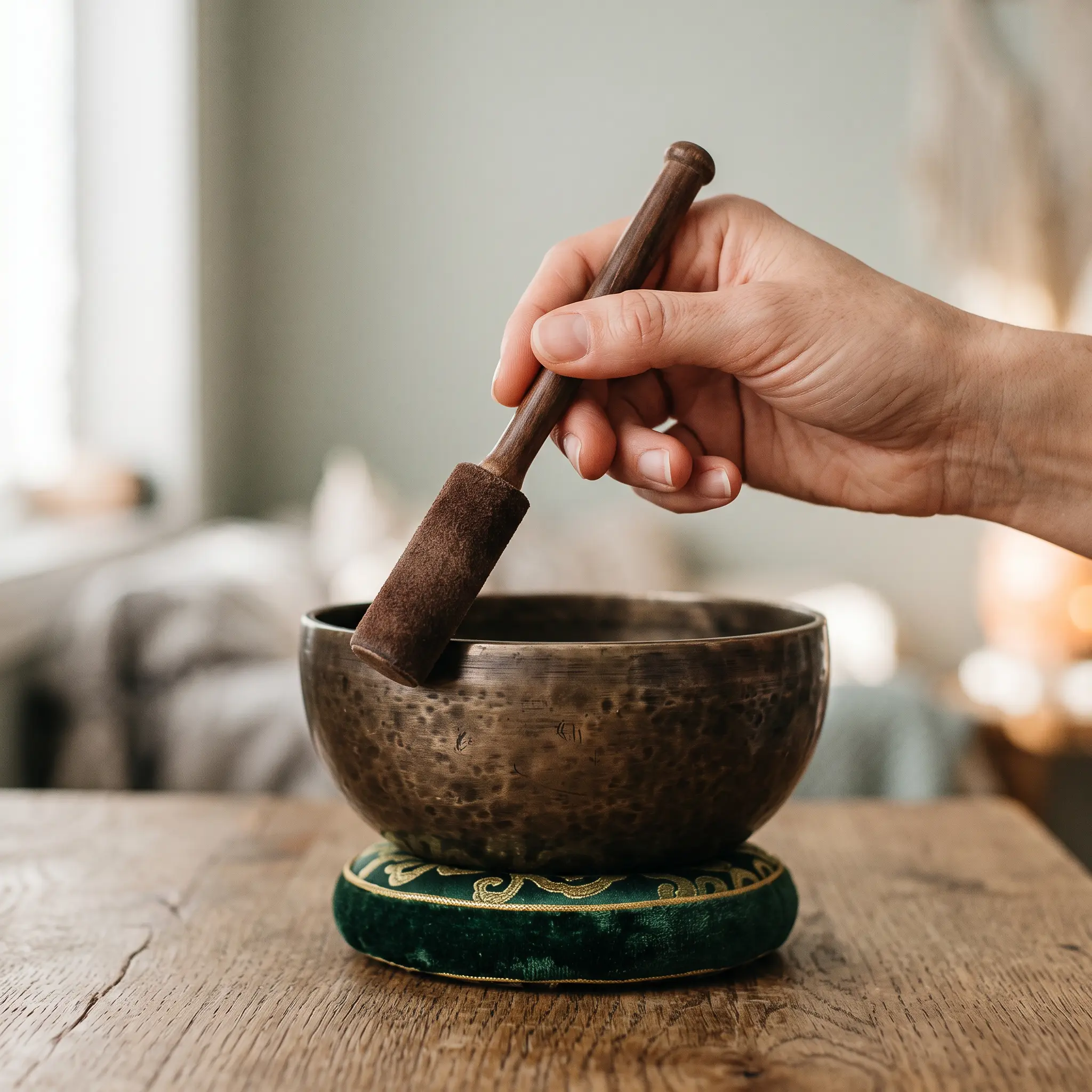
Hold the mallet like a pen, tap the upper part of the bowl near the rim, and let the sound ring out. A university museum record describes the traditional style: one hand holds the bowl while the other runs a striker around its edge.
Start with the tap. It is the easiest method for beginners:
- Place the bowl on its cushion on a flat surface.
- Hold the mallet like a pen, with a loose grip.
- Tap the outer wall near the rim, not the lower part, with a moderate strike.
- Let the tone fade fully before your next tap.
Then try rim play. Press the mallet flat against the outer rim. Circle it clockwise with even pressure. Keep going for 4–5 loops to build the sound.
Thicker bowls need more pressure. Thinner bowls need a light touch. A new mallet also needs a 5-minute break-in, so tiny grooves form and the sound improves.
To put it simply, tap first, circle second, and expect it to take a few tries.
What mistakes should beginners avoid?
The three most common beginner mistakes are hitting too hard, gripping too tight, and tapping too low.
- Hitting too hard: a hard strike gives a harsh, metallic tone. A small bowl can even slip from your hand.
- Gripping the mallet too tight: a tight grip adds extra pressure and stops the bowl from ringing freely.
- Tapping low on the wall: the lower part of the bowl makes less sound. Aim near the rim.
How do I clean and store a singing bowl?
Wipe a metal singing bowl with a soft microfiber cloth about once a week. Never use steel scrubbers or abrasive cleaners.
If you use water, dry the bowl by hand right away. Keep it out of the dishwasher. Store it on a flat, padded surface such as a cushion. If you stack bowls, put soft padding between them.
Crystal bowls are different. Wash them gently with mild soap and water, then pat them dry.
A small dent is usually cosmetic. A crack can make the bowl buzz, and that is a good reason to replace it. Gentle care is also the rule for your wooden beads, which we cover next.
What are wooden mala beads, and why do they need different care?
A mala is a loop of 108 beads used to count mantras during meditation. Think of it as a rosary for meditation. Britannica describes malas as a traditional tool in Buddhism, typically with 108 beads.
Wooden malas need gentler care than glass or stone for two reasons. Wood is porous, and the cord is fragile. Conservators at the Canadian Conservation Institute note that bare wood readily absorbs water.
Skin oils, lotions, and salt also wear down the cord and porous beads over time. A mala you wear daily sees more of this than one kept on a shelf. The same rules apply to wooden craft beads and bracelets.
How do I clean wooden beads step by step?
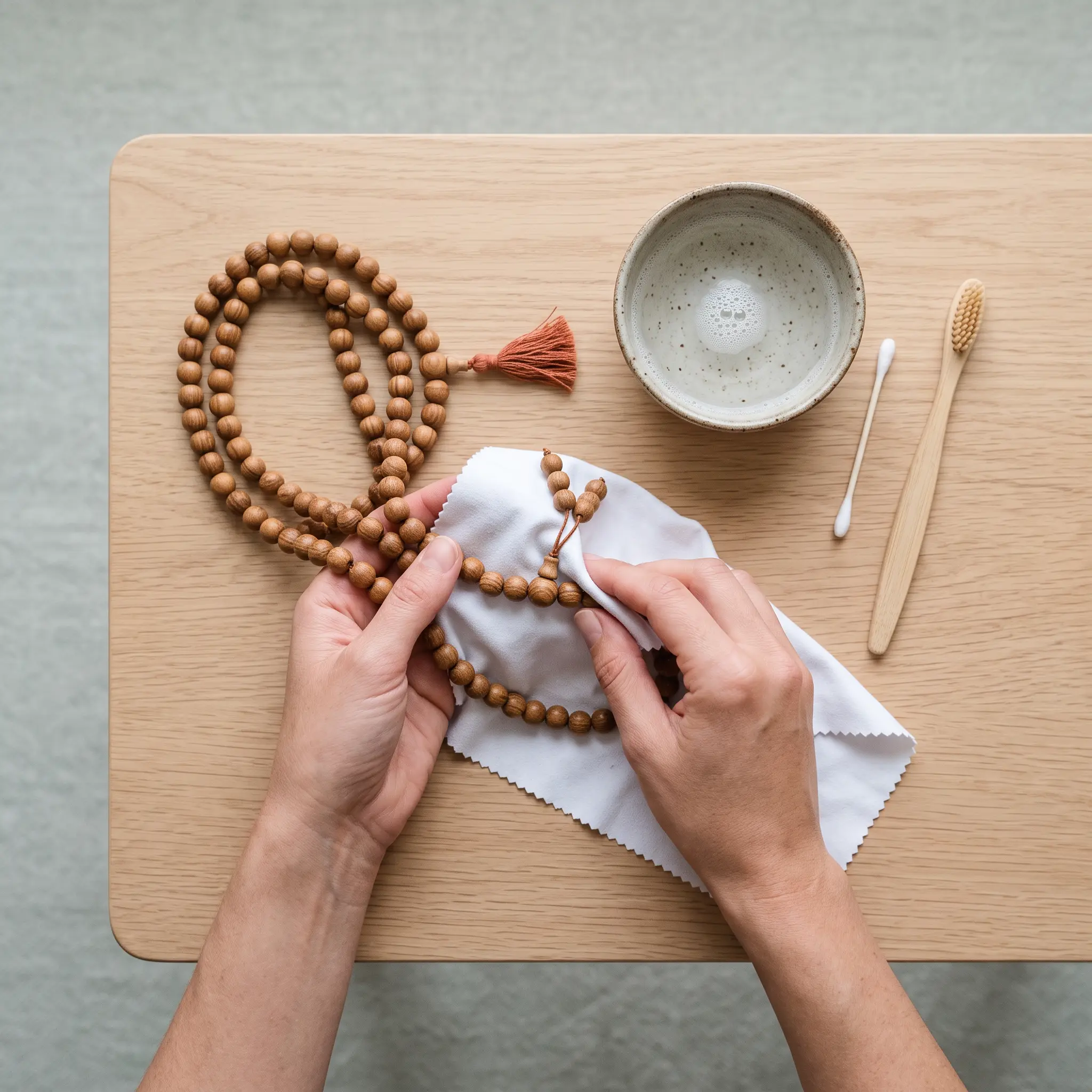
Clean wooden beads with a dry cloth first, then a barely damp cloth with one drop of mild soap if marks remain.
- Test first. Try your method on one hidden spot before you clean the whole strand.
- Dust dry. Use a soft, lint-free cloth or a soft brush on each bead.
- Mix gently. Add one small drop of mild soap to a bowl of lukewarm water.
- Spot clean. Wring a cloth until it is barely damp. Use a cotton swab or soft toothbrush on stubborn marks.
- Remove residue. Wipe each bead with a cloth dampened in plain water.
- Dry fully. Pat the beads dry, then hang the mala to air-dry before you wear or store it.
Go slowly and do not over-clean. Over-cleaning can wear the surface and strip the natural darkening that wood develops with use.
| Method | Moisture | Use it when |
|---|---|---|
| Dry wipe or soft brush | None | Weekly dusting |
| Barely damp cloth + 1 drop soap | Low | Visible grime or skin residue |
| Soaking | High | Never |
How often should I clean wooden beads?
Dust wooden beads every time you take them off, and wipe them damp only when you see marks. Regular dusting keeps grime from building up, so you rarely need a deeper clean. Over-cleaning does more harm than dirt, because each damp wipe adds moisture and wears the surface.
Can wooden beads get wet?
Wooden beads can handle a quick wipe, but not soaking, showering, or swimming. Trapped moisture can weaken the cord and stain the holes in the beads. Dry them right away after any contact with water.
What should I never use on wooden beads?
Never use soaking, alcohol, glass cleaner, or bleach on wooden beads. Museum conservators warn that water and solvents can swell wood fibres and raise the grain. Stick to the gentle steps above.
Should I oil wooden beads, and with what?
Rub a pea-sized dab of mineral oil through your wooden beads every few months in dry climates. In milder climates, once a year is enough. Oil keeps the wood from drying out and cracking.
| Oil | Amount | Note |
|---|---|---|
| Mineral oil | Pea-sized | Stable; does not go rancid |
| Jojoba oil | A few drops | Plant-based; often used on wooden jewelry |
| Coconut oil | A tiny dab | Plant-based; can turn rancid if you overuse it |
Rub the oil into your hands first. Then work it through each bead and wipe off the extra with a dry cloth. Choose an oil that does not go rancid, since a sour smell on your beads is hard to remove.
Not sure if your beads need oil? Beads that look pale or feel dry are good candidates. Test one bead first.
Expect your beads to darken over time. This natural change is called patina, and it is normal. Many people see it as a record of their practice.
What everyday habits keep wooden mala beads clean longer?
Take your mala off before water, lotion, or workouts, and store it in a soft cloth pouch. These small habits cut down how often you need to clean.
- Remove before moisture: showers, pools, and saunas can damage wood.
- Skip lotion: skin oils, lotions, and salt wear down the cord and porous beads.
- Limit direct sun: the Canadian Conservation Institute lists light among the things that can damage wooden objects.
- Handle with clean, dry hands: this keeps skin oils and lotion off the wood.
- Restring when needed: a frayed cord or a broken mala can be restrung rather than replaced.
Can I cleanse wooden mala beads with a singing bowl?
Yes: place the mala in the bowl and tap the side gently. Treat this as a ritual cleanse, not a physical clean.
Energetic cleansing is a practice some meditators use to reset a mala before setting a new intention. It is a personal, spiritual choice. A bowl will not remove dirt, so wipe the beads when they look dull.
| Method | How | Note for wood |
|---|---|---|
| Singing bowl | Place the mala in the bowl and tap the side | No moisture, so it is gentle on wood |
| Moonlight | Leave it out for a few hours | Gentle on wood |
| Sunlight | Leave it in direct light for a few hours | Light can damage wood, so keep it brief |
| Sage smoke | Hold the mala above rising smoke | Keep beads away from flame and hot ash |
If you use more than one method, finish with a gentle dry wipe.
In summary, the bowl is the safest ritual choice for wooden beads. It adds sound, not moisture or heat.
What is the simplest way to start today?
Start with one medium metal bowl, a cushion, and a mallet. Add a soft cloth and a little mineral oil for your wooden beads. That is your whole starter kit.
- Bowl: medium metal, 5–7 inches.
- Mallet and cushion: a suede- or leather-wrapped mallet and a flat cushion.
- Cloth: soft and lint-free, for weekly dusting.
- Soap and cotton swab: one drop of mild soap for spot cleaning.
- Mineral oil: a pea-sized dab every few months in dry climates, or yearly otherwise.
One bowl you love and one mala you care for is a complete practice.
In summary, a medium metal beginner singing bowl and well-kept wooden mala beads give you everything you need to start. Choose a bowl you enjoy hearing. Wipe your beads gently. Keep water away from the wood.
Ready to begin? Explore the beginner singing bowl and wooden mala collection at ShaoLinStore.
Shop beginner singing bowls and wooden malas
❓ Frequently Asked Questions
Tapping a singing bowl takes seconds to learn, and rim play takes a little practice. Start by tapping near the rim. Then add slow, even rim pressure once the bowl responds.
A medium metal bowl, 5–7 inches wide, with a suede- or leather-wrapped mallet is the easiest to play. It is heavy enough to stay steady and light enough to hold.
Wooden beads can handle a quick wipe with a barely damp cloth, but soaking can swell the wood and weaken the cord. Dry the beads right away and keep them out of showers, pools, and saunas.
Mineral oil is the most common choice for wooden beads. Use a pea-sized amount and wipe off any extra. Jojoba and coconut oil are alternatives.
Yes, as a ritual cleanse. Place the mala in the bowl and tap the side gently. This does not remove dirt, so still wipe the beads when they look dull.
📚 References
- Singing bowl sound meditation: A peer-reviewed observational study of 62 adults on Tibetan singing bowl meditation, mood, and tension. Goldsby et al., Journal of Evidence-Based Complementary & Alternative Medicine (SAGE)
- Himalayan singing bowls as instruments: A university museum record on how traditional bowls are held and played with a striker. Fleming Museum, University of Vermont
- Mala beads: Encyclopedia entry on prayer beads, including the 108-bead mala. Encyclopaedia Britannica
- Cleaning bare wood: Conservation guidance on testing first, avoiding water and solvents, and keeping patina. Canadian Conservation Institute, Care and Cleaning of Unfinished Wood (CCI Notes 7/1)
- Caring for wooden objects: Overview of light, humidity, and water as risks to wood. Canadian Conservation Institute, Furniture, Wooden Objects and Basketry