
One pass with a tin of brass polish can erase a patina that took years to build, and there is no undo button. A patina is the thin, stable surface layer that forms on aging metal, and it is the main thing to protect when you clean a bronze Buddha statue. This guide gives you four safe steps, a simple way to tell healthy green from harmful green, and the six habits that ruin copper alloy statues.
ShaoLin Store sells handmade copper statues, and the steps below follow National Park Service and Canadian Conservation Institute guidance, not kitchen folklore. On an altar or on a bookshelf, the goal is the same: protect the metal, keep the finish, and handle the Buddha image with respect.
The short version: Dust your bronze Buddha statue monthly with a soft brush. Spot-clean only when needed, using distilled water and a drop of pH-neutral soap. Never use metal polish, vinegar, or lemon. Wax once every 1 to 2 years, and keep room humidity below 55%.
Scope: This guide covers routine home care for modern decorative statues. If your statue is an antique, or you are unsure of its value, talk to a professional conservator before you clean it.
First, Find Out What Metal You Are Cleaning
Check weight, sound, and temperature first: solid bronze, brass, and copper statues feel heavy and cool and ring when tapped, while cold-cast bronze feels lighter and warmer and gives a dull thud. Cold-cast bronze is resin mixed with metal powder, poured into a mold at room temperature. That difference decides how much water, rubbing, and wax the surface can take.
Most solid statues are made by lost-wax casting, where molten metal replaces a wax model inside a mold. Bronze is a copper alloy, usually copper and tin. Brass is copper and zinc.
The Weight, Tap, and Touch Test: Solid Metal or Cold-Cast Resin?
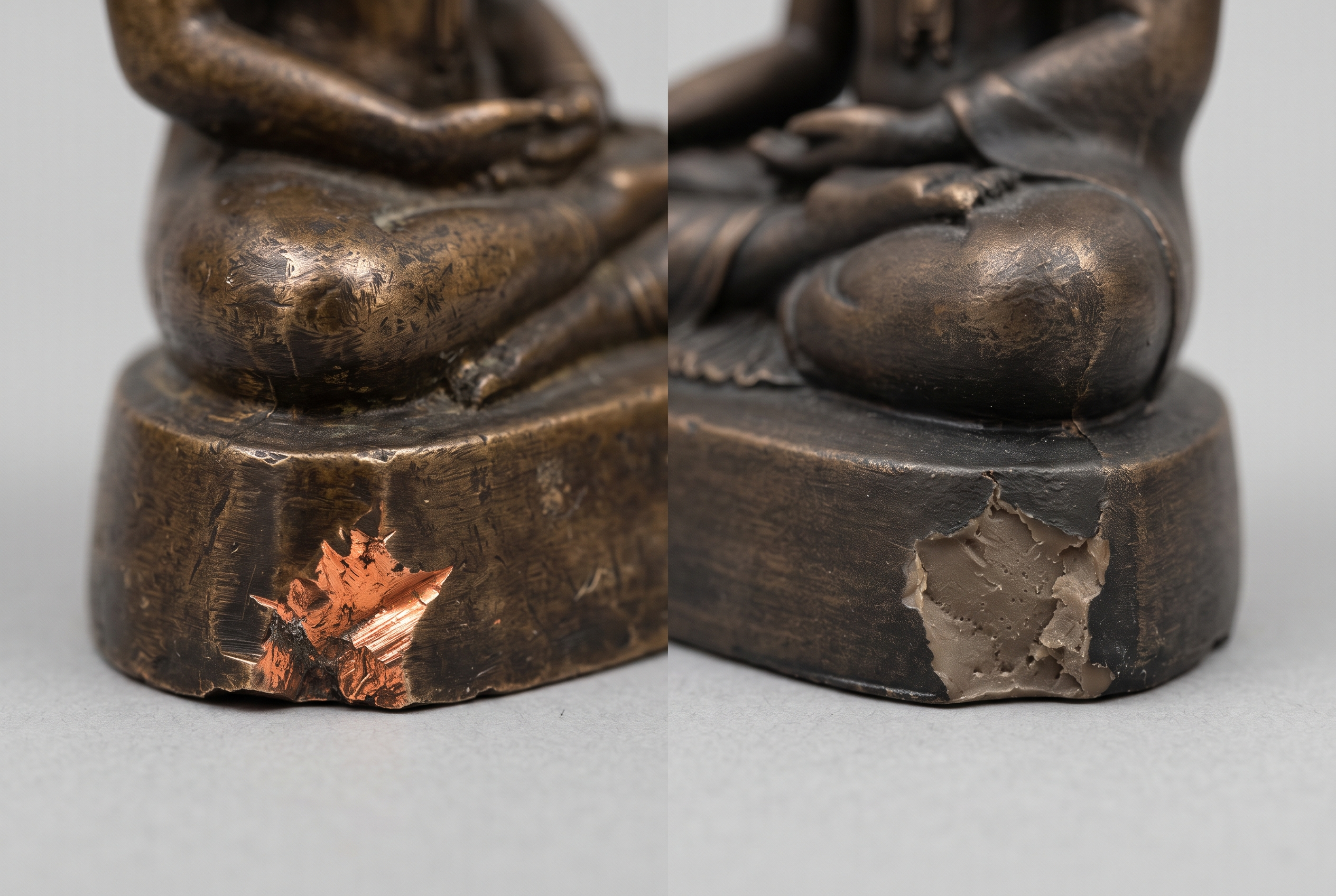
Run all three checks, because no single test is reliable on its own.
| Check | Solid bronze, brass, or copper | Cold-cast bronze (bronze resin) |
|---|---|---|
| Weight | Heavy for its size | Noticeably lighter |
| Tap sound | A clear, lasting ring | A dull thud |
| Touch | Cool to the hand | Warmer, close to room temperature |
| Chips or worn edges | Metallic color underneath | Dull, non-metallic core |
| Product wording | “Solid bronze,” “solid copper” | “Bronze finish,” “bronze-tone,” “bronze powder” |
Weight alone can mislead, since some large resin pieces are filled to feel heavier. Look at chips or worn edges on the base instead of scratching the surface. For reference, the solid copper Royal Ease Guanyin with gilded crown details stands 8.9 in (22.6 cm) tall and weighs 2.16 lb (980 g). Its product page states that it is metal, not cold-cast resin.
Don’t worry if the tests disagree. When in doubt, treat the statue as the more fragile material and stick to dry dusting.
Patina, Shellac, or Gold Leaf: Read the Surface Before You Touch It
Look at the finish before you pick up a cloth, because natural patina, artificial patina, and coatings each need different care. Natural patina forms slowly as the metal reacts with air. Artificial patina is applied by the maker to create an aged look.
Some makers also add a clear shellac or lacquer coating to copper alloys. The National Park Service warns that removing such a coating by accident permanently lowers the object’s value. If the surface looks uniformly glossy, like plastic, assume it has a coating and dust it only.
Try one more check. Rub a clean, dry cotton swab on the underside of the base. If color lifts onto the swab, skip wet cleaning and stay with dry brushing. Gold leaf and mud-gold areas get their own rules in the gilding section below.
Found out your “bronze” statue is resin? A solid copper piece can be gently cleaned and waxed for years with the steps below. Browse our handmade copper and bronze-tone Buddha statues.
How Do You Clean a Bronze Buddha Statue Without Removing the Patina?
To clean a bronze Buddha statue without removing the patina, dust it with a soft natural-bristle brush, spot-clean only stubborn grime with distilled water and a drop of pH-neutral soap, dry it immediately, let it air-dry for 24 hours, then seal it with a thin coat of microcrystalline wax.
Patina is a thin, stable layer that protects the metal underneath, so every step below aims to leave it alone. These are planning estimates for a tabletop statue:
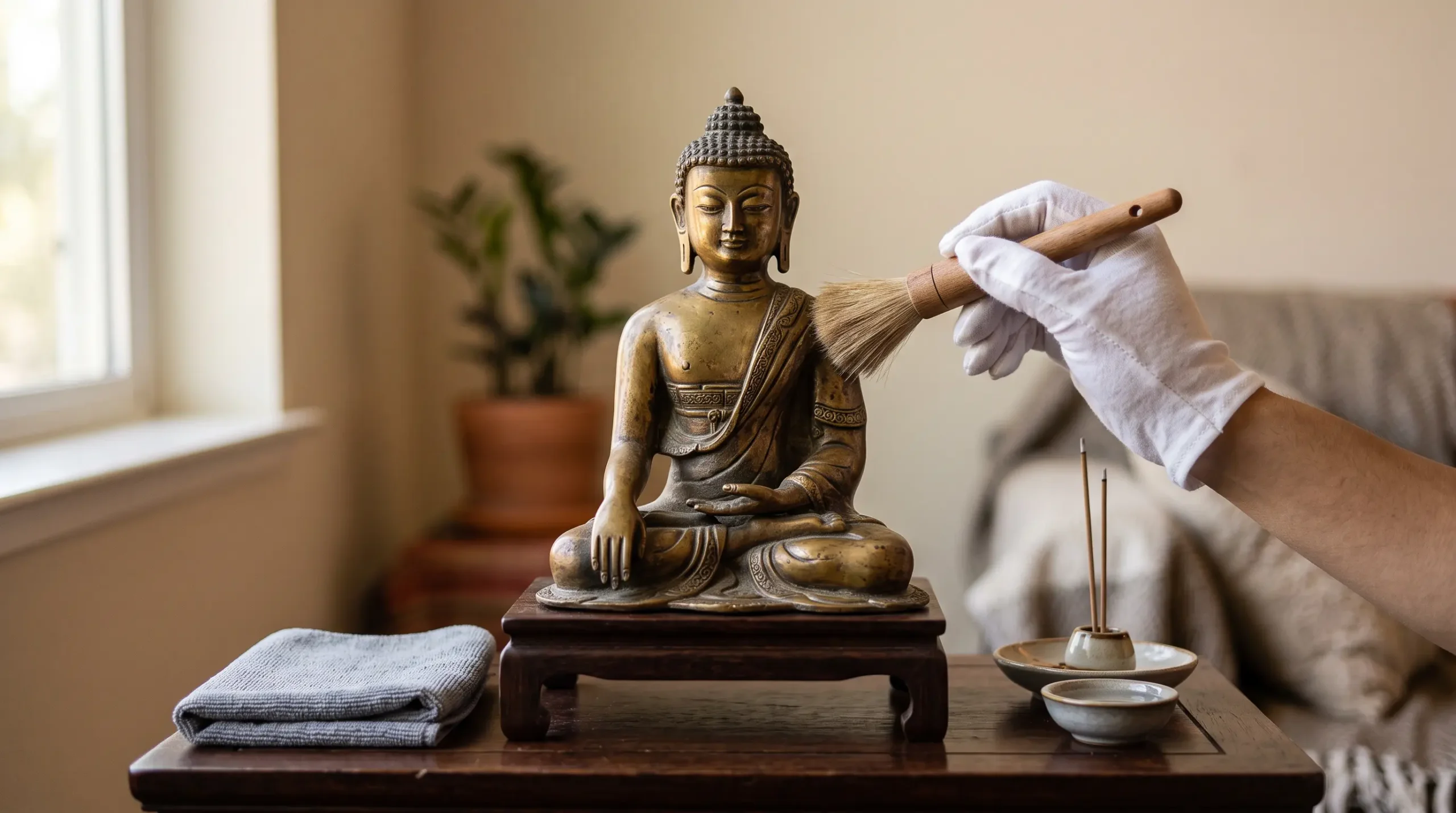
- Dry-dust: Brush from the crown to the base with a soft natural-bristle brush. About 5 minutes.
- Spot-clean: Dab stubborn grime with a barely damp cloth, then dry at once. About 15 minutes.
- Air-dry: Leave the statue in a dry room for 24 hours.
- Wax (optional): Apply a thin coat of microcrystalline wax, let it set, then buff. About 20 minutes.
What You Need: A 6-Item Toolkit
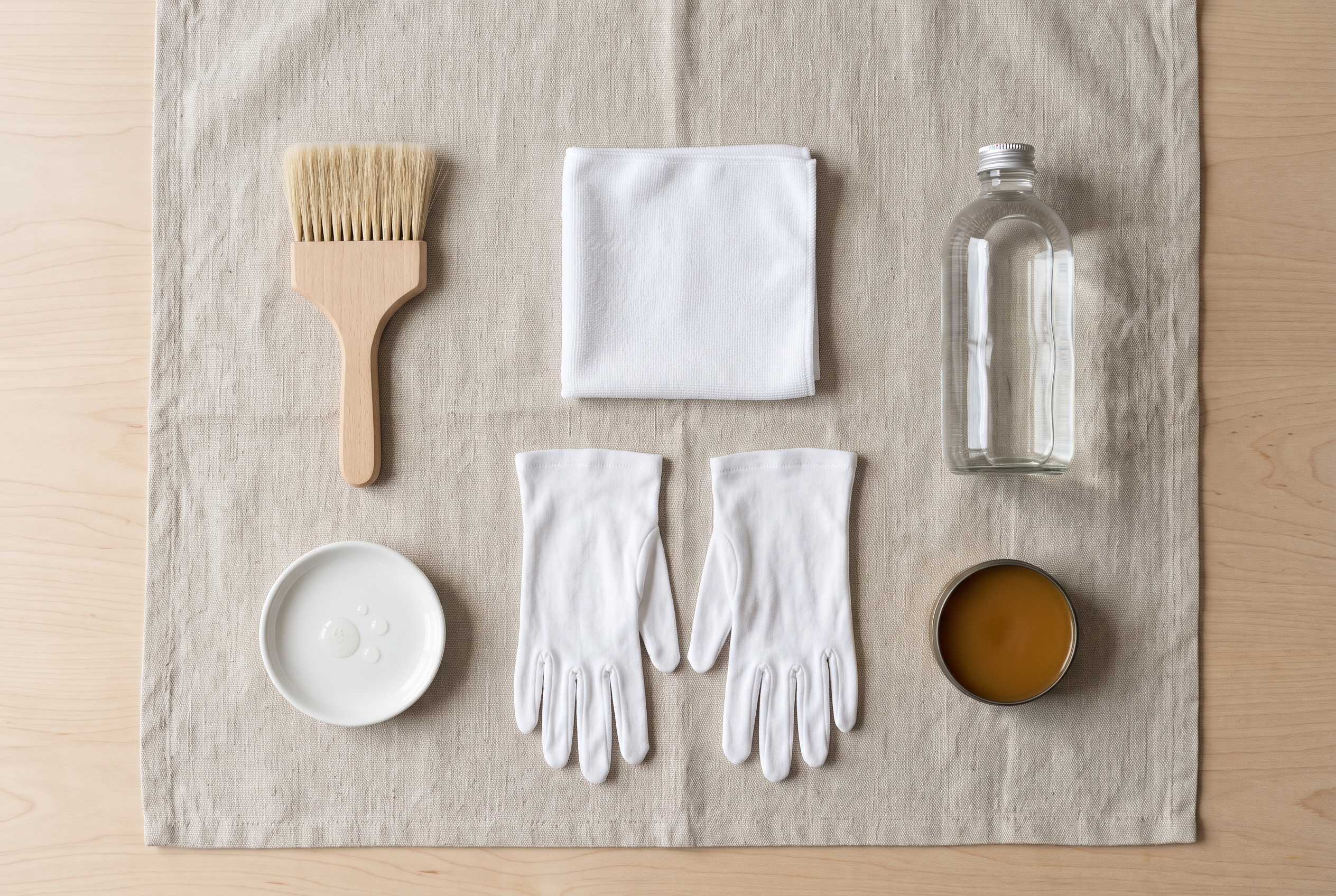
Six inexpensive tools cover the whole routine.
- Soft natural-bristle brush: A hake or watercolor brush works well. Wrap any metal ferrule in tape so it cannot scratch the statue.
- Microfiber cloth: Use it for drying and buffing, not for scrubbing.
- Distilled water: Tap water carries chlorides and minerals that can mark metal.
- pH-neutral soap: A few drops only. Orvus is the detergent named in National Park Service guidance.
- Nitrile or cotton gloves: Skin oils and salts leave marks on bare metal.
- Microcrystalline wax: Renaissance Wax is the best-known brand. It is thin, clear, and suited to indoor statues.
Step 1: Dry-Dust From the Crown Down
Dry dusting with a soft brush removes most of what settles on a statue, and for many statues it is the only step you need. Not sure you are doing it right? That is normal. This step is hard to get wrong.
- Pad your table with a soft towel, and turn off nearby fans.
- Lift the statue from its base. Never lift by the hands, halo, or any thin part.
- Brush from the head down to the base in short strokes.
- Take extra time in robe folds, behind the ears, and around the hair curls, where dust packs in.
Step 2: Spot-Clean Only What Dusting Won’t Lift
Use distilled water on a cloth wrung out until it no longer drips, and clean only the stained spot. Work in small circles, then dry the area right away with a second, dry cloth.
For stubborn grime, add a few drops of pH-neutral soap to the distilled water. Follow with a pass of plain distilled water to remove soap residue. Never immerse the statue, because water can sit inside hollow castings. Keep liquid away from the base opening and any seams.
Steps 3 and 4: Dry for 24 Hours, Then Wax (Optional)
Let the statue air-dry for at least 24 hours in a dry room before you apply any wax. Wax over trapped moisture turns hazy and can hold water against the metal.
Apply microcrystalline wax, a stable conservation wax, in a thin coat with a soft cloth. Let it set for a minute or two, following your wax’s label, then buff with a clean microfiber cloth. Buffing leaves a thin moisture barrier that slows oxidation. National Park Service guidance says a coat should protect for “at least a year or two,” depending on the environment and handling.
Carnauba paste wax, such as Johnson’s, is common on outdoor bronze. It goes on thicker, so it suits tabletop statues less well. A white haze after buffing usually means too much wax or leftover moisture. Skip wax entirely if you suspect a shellac or lacquer coating.
Green Spots: Healthy Patina or Active Corrosion?
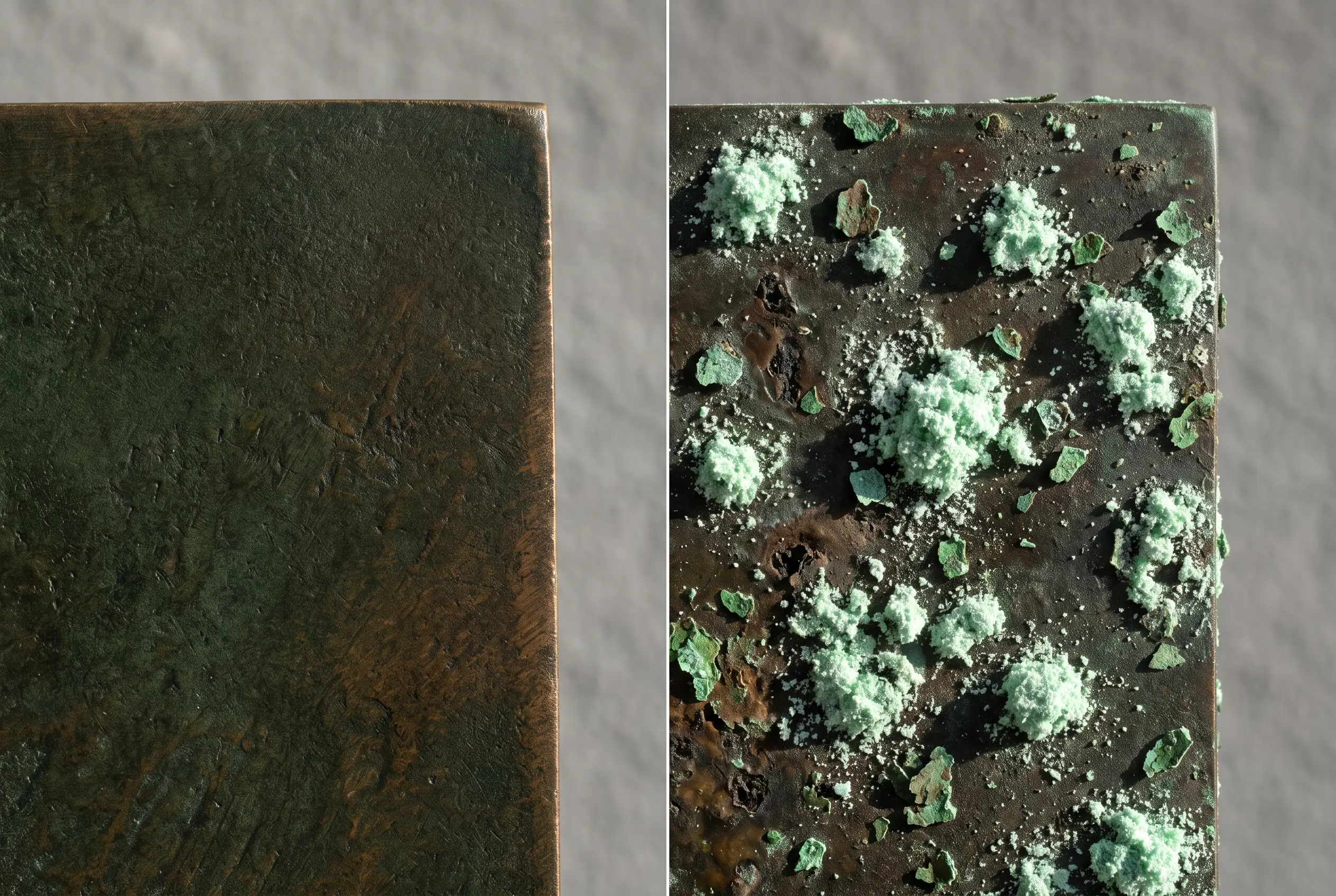
Not all green is bad. An even, hard green or brown layer is stable patina that protects the metal. Bright, powdery light-green spots that keep spreading are active corrosion called bronze disease, which the Canadian Conservation Institute links to relative humidity of 55% and above.
Stable Patina: Even, Hard, and Worth Keeping
A stable oxide layer protects the metal beneath it, and conservators often treat it as a desirable patina. Verdigris is the green corrosion layer that forms on copper alloys. When it is even, hard, and tightly bonded, it is part of a healthy surface.
Oxidation also darkens copper alloys over time to brown, black, or deep green. These changes are normal. The fix is to leave them alone and dust only.
Powdery Light-Green Spots: Isolate, Dry, and Call a Conservator
Bronze disease is active corrosion driven by cuprous chloride. It appears as a light green powder erupting in spots, and the Canadian Conservation Institute ties it to relative humidity of 55% and above. Any metal object surrounded by flakes or loose powder counts as actively corroding.
The institute notes the problem is most common on archaeological copper alloys. A modern statue is less likely to have it, but a damp room raises the odds. If you see powder, act in this order:
- Move the statue to a drier room, away from bathrooms and kitchens.
- Place silica gel nearby, and track the room with a hygrometer, a small gauge that reads humidity.
- Do not scrub, and do not use chemicals.
- Contact a conservator with metals experience. The American Institute for Conservation runs a “Find a Conservator” directory.
Stop and check: If green powder rubs off on your fingertip, don’t scrub it. Scrubbing only spreads the powder.
6 Cleaning Mistakes That Permanently Damage Metal Statues
Six habits do the most harm: polishing, acidic home remedies, abrasives, soaking, oiling, and bare-hand handling. If you have already made one, don’t panic. Stop, dry the statue, and switch to dry dusting.
Kitchen Remedies and Brass Polish That Strip Patina
- Commercial metal polish. Many polishes contain ammonia or harsh abrasives. The National Park Service advises against them for copper alloys. Do this instead: dust, then spot-clean with distilled water.
- Vinegar, lemon juice, and ketchup. Acids dissolve patina and leave blotchy bright patches that cannot be reversed. Do this instead: a drop of pH-neutral soap in distilled water.
- Abrasive pads and baking soda. They scratch the surface and wear off any gold layer. Do this instead: a soft brush and a microfiber cloth.
Soaking, Rinsing, Oiling, and Over-Handling
- Soaking, rinsing, or the dishwasher. Water gets into hollow castings and seams, then corrodes from the inside. Do this instead: a barely damp cloth, dried at once.
- Olive oil or baby oil for shine. Oil attracts dust and turns sticky over time. Do this instead: a thin coat of microcrystalline wax, buffed.
- Bare hands, rings, and watches. Skin oils and salts mark the metal, and rings scratch it. Do this instead: clean gloves and a two-handed lift from the base.
Gold Leaf, Mud-Gold, and Painted Faces Need a Lighter Touch
Gilded and mud-gold areas need dry brushing only, because even a barely damp cloth or a light rub can lift the thin gold layer. That rule covers gold leaf, a mud-gold finish (a decorative gold surface over the metal), and any painted accents such as faces and jewelry.
Why Gilding Can’t Be Polished
The National Park Service notes that a thin layer of gold on an object can be destroyed by polishing. A Getty Conservation Institute expert report on gilded wood adds that water-based cleaning can undercut metal leaf. The same caution makes sense for gilded metal.
Skip the microfiber cloth on gold. Dragging it back and forth can catch and lift the leaf edges.
A Brush-Only Routine for Gilded Areas
- Use a clean, extra-soft, dry brush and sweep lightly in one direction.
- Don’t touch the face, and don’t rub painted details.
- If gold is flaking or lifting, stop. Ask a conservator before you do anything else.
The Royal Ease product page gives the same advice: skip abrasive pads and metal polish, which can strip the warm finish and painted accents. A piece such as our aged copper meditating Buddha with a mud-gold finish already has its aged tone built in. Day to day, it needs dusting, not polishing.
Everyday Care for a Bronze Buddha Statue at Home
Everyday care comes down to three habits: stable humidity, regular dusting, and a calm, respectful way of handling. Get those right, and the cleaning steps above become occasional rather than constant.
Humidity, Light, and Placement: The 55% Rule
Keep room humidity below 55% relative humidity (RH), the share of moisture the air holds compared with its maximum. The Canadian Conservation Institute says active corrosion can occur above 55%. For objects that already show bronze disease, it advises storage typically below 42%.
Sources disagree on the exact number, so here is how to read them. Some museum guidance targets 42% to 46%. Some retailers say 60%. Museum targets protect fragile or already corroding metal. For a modern statue at home, a steady reading below 55% is a realistic goal.
- Measure it: A digital hygrometer costs little and takes the guesswork out.
- Control it: Run a dehumidifier in humid summers, especially in damp basements and coastal homes.
- Place it well: Keep statues away from bathrooms, kitchens, air-conditioner vents, and direct sun.
A Care Calendar for Shelf, Altar, and Garden Statues
How often you clean depends on where the statue sits. This table is an editorial guide, not a lab standard.
| Where it sits | Dust | Wet-clean | Wax |
|---|---|---|---|
| Shelf or desk | Monthly | Only as needed | Every 1 to 2 years |
| Altar with incense | Every 1 to 2 weeks | Quarterly check for a soot film | Every 1 to 2 years |
| Outdoor garden | After storms | Gentle wash 1 to 2 times a year | 1 to 2 times a year |
Incense residue builds up as a fine soot film, so altar statues need more frequent dusting. Burn incense in a handmade incense burner that keeps ash away from your statue, and wipe the altar surface before you return offerings. Heavy rain, salt air, and city pollution shorten outdoor intervals.
Cleaning as an Act of Respect
Cleaning a Buddha statue is widely seen as an act of care, not disrespect. Wash your own hands first, then lift the statue by its base. Avoid touching the head, and handle the hands and mudra gently.
Follow the customs of your own tradition or teacher if you have one. Some households add a quiet pause or a short chant before they begin. Mindful cleaning is simple: go slowly, use the fewest steps that work, and put everything back as you found it. A clean, quiet surface is its own kind of offering.
The Bottom Line: Less Is More
The key takeaway is that a bronze Buddha statue needs far less cleaning than most owners expect. Dust it monthly, wet-clean rarely, never polish, wax once every 1 to 2 years, and keep the room below 55% humidity. Do that, and the patina keeps protecting the statue for you.
Frequently Asked Questions
No. Acidic kitchen cleaners dissolve patina and can leave blotchy, bright patches that can’t be reversed. Stick to a soft brush and, only when needed, distilled water with a drop of pH-neutral soap.
Wax an indoor statue once every 1 to 2 years. National Park Service guidance says a thin coat of microcrystalline wax protects for at least that long, depending on environment and handling. Outdoor statues need cleaning and rewaxing once or twice a year.
No. Cleaning is widely seen as a sign of care. Lift the statue from its base, keep your movements calm, and follow the customs of your own tradition or teacher if you have one.
Yes. Copper alloys naturally deepen in tone with air and handling, and skipping polish keeps that change even. Check your statue against the care calendar above, and set a monthly dusting reminder on your phone.
From “I’m afraid to touch it” to a five-minute monthly habit
Before: a statue you are afraid to clean. After: a quiet monthly ritual you actually enjoy. If you are ready for a piece built to age gracefully, explore ShaoLin Store’s handmade statues.Explore Handmade Statues
How we wrote this: The care steps follow National Park Service and Canadian Conservation Institute guidance. Timing figures are planning estimates for a tabletop statue, not laboratory results. This guide does not replace the advice of a professional conservator for antiques or high-value pieces.
References
- Caring for Silver and Copper Alloy Objects (Conserve O Gram 10/2): National Park Service guidance on dusting, cleaning, polishes to avoid, and microcrystalline wax. nps.gov
- Recognizing Active Corrosion (CCI Notes 9/1): Canadian Conservation Institute explanation of stable patina, bronze disease, and the humidity link. canada.ca
- Cleaning of Wooden Gilded Surfaces, Expert Meeting Report: Getty Conservation Institute discussion of cleaning risks for gilded surfaces. getty.edu
- Bronze Method: Cold Cast: Dealer explanation of how cold-cast bronze differs from solid cast bronze. regentantiques.com