
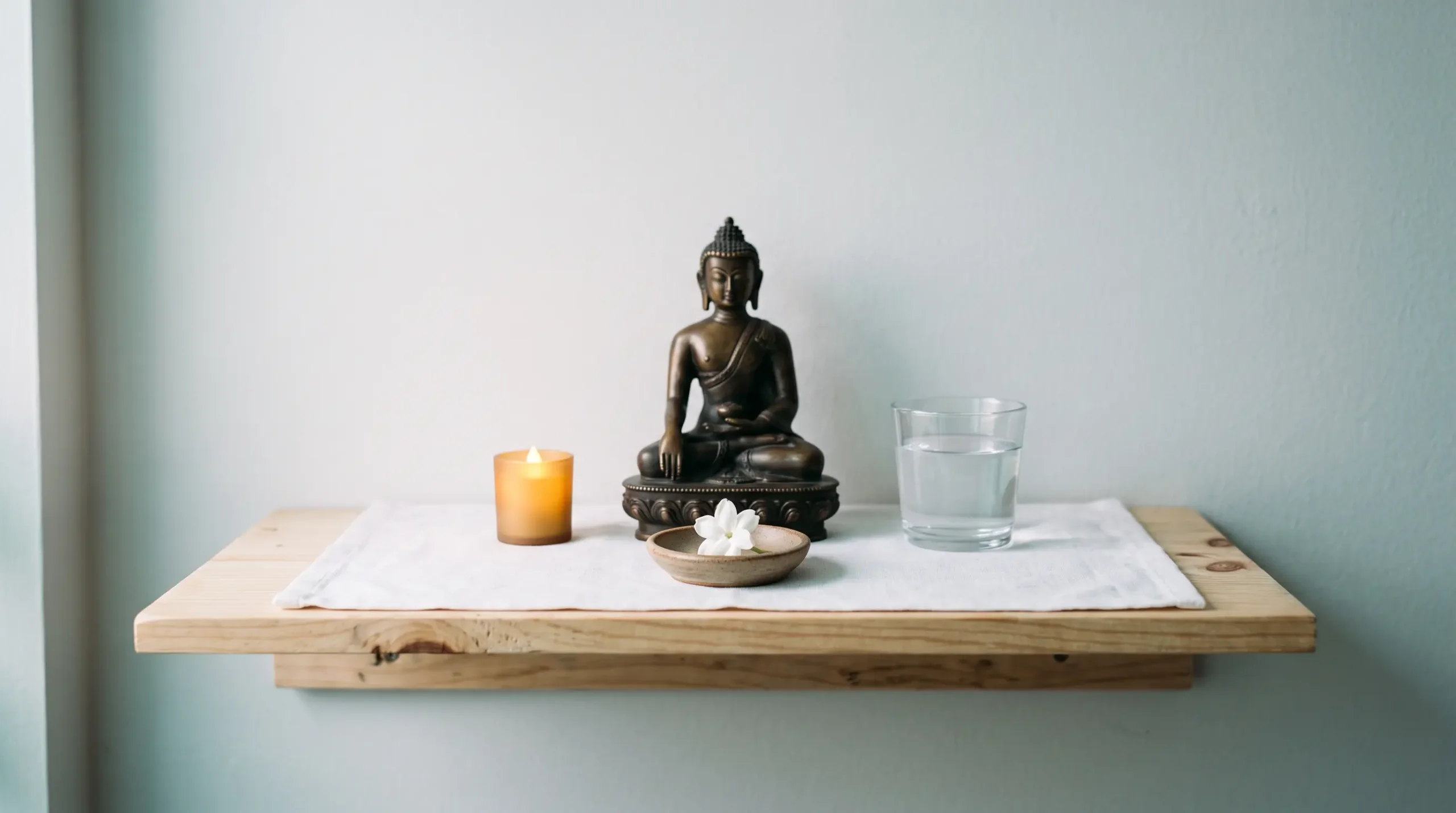
A simple Buddhist home altar needs only three things: a Buddha image set slightly above your seated eye level, a small light, and a cup of fresh water. Incense, flowers, and fruit are optional. Many traditions add them over time, and none expect a full set on day one.
If you worry about getting it wrong, that worry is already a sign of respect. You do not need to be an expert to keep a quiet shrine for meditation. You need a clean spot, a few simple offerings, and a habit you can keep.
At ShaoLin Store, we sell statues, incense burners, and meditation cushions inspired by Shaolin and Chan culture, so setup questions reach us often. This guide covers what to place, where to put it, seven setup steps, how traditions differ, and how to keep the altar going.
Already have a shelf in mind? Browse handmade Buddha statues sized for shelf altars and measure before you buy.
Please note: This guide describes common practices across Buddhist traditions. Customs vary by lineage and family. If you have a teacher or a temple, follow their guidance first.
What Do You Actually Need on a Simple Home Shrine?
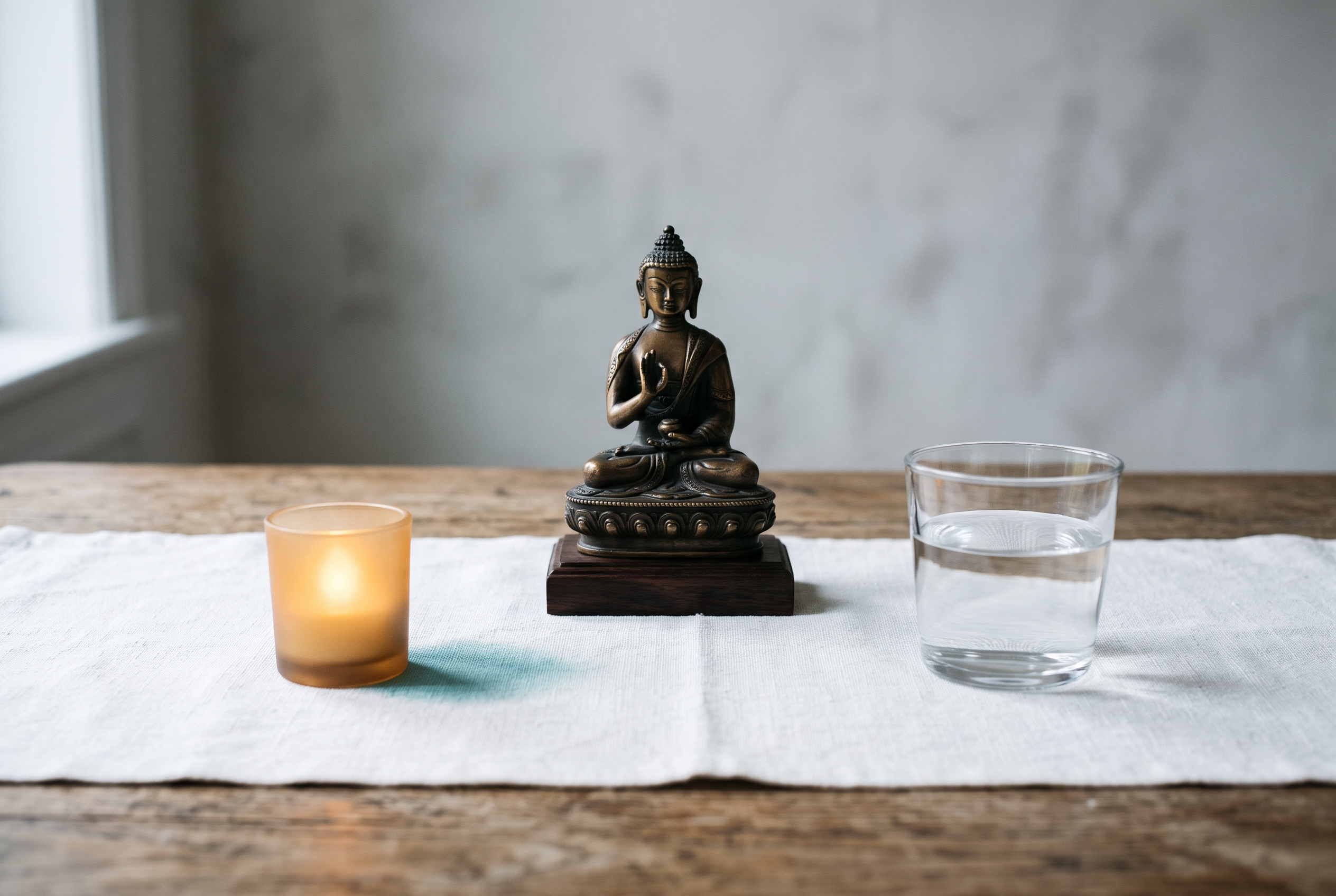
You need three things to start: one Buddha image, one light, and one cup of fresh water. Everything else can wait.
The Three Jewels are the Buddha, his teachings (the Dharma), and the community of practitioners (the Sangha). The image on your altar stands for the first jewel. The light and the water support that focus without adding clutter.
The 3-Item Starter Altar
- Buddha image: A statue, a framed print, or a photo works. The FPMT Losang Dragpa Centre lists a statue or photo of the Buddha first among its altar items.
- Light: One candle or one LED votive. The same guide accepts a small electric light.
- Fresh water: One clean cup or small bowl, refilled each morning.
A common pattern is buying a full offering set first, then using only half of it. Start with these three and add one item at a time.
Optional Offerings to Add Over Time
Five offerings appear on most Buddhist altars: water, flowers, incense, light, and food. Each carries a traditional meaning.
| Offering | Often understood as | Practical tip |
|---|---|---|
| Water | Generosity and a clear mind | Pour a fresh cup each morning |
| Flowers | Impermanence, since they fade | Fresh or silk; remove when faded |
| Incense | Discipline and a calm atmosphere | Use only with open ventilation |
| Light | Wisdom that clears confusion | An LED votive works as well as a flame |
| Food (fruit) | Gratitude and giving | Share the fruit after 1 to 2 days |
Other optional pieces include a mala (a string of 108 prayer beads), a small singing bowl, a sutra, and a small stupa. Shambhala’s home shrine guide also encourages found, inexpensive, or repurposed objects, so a smooth stone or a plain dish can serve.
What Not to Place on a Buddhist Altar
Keep the surface clear of everyday objects. In many traditions, these items do not belong there:
- Keys, mail, and bills: They pull daily errands onto a space meant for quiet.
- Alcohol: Most traditions treat it as unsuitable for offerings.
- Storage clutter: Remotes, chargers, and loose change crowd the focal point.
- Photos of living people: Some traditions avoid them on the altar.
Customs vary, so ask your teacher or temple when in doubt.
Where Should a Buddhist Altar Be Placed at Home?
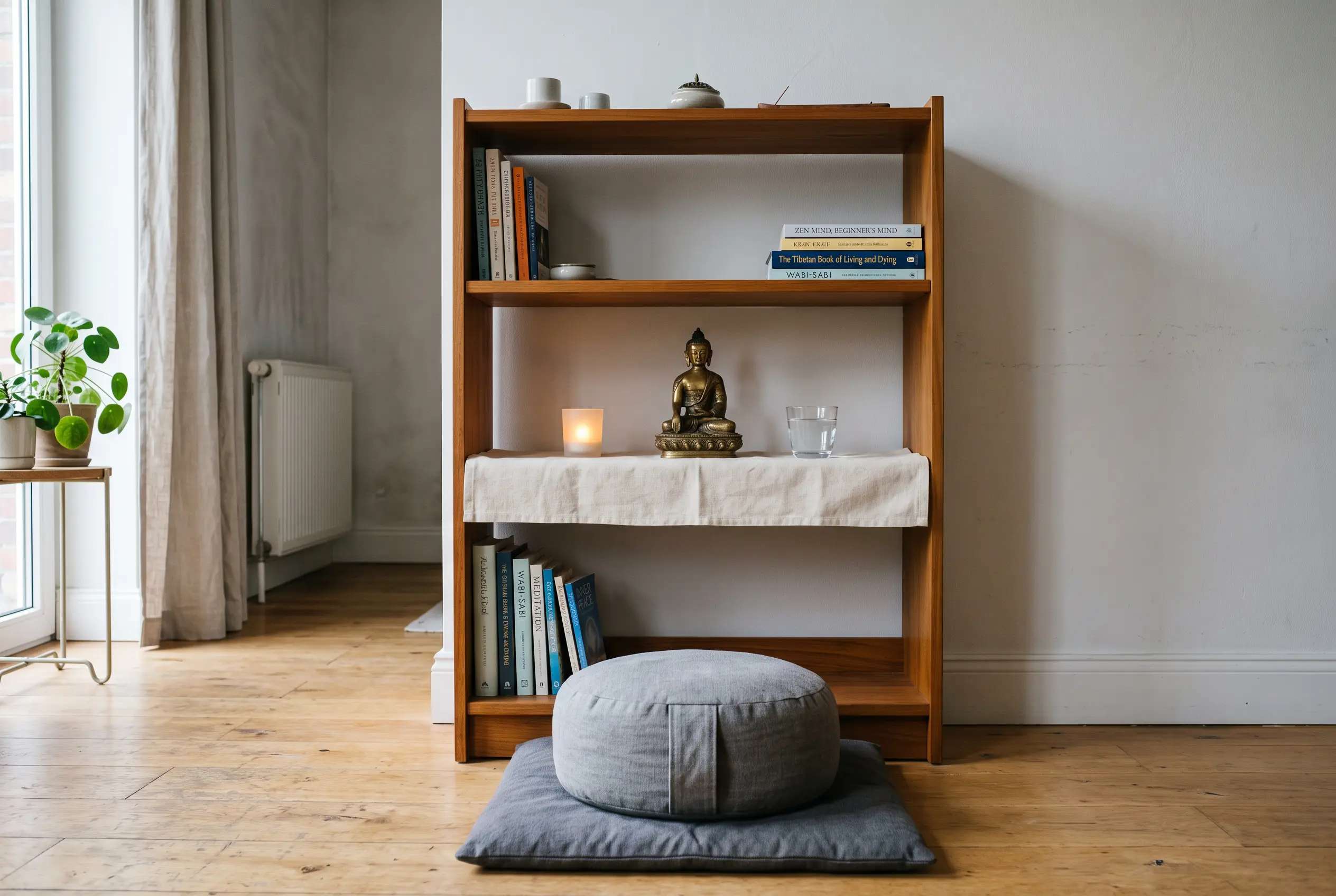
Place your altar in a clean, quiet spot where the Buddha image sits slightly higher than your head when you are seated, off the floor and away from bathrooms and kitchens. Height, cleanliness, and calm matter more than direction.
How High Should the Buddha Image Sit?
Seated eye level is the height of your eyes while you sit in your usual meditation position. FPMT guidance places the image higher than the head of a person sitting before it. As a floor rule, our Royal Ease product page recommends keeping a statue at least 3 feet (90 cm) off the floor.Your seated eye level
Sit in your usual position, then check where the base of the statue falls against your eyes. If it sits below them, raise the shelf or move the altar to a taller surface.
Direction matters less. Tibetan guidance says the altar traditionally faces east, but not essentially so. A calm wall or window beats a television.
Can a Buddhist Altar Be in the Bedroom?
Yes, a Buddhist altar can sit in a bedroom when that is your only quiet space. The FPMT Losang Dragpa Centre advises against placing it where it faces the foot end of the bed. Choose a shelf above bed height, on a side wall.
Some practitioners drape a plain cloth over the altar at night or when guests visit. It keeps the space private without moving anything.
Small Apartments, Bookshelves, and Shared Homes
A single shelf is a complete altar. Here are three layouts that fit most homes:
- Bookshelf: Clear one shelf at or above eye level and keep books off it.
- Rental: Use a freestanding shelf or small table so no wall needs nails.
- Shared home: Use the top of a closed cabinet and choose an LED votive over a flame.
Keep your seat close to the shrine. Meditation cushions for sitting at your altar put your practice and your offerings in the same corner.
If your only option is not ideal, use it anyway. An altar you visit beats a perfect one you skip.
Home Shrine Setup: 7 Simple Steps in About 30 Minutes
To set up a simple Buddhist altar, choose a quiet spot, clean a stable surface, place a Buddha image above seated eye level, then add a light, fresh water, and optional incense or flowers below it. The whole setup takes about 30 minutes, and daily care takes two minutes.
- Choose a quiet, clean spot (5 minutes). Pick a place you pass every day, away from bathrooms, kitchens, and the floor.
- Clear and wipe the surface (5 minutes). Use a soft damp cloth, then dry it. Add a plain cloth if you like.
- Place the Buddha image (5 minutes). Set it at the back center, with its base above your seated eye level.
- Add fresh water (2 minutes). Fill a clean cup and set it in front of the image.
- Add a light (3 minutes). Place a candle or an LED votive to one side, clear of anything that can burn.
- Add incense or flowers (5 minutes). Do this only if you can ventilate the room and replace them when they fade.
- Sit and pause (5 minutes). Take three slow breaths and make a simple gesture of respect, such as palms together.
What You Will Need (and What You Can Skip)
Total time: about 30 minutes the first time. Supplies:
- A Buddha image: statue, print, or photo
- A stable shelf or small table
- A plain cloth and a soft dry cloth
- A cup or small bowl for water
- A candle or an LED votive
- An incense holder (optional)
You can skip a dedicated altar table, a full seven-bowl set, and costly ritual items.
Common Setup Mistakes Beginners Make
Watch for these:
- Buying the statue before measuring. Buy the shelf first, then the statue. A figure that looked small online can crowd a bookshelf.
- Crowding the surface. Keep the center clear so the image reads as the focus.
- Leaving empty bowls upright. Tibetan custom turns empty offering bowls upside down.
- Using the statue as a bookend or decoration. Treat it as a focus for practice, not as a prop.
Chan, Tibetan, Theravada, or Japanese: How Do Altars Differ?
Most traditions agree on the basics, which are to raise the image, keep it clean, and offer simply, but the details differ. Knowing them helps you avoid mixing customs by accident.
| Tradition | Typical center image | Common offerings | Beginner note |
|---|---|---|---|
| Chinese Chan and Pure Land | Shakyamuni, Guanyin, or Amitabha | Incense, flowers, light, water, fruit | Keep it simple; follow your temple’s style |
| Tibetan | Buddha image, plus a text and a small stupa | Seven water bowls, a lamp, food | Many setups are taught by a teacher |
| Theravada | Shakyamuni Buddha image | Flowers, light, incense, water | A regular habit matters more than a full set |
| Japanese butsudan | The central figure of your sect | Incense, flowers, light, rice | Often also honors ancestors; rules vary by sect |
Chinese Chan and Pure Land Altars
Many Chinese Buddhist homes center Shakyamuni, Guanyin, or Amitabha. Offerings are usually incense, flowers, light, water, and fruit, arranged with restraint. Chan (known in Japan as Zen) favors a plain look that suits a single shelf.
Tibetan Altars: Body, Speech, and Mind
A Tibetan altar traditionally holds three supports. A statue or photo of the Buddha represents body, a Dharma text represents speech, and a small stupa represents mind.
Water offerings follow exact rules. Lama Zopa Rinpoche’s advice describes seven bowls. The FPMT Losang Dragpa Centre says to fill each one to within a couple of millimeters (about 0.1 inch) of the rim, and to space the bowls about a grain of rice apart. Empty bowls go upside down. If you want the full Tibetan setup, learn it from a teacher first.
Theravada and Japanese Butsudan Customs
Many Theravada homes keep one Buddha image with flowers, a light, incense, and water. The setup is short, and the weight falls on regular practice.
A butsudan is the Japanese household Buddhist altar, a cabinet that often also honors ancestors. Wikipedia’s butsudan entry cites estimates that more than 60% of Japanese households have one, with rural rates above 90% and urban rates often below 60%. Sects such as Jodo Shinshu have their own layouts, so ask your temple first.
Not Buddhist? How to Keep It Respectful
You do not need to convert to keep a Buddha image at home, but you do need to treat it as more than decor. Most teachers welcome sincere interest. A few habits show that respect:
- Do: Keep the image above your seated eye level and off the floor.
- Do: Dust it and refresh the water on a regular schedule.
- Do: Choose Shakyamuni or Guanyin as a first figure.
- Do not: Place it in a bathroom, on the floor, or beside shoes.
- Do not: Use a Buddha head as a bookend or a garden ornament.
- Do not: Start with a wrathful protector figure, such as Mahakala. These are usually practiced under a teacher’s guidance.
A Buddha head or bust can also read as decor in some traditions. A full seated figure is the safer choice for your main image.
Choosing a Buddha Statue: Size, Material, and Budget Compared
Choose a statue that fits your shelf first and your taste second. On a shelf with 12 inches of open height, a figure about 8 to 9 inches tall leaves headroom above it and space in front for a cup and a light.
Size the Statue to Your Shelf, Not Your Room
Measure the open height and depth of the shelf before you shop. Leave about 3 inches above the head, and enough depth in front for a water cup and a light. A statue that fills the shelf leaves no room for offerings.
Copper, Sandstone, or a Simple Print?
Each material suits a different stage of practice. A printed image is a fine place to start.
| Option | Price | Best for | Trade-off |
|---|---|---|---|
| Printed or framed image | Low cost, printed at home or at a shop | Trying out an altar, renters | Less presence; paper can fade |
| Sandstone Buddha with open-center tealight display | $96.95 | A 3-item starter in one piece | Stone needs a dry spot; a tealight is a real flame |
| Aged copper meditating Buddha, mud-gold finish | $298.95 | The classic meditation pose | Heavier; check listed dimensions against your shelf |
| Royal Ease Guanyin, solid copper | $388.95 | A compact, weighty centerpiece | Highest price of the four |
Which Figure Fits a Beginner’s Altar?
Shakyamuni Buddha and Guanyin are the two most common first figures. Shakyamuni, often shown in the dhyana mudra (hands resting in the lap for meditation), suits a quiet practice corner. Guanyin, the bodhisattva of compassion, is central in many Chinese homes.
Our Royal Ease Guanyin is cast in solid copper and measures 4.3 x 2.7 x 8.9 inches (11 x 6.8 x 22.6 cm). It weighs 2.16 pounds (980 g), so it stays put on a shelf. At 8.9 inches it also leaves room for a cup and a light on a standard bookshelf, which keeps the 3-item altar intact. The product page describes the relaxed royal ease posture as linked to Guanyin imagery since roughly the late ninth century.
Our product pages state that each statue is blessed by Shaolin monks. We offer that as background, not as a promise of any result.
Ready to choose? See the solid copper Royal Ease Guanyin statue (8.9 in), priced at $388.95 and marked down from $426.95 at the time of writing.
How Do You Keep a Buddhist Altar Respectful Without Burning Out?
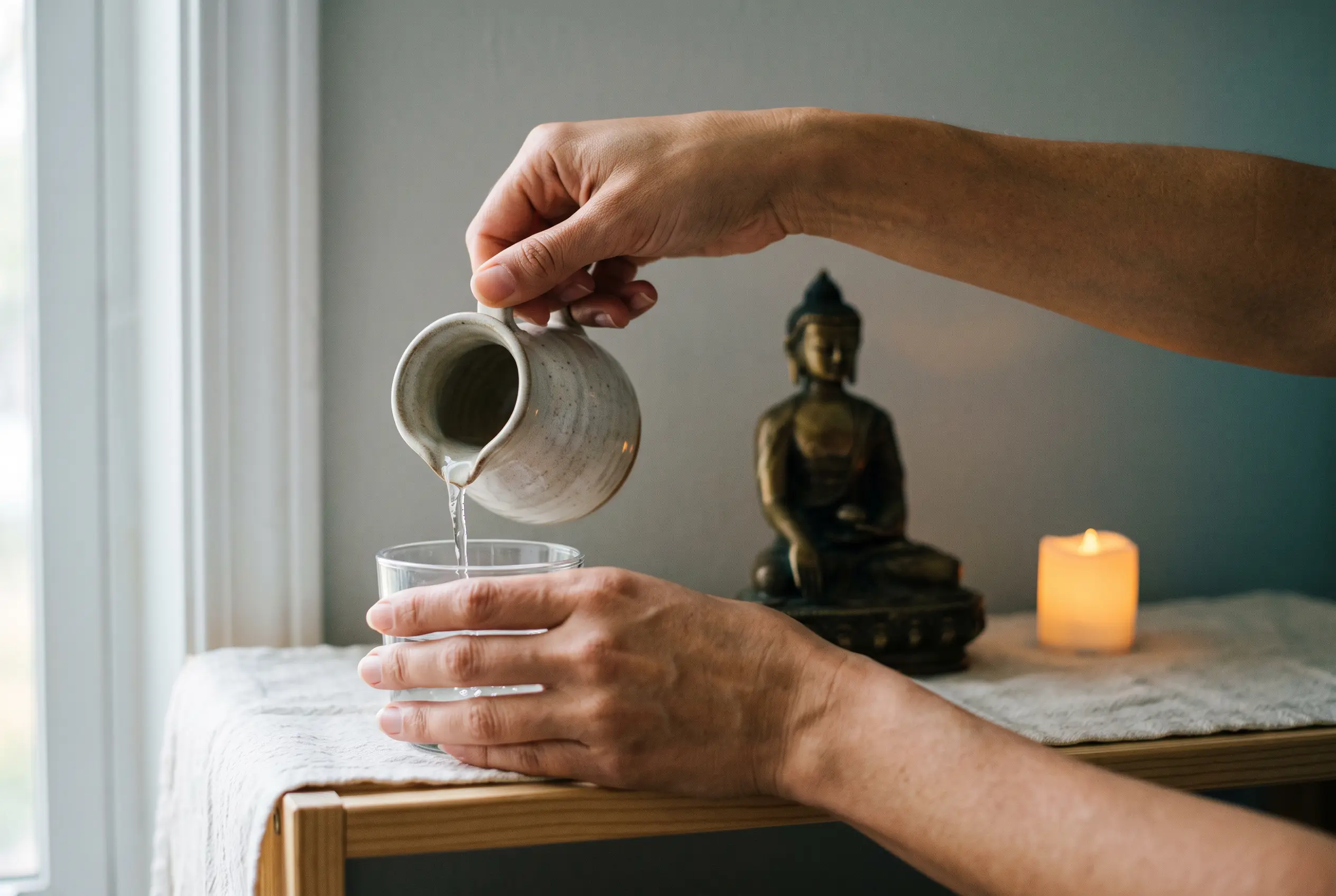
Keep it light: refresh the water and pause for one breath each day, dust once a week, and never leave a candle or incense burning unattended. A routine you can keep beats a perfect one you drop.
A 2-Minute Daily Routine
Fresh water, refreshed daily, is the heart of the routine. Many practitioners empty the cup at the end of the day and refill it each morning.
- Refresh the water (30 seconds): Pour out the old water, rinse the cup, and refill it.
- Turn on the light (15 seconds): Switch on the LED votive, or light the candle if you will stay nearby.
- Pause (60 seconds): Take three slow breaths and bow with palms together.
- Close (15 seconds): Turn off the light and walk away.
A neglected altar turns into a guilt shelf. Shrink the routine before you skip it.
Weekly Cleaning and Incense Safety
Plan on about 10 minutes each week. Wipe the statue with a soft dry cloth, wash the cup, and clear dust and ash from the surface. Avoid abrasive cleaners on metal figures, since they can scratch the finish.
Open flame needs firm limits. Fire safety guidance commonly advises keeping a candle at least 12 inches from anything that can burn. If children or pets share your home, keep the flame out of reach or switch to an LED votive.
Good ventilation makes incense safe to use. Crack a window, use a stable burner, and let the stick burn out in a space you can see. A well-made burner holds ash and keeps the stick upright, so handmade incense burners with stable bases are worth considering before you buy incense in bulk.
Frequently Asked Questions
No. The FPMT Losang Dragpa Centre lists a statue or photo of the Buddha, so a framed print works as the focal point.What matters most is that the image is clean, raised, and treated with care.
There is no fixed number, but beginners do best with one main image. If you add more, keep the central figure highest and leave room for the offerings.
Many people do, and most teachers welcome sincere interest. Keep the image off the floor, away from bathrooms, and out of purely decorative use, such as a bookend.
Many practitioners refresh the water daily and replace flowers as soon as they wilt. Start with a schedule you can keep, and measure your shelf before you add a statue.
Final Thoughts on Your Buddhist Home Altar
The bottom line is that a Buddhist home altar works best when it stays small. Place one image above seated eye level, add a light and fresh water, and keep the space clean. Add incense, flowers, and fruit only when your routine can carry them.
Start with three items
Add the rest when your practice asks for it. When you are ready for a statue, browse ShaoLin Store’s handmade statue collection.
References
- Advice on water bowl offerings: Lama Zopa Rinpoche on making seven water bowl offerings. FPMT (PDF)
- Altar set-up guide: Items, placement, and water bowl details from the Foundation for the Preservation of the Mahayana Tradition. FPMT Losang Dragpa Centre
- Buddhist home shrines: How to set up a shrine at home, including found and repurposed objects. Shambhala
- Butsudan: Overview of the Japanese household Buddhist altar and its prevalence. Wikipedia