
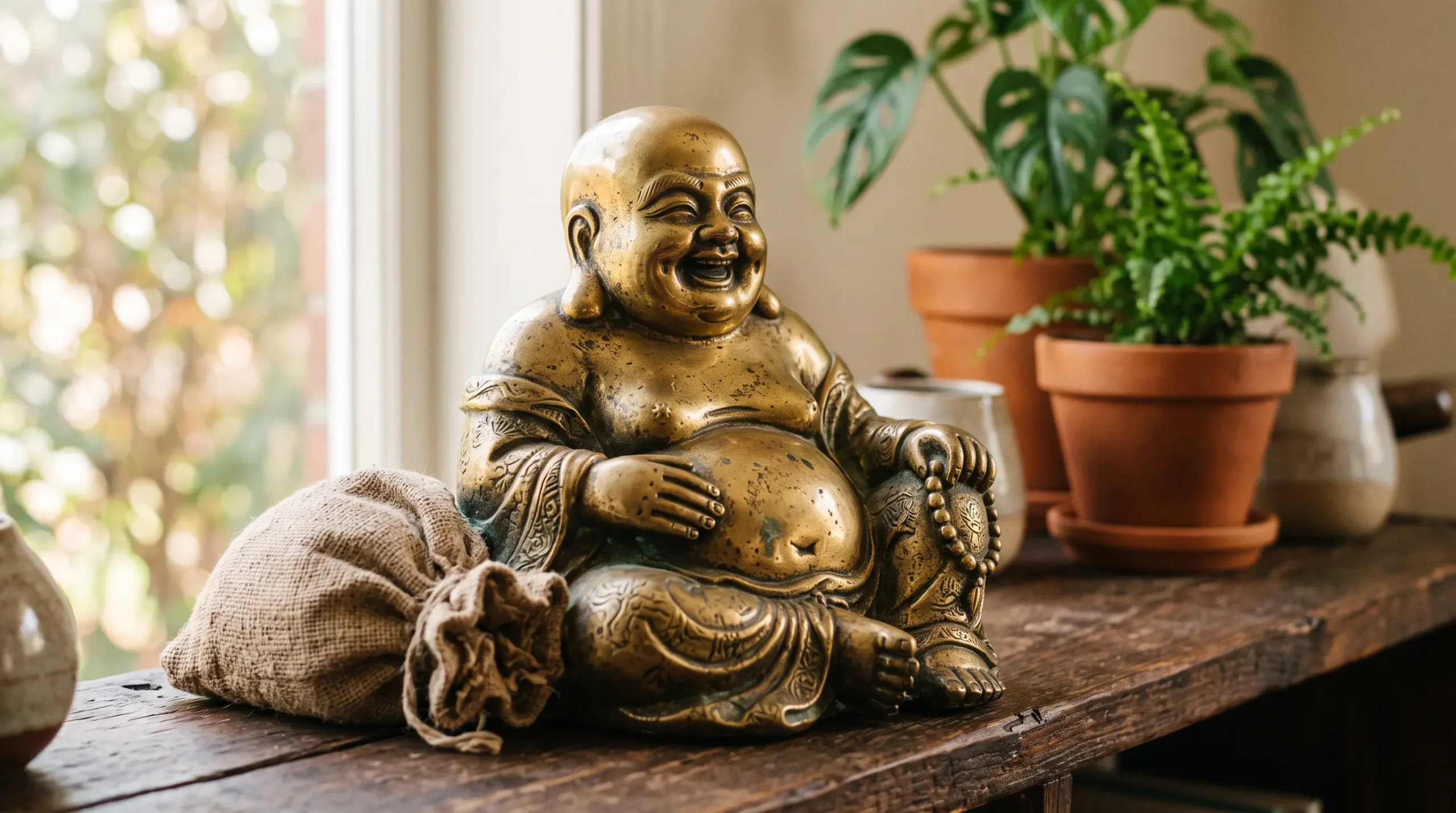
The Laughing Buddha is not the Buddha. He is Budai, a Chinese monk from the 10th century who carried everything he owned in a cloth sack. At ShaoLinStore, we believe a statue means more when you know who it shows. This guide explains who Budai was, what his symbols mean, and how to choose and place a statue with respect. We mark folk beliefs as folk beliefs, and we link our sources at the end.
Here’s what you need to know: the Laughing Buddha is Budai, a real monk named Qieci. Buddhists honor him as an incarnation of Maitreya, the future Buddha. He stands for contentment, generosity and abundance.
What Does the Laughing Buddha Mean?
The Laughing Buddha represents contentment, generosity and abundance. In East Asian tradition, his round belly stands for generosity and abundance, and also for wealth and fertility. His laugh shows a mind free of worry.
Folk belief later added a second layer: luck and prosperity. That is why you often see him near the till in shops and restaurants across Asia.
| Entity | Attribute | Value |
|---|---|---|
| Laughing Buddha | Core meanings | Contentment, generosity, abundance |
| Laughing Buddha | Chinese name | Budai (布袋), “cloth sack” |
| Laughing Buddha | Religious status | Folk-Buddhist figure, not the historical Buddha |
The Smithsonian’s National Museum of Asian Art puts it plainly: laughing buddha images are “not traditionally understood to depict the Historical Buddha at all.” To see why, meet the monk himself.
Who Was Budai, the Monk Behind the Laughing Buddha?
Budai was a real Chinese Chan monk who lived in the 10th century, during the Later Liang dynasty. Chan is the Chinese name for Zen. His given name was Qieci, and people called him “Budai” because of the sack he carried.
Legend says he wandered through towns and markets. He could predict the weather and people’s fortunes. He also loved making children laugh.
| Entity | Attribute | Value |
|---|---|---|
| Budai | Given name | Qieci (契此) |
| Budai | Era | 10th century, Later Liang dynasty |
| Budai | Tradition | Chan (Zen) Buddhism |
| Budai | Nickname meaning | “Cloth sack” |
What Do the Earliest Records Say About Budai?
The earliest detailed accounts of Budai were written decades after his death. The monk-historian Zanning included him in the Song Gaoseng Zhuan in 988. The monk Daoyuan told his story again in the Jingde Chuandeng Lu in 1004.
| Source | Compiler | Year |
|---|---|---|
| Song Gaoseng Zhuan (Lives of Eminent Monks of the Song) | Zanning | 988 |
| Jingde Chuandeng Lu (Records of the Transmission of the Lamp) | Daoyuan | 1004 |
These texts disagree on details, including the year he died. Estimates range from about 901 to 917. Some reference works call him semi-historical, because legends grew around him quickly. The monk was real, but many stories are tradition, not record.
Why Is He Called Budai?
Budai means “cloth sack” in Chinese. In Japanese, the same characters are read Hotei. The sack carried a double meaning: it held gifts for children, and it showed a life with little to cling to.
A famous Zen story captures the second meaning. When a monk asked him about the heart of the Buddha’s teaching, Budai put his sack down and stood quietly. Asked what came next, he picked it up and walked away. The key takeaway is that “letting go” is the original lesson, long before the luck-and-wealth reading.
Is the Laughing Buddha Really the Buddha?
No. The Laughing Buddha is not Siddhartha Gautama, the Indian founder of Buddhism. Gautama lived about 2,500 years ago in India. Budai lived in China roughly 1,400 years later.
The word Buddha is a title, not a name. It means “Awakened One.” Gautama is also called Shakyamuni, the Historical Buddha. Calling Budai the “Laughing Buddha” is a friendly nickname, not a claim that he is Gautama.
The mix-up has two causes. Religion scholar Megan Bryson of the University of Tennessee points to 18th-century European fashion for Chinese porcelain, which included laughing statues. She also points to Japanese Zen, which became popular worldwide in the 19th and 20th centuries. As a result, many Western images follow Japanese models.
Why Do So Many People Call Him the “Fat Buddha”?
Many people say “Fat Buddha” because Western shops, restaurants and films used his image long before anyone explained it. The nickname stuck, and it spread the idea that he was the founder of Buddhism.
In Chinese, the nicknames are gentler: Xiao Fo means “Laughing Buddha.” Calling him by his own name, Budai, is a small way to honor the man behind the statue.
How Is Budai Connected to Maitreya, the Future Buddha?
Budai is traditionally seen as an incarnation of Maitreya, the Buddha of the future. Britannica notes that his kindly nature led people to regard him as an incarnation of this bodhisattva. A bodhisattva is a being on the path to becoming a buddha.
The link comes from a verse he is said to have spoken near death. In short, it says: “Maitreya, the true Maitreya, takes countless forms. He shows himself to people again and again, but they do not recognize him.”
| Entity | Attribute | Value |
|---|---|---|
| Maitreya | Role | Future Buddha, waiting in heaven for his final rebirth |
| Maitreya | Classic look | Pensive pose, rich clothing |
| Maitreya | Popular alternate form | Plump, plainly dressed, wish-granting sage (Budai) |
The Smithsonian’s guidebook Paths to Perfection says the plump form is the most notable alternate form of Maitreya. In many Chinese temples, a Budai statue greets visitors at the entrance. That is why most people first meet him there.
How Can You Tell a Laughing Buddha From a Buddha Statue?
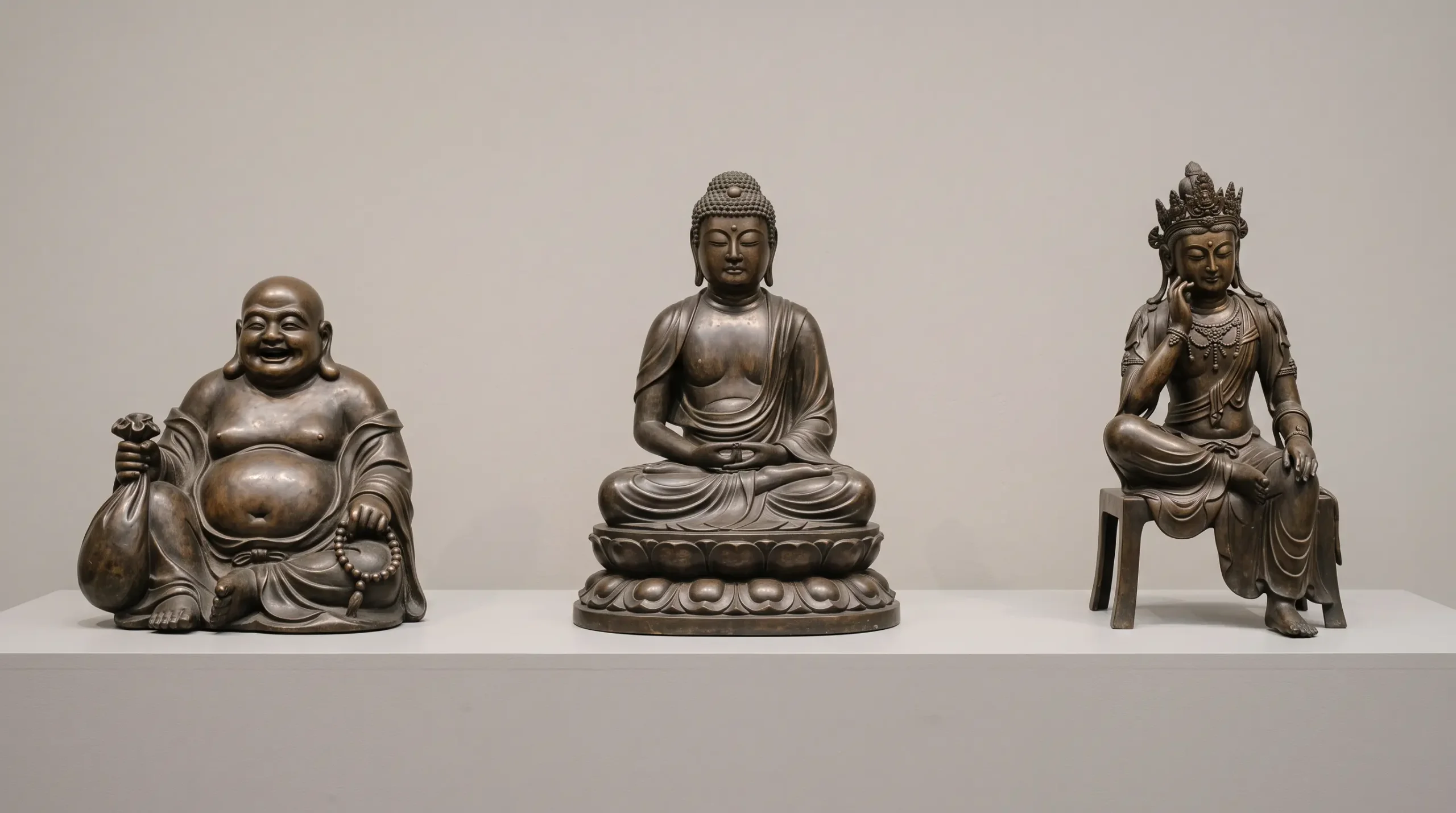
Look for the belly, the sack and the laugh. A bald, round-bellied figure with a cloth bag is Budai. A slim, calm figure with formal hand gestures is the historical Buddha.
| Feature | Laughing Buddha (Budai) | Gautama Buddha | Maitreya (classic form) |
|---|---|---|---|
| Origin | 10th-century China | India, about 2,500 years ago | Indian Buddhist scripture |
| Body | Round, belly exposed | Slim, composed | Elegant, often richly adorned |
| Face | Laughing | Calm, inward | Pensive |
| Marks and gestures | Sack, beads, fan or ingot | Cranial bump, long earlobes, mudras | Pensive pose |
| Meaning | Contentment, generosity | Awakening, the Dharma | Hope for a future age |
Bottom line: if you want a statue of the Buddha for meditation, choose a Shakyamuni statue. If you want a figure of joy and generosity, choose a Laughing Buddha.
What Do the Laughing Buddha’s Symbols Mean?
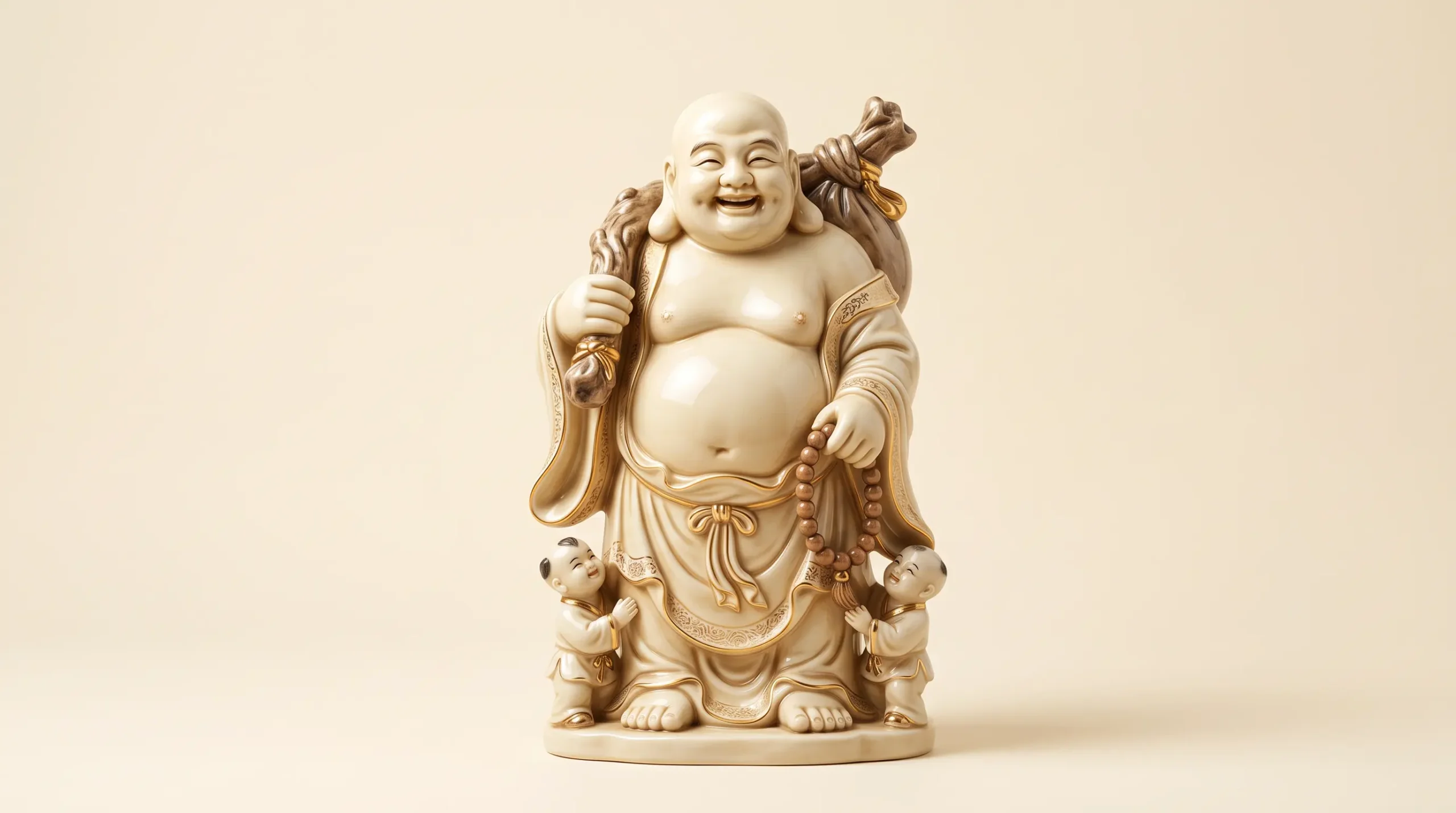
Each object Budai holds points to a specific idea. The sack means generosity, the belly means a big heart, and the beads mean practice. Later additions, such as ingots, were added by folk belief to signal wealth.
| Symbol | Traditional meaning | Popular meaning |
|---|---|---|
| Big belly | Generosity, tolerance, abundance | Wealth and fertility |
| Cloth sack | Owning little, giving freely | A bag of treasure that never empties |
| Laughing face | Freedom from worry | Joy, welcome |
| Prayer beads | Spiritual practice | Calm, wisdom |
| Children | His love of children | Family luck |
| Gold ingot | Not a traditional symbol | Money, career success |
| Fan and gourd | Not a traditional symbol | Health, removing obstacles |
Why Does the Laughing Buddha Have a Big Belly?
His big belly is not about greed. In East Asian tradition, it signals generosity and abundance, plus a heart wide enough to absorb life’s troubles. A common temple couplet says a big belly can hold what the world finds hard to hold, and a laugh can answer what is laughable.
What Do the Different Laughing Buddha Poses Mean?
Pick the pose by intention. These pairings come from modern feng shui and retail tradition, not from ancient Buddhist texts. Treat them as popular custom.
| Pose | Popular association | Often chosen for |
|---|---|---|
| Standing, ingot raised | Wealth, celebration | New business |
| Seated with sack or coins | Generosity, steady abundance | Housewarming |
| With children | Family harmony | Family homes, new parents |
| With fan and gourd | Health | Elderly relatives |
| Carrying sack on a staff | Safe journeys | Frequent travelers |
| With beads | Calm and practice | Quiet corner, desk |
Is Hotei the Same as the Laughing Buddha? Budai Across Asia
Yes. Hotei is the Japanese name for the Laughing Buddha. The same monk traveled with Chan Buddhism to Korea, Vietnam and Japan, gaining new names along the way.
| Country | Name | Role |
|---|---|---|
| China | Budai (布袋) | Maitreya incarnation, temple greeter |
| Japan | Hotei | One of the Seven Lucky Gods |
| Korea | Podae | Buddhist and folk figure |
| Vietnam | Bố Đại | Temple and folk figure |
Who Is Hotei Among Japan’s Seven Lucky Gods?
Hotei is one of the Shichi-fuku-jin, Japan’s Seven Lucky Gods. Britannica describes him as a cheerful, contented monk with a large exposed belly, often shown with children. Japanese art also shows the seven gods together on a treasure ship, called takarabune.
Zen Buddhism reached Japan around the 13th century, and Budai became Hotei there. This is a quick rule: Hotei and Budai are one figure with two names.
Is Thailand’s Phra Sangkachai the Same as the Laughing Buddha?
No. Phra Sangkachai is a different figure. In Thai tradition he is based on Mahākaccāyana, a disciple of the historical Buddha. Budai was a Chinese monk of the 10th century.
The two look alike at a glance, because both are round and smiling. Check the style: Phra Sangkachai usually sits with hands resting on his belly in a Theravada-style robe. Budai often stands, laughs openly and carries a sack.
Why Do People Rub the Laughing Buddha’s Belly?
People rub the Laughing Buddha’s belly for luck and prosperity. It is a Chinese folk custom, not a Buddhist ritual. The idea is that his abundance rubs off on you.
| Entity | Attribute | Value |
|---|---|---|
| Belly rubbing | Believed result | Luck, wealth, happiness |
| Belly rubbing | Doctrinal status | Folk belief, not Buddhist doctrine |
| Skipping the rub | Consequence | None in any tradition |
If you choose to try it, keep it simple and respectful:
- Wash or wipe your hands first.
- Touch the belly gently, without scrubbing or pushing.
- Smile and name one thing you are grateful for, or one wish.
- Dust the statue now and then, so it stays a cared-for object.
Think of it as a small pause. You stop, smile and set an intention. That is a gentle habit, whatever you believe about luck. The older lesson is quieter: Budai’s sack teaches you to hold things lightly.
Where Should You Place a Laughing Buddha Statue?
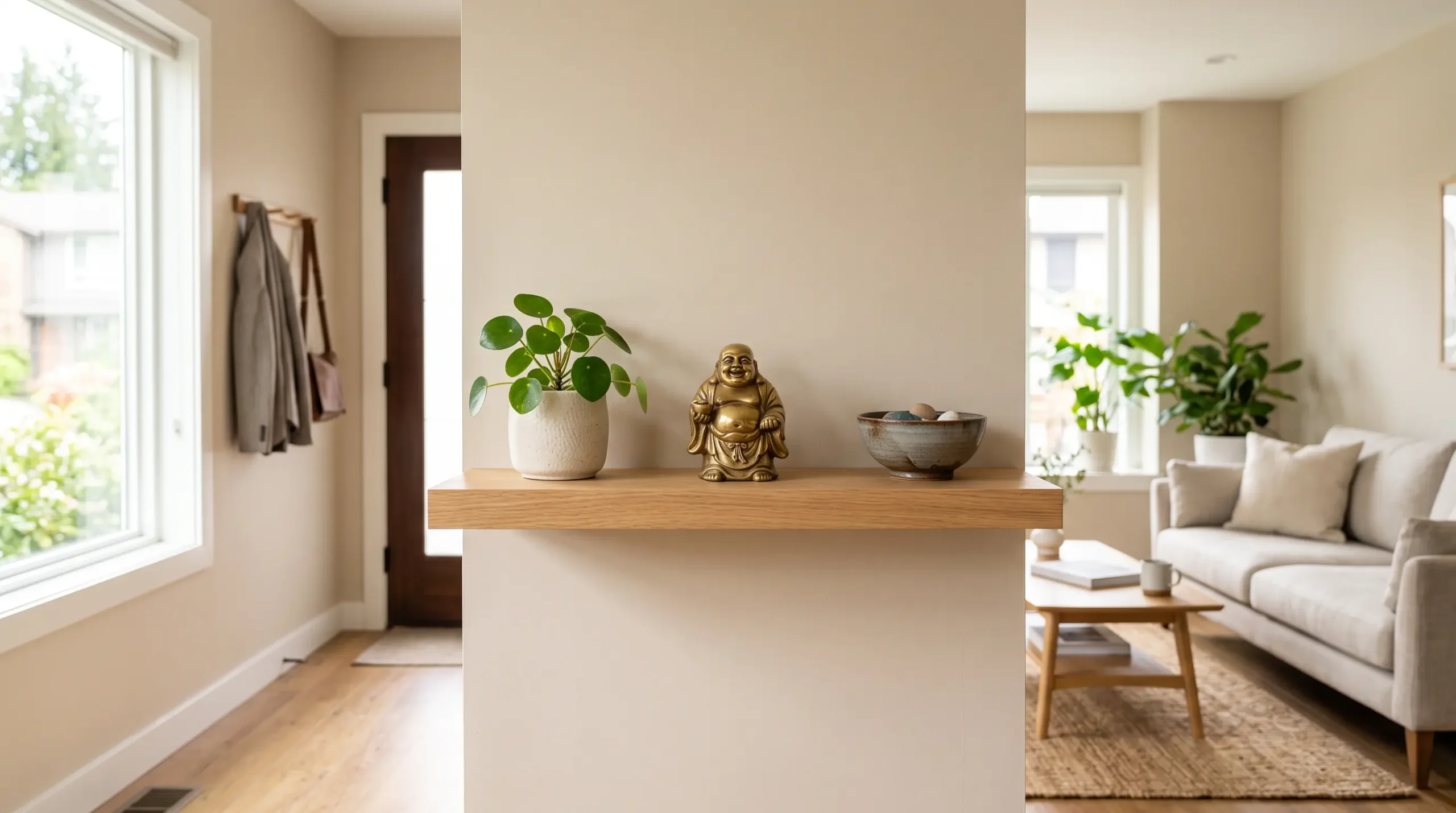
Place a Laughing Buddha statue at or above eye level, on a clean surface, facing into the room. Avoid the floor, the bathroom and the kitchen. These rules come from feng shui and Vastu, which are folk systems, not Buddhist teaching.
| Goal | Commonly advised placement |
|---|---|
| Wealth | Southeast corner of the home |
| Family and health | East side of the home |
| Welcome | Near the main entrance, facing inward |
| Work | On a desk, in view of you |
| Always avoid | Floor, bathroom, kitchen, facing a wall |
Guides disagree on exact directions. Some say southeast, some say east, and some say face the door. Only the basics are consistent: high, clean and visible. If sources conflict, follow those three and choose the spot that feels welcoming.
Where Does a Laughing Buddha Go in an Office, Shop or Garden?
In an office or shop, put the statue where you and your visitors can see it. A desk or counter at eye level works well. Keep the surface tidy, because a dusty statue sends the opposite message to a welcome.
In a garden, choose a weatherproof material such as solid brass, bronze or stone. Set it on a stand or low wall, not on bare ground. A sheltered spot with a view of the path, or of a seating area, keeps him part of daily life.
| Space | Good spot | Material tip |
|---|---|---|
| Living room | Shelf near the entrance or a southeast corner | Any indoor material |
| Office desk | Eye level, facing you or the door | Small resin or brass piece |
| Shop counter | Beside the till, in view of customers | Durable brass or porcelain |
| Garden | Raised stand with a view of the path | Solid brass, bronze or stone |
How Do You Choose or Gift the Right Laughing Buddha Statue?
Choose by intention first and material second. A standing statue with an ingot suits a new business. A statue with children suits a family home. Both make a warm gift.
When you shop at ShaoLinStore, start with the pose that matches your goal. Then check the material against where the statue will live.
| Material | Strength | Keep in mind |
|---|---|---|
| Brass or bronze | Durable, weighty | Solid pieces last longest |
| Wood | Warm, natural look | Keep away from damp |
| Porcelain or ceramic | Classic Chinese style | Fragile |
| Resin | Light, budget-friendly | Least durable |
Before you buy, run through this short checklist:
- Confirm the figure is Budai, not a mislabeled Shakyamuni statue.
- Check the face, sack and fine details for clean craftsmanship.
- Match the material to the room or outdoor space.
- For an antique, ask where it came from.
Some Vastu and feng shui sources say a gifted statue is luckier. Traditions do not agree, and no rule stops you from buying your own. The short answer is that sincere intention matters more than who paid.
Is It Disrespectful to Own a Laughing Buddha Statue?
No. Owning a Laughing Buddha statue as a non-Buddhist is generally fine if you treat him as a cultural and spiritual figure. Disrespect comes from how you use the statue, not from who owns it.
| Practice | Respectful? |
|---|---|
| Display on a clean, raised shelf | Yes |
| Own it as a non-Buddhist | Generally yes |
| Set it on the floor or in a bathroom | No |
| Use it as a joke prop or ashtray | No |
| Place it above a Shakyamuni image on an altar | Avoid |
Knowing who Budai is counts as respect. A statue placed with that knowledge becomes a reminder to give freely and worry less.
Conclusion: What the Laughing Buddha (Budai) Teaches
The Laughing Buddha was never the Buddha, and that is why he matters. In summary, Budai was a real 10th-century monk with a cloth sack and a laugh. He became Asia’s best-loved symbol of contentment. Belly rubbing and feng shui placement are folk customs you can enjoy, as long as you know where they come from.
Ready to bring one home? Explore the Laughing Buddha collection at ShaoLinStore and choose the figure that fits your intention.
❓ Frequently Asked Questions
No. The Laughing Buddha is Budai, a 10th-century Chinese Chan monk, not Siddhartha Gautama, the founder of Buddhism. East Asian Buddhists honor him as an incarnation of Maitreya, the future Buddha.
Budai is traditionally seen as an incarnation of Maitreya, based on a verse he is said to have spoken before he died. Maitreya is an older figure from Indian Buddhist scripture, so Budai became identified with him.
Rubbing the belly is a Chinese folk custom meant to bring luck and prosperity. It is not part of Buddhist doctrine, and nothing bad happens if you skip it.
Yes. Some feng shui and Vastu sources say a gifted statue is luckier, but traditions disagree and no rule forbids buying your own. Place it respectfully: raised, clean and facing into the room.
Yes. Hotei is the Japanese reading of the same name, meaning cloth sack. In Japan he became one of the Seven Lucky Gods. Thailand’s Phra Sangkachai is a different figure.
📚 References
- Smithsonian guidebook on Buddhist art: explains that laughing buddha images do not depict the Historical Buddha, and describes Maitreya’s forms. Paths to Perfection: Buddhist Art at the Freer|Sackler, Smithsonian National Museum of Asian Art
- Hotei and the Seven Lucky Gods: confirms Hotei’s link to the Chinese monk Pu-tai and to Maitreya. Britannica, “Hotei”
- Scholarly overview: explains the 10th-century monk, his symbolism and how he became a global icon. Megan Bryson, University of Tennessee, “Who is the ‘Laughing Buddha’?” (The Conversation, via Religion News Service)
- Museum perspective on Budai’s names and verse: covers how Budai became Hotei in Japan and his link to Maitreya. Bowers Museum, “A Budai By Any Other Name Would be Just as Compassionate”
- Reference entry: summarizes Budai’s name, era, legends and identification with Maitreya. Wikipedia, “Budai”