

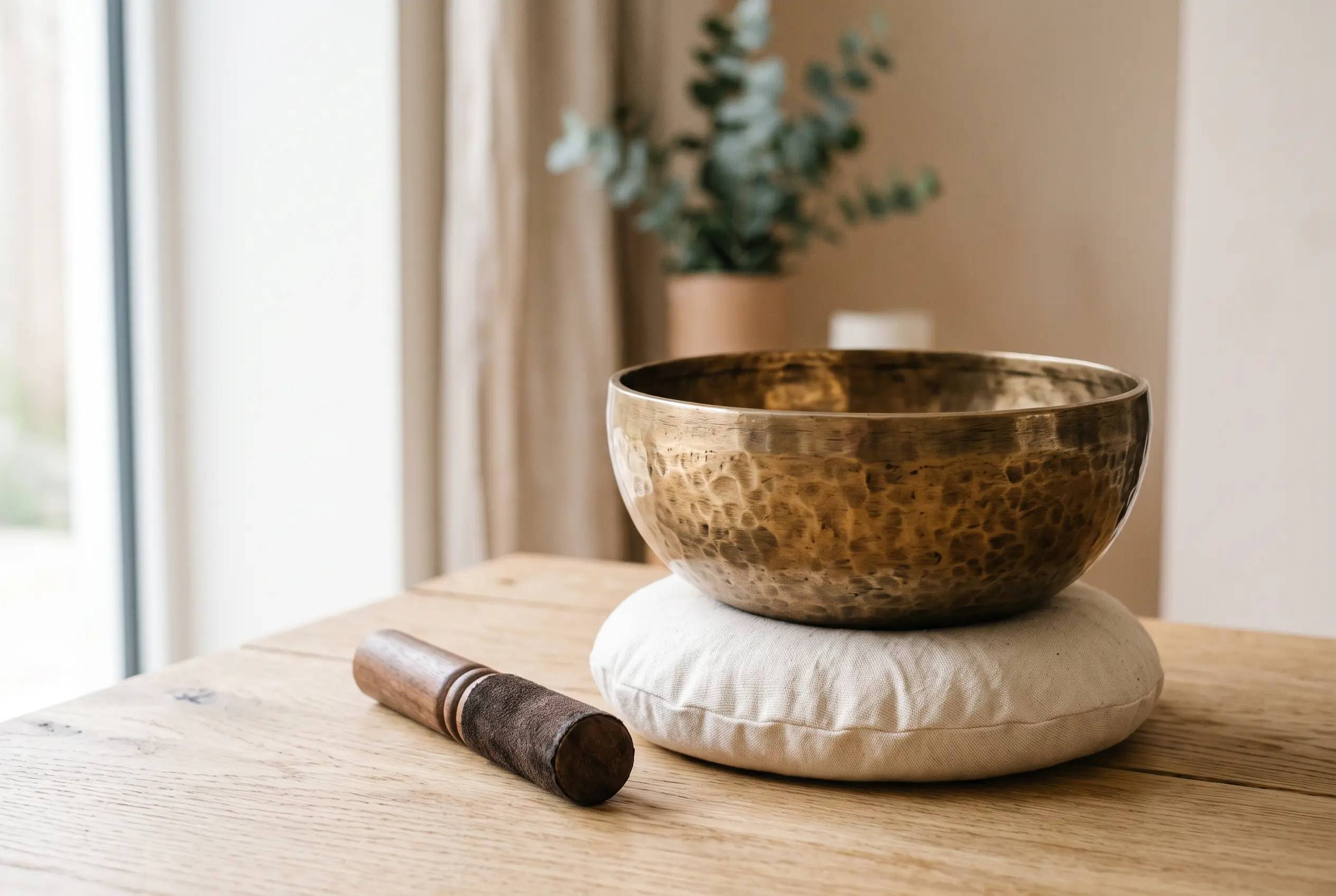
Your first singing bowl should be a hand-hammered metal bowl about 5–7 inches wide. That size sings easily, fits in one palm and costs far less than a large bowl. At ShaoLinStore, we hear the same two worries from new players: “Which bowl should I buy?” and “Why won’t mine sing?” This guide answers both. You will learn how to choose a singing bowl for beginners, play it within five minutes and keep it sounding good for years. No myths and no hype.
The short answer: buy a 5–7 inch hand-hammered bronze bowl with a wooden striker and a cushion. Strike it gently, then rub the rim in slow circles. Wipe it dry after every session.
What Is a Singing Bowl, and What Is It Made Of?
A singing bowl is a standing bell: an upturned bowl of bronze or quartz that rings when struck and hums when you rub its rim. A standing bell is simply a bell that rests rim-up on a surface instead of hanging. Most metal bowls are bell-metal bronze, a hard alloy of copper and tin.
| Entity | Attribute | Value |
|---|---|---|
| Bell-metal bronze | Composition | About 77–80% copper and 20–23% tin (dealer testing) |
| Crystal bowl | Material | Quartz (silica), about 99.9% pure |
| Standing bell | Origin | China; singing-style bowls reached the West in the early 1970s |
You may see bowls sold as “seven-metal” bowls, said to contain gold, silver, mercury, copper, iron, tin and lead. Specialist dealers who tested antique bowls report almost pure copper and tin instead. Himalayan Bowls says metallurgists at Oxford University reached the same finding. Treat “seven metals” as a sales story, not a quality mark.
Every bowl makes sound the same way. Its walls and rim vibrate, and the vibration creates a main pitch plus quieter higher pitches called overtones. Strike a bowl and you hear several overtones at once. Rub the rim and the sound narrows to one steady, humming note.
Why does this matter? High-tin bronze gives the long, layered sound people love. Thin, cheap brass sounds duller and may contain lead (more on that in the safety section).
Metal vs Crystal Singing Bowls: Which Is Better for a Beginner?
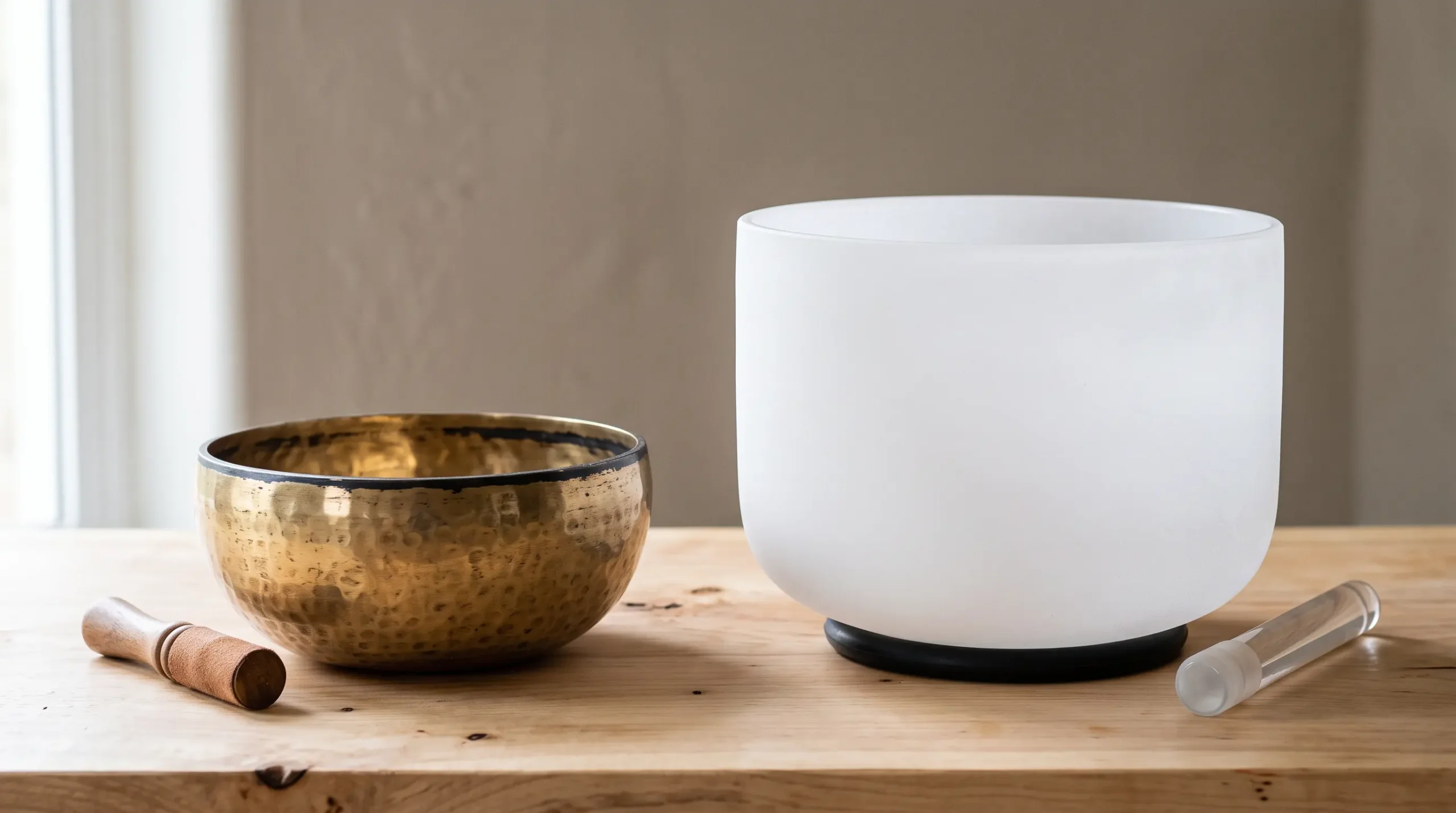
A metal singing bowl is the better first buy for most beginners. It costs less, survives drops and forgives clumsy technique. A crystal singing bowl makes a smarter second bowl once you know what sound you want.
| Feature | Metal (bronze) bowl | Crystal (quartz) bowl |
|---|---|---|
| Sound | Warm, layered, rich overtones | Pure, long, near-single tone |
| Beginner size | 5–7 inches | 8–10 inches (frosted) |
| Typical price | About $50–$150 | About $100–$300 per bowl |
| Weight | Lighter | 2–3× heavier at the same width |
| Durability | Very tough | Can crack from a hard strike or a fall |
| Best for | Personal meditation, travel, gifts | Room-filling sound, group sessions |
In summary, pick metal if you want a bowl you can toss in a backpack. Pick crystal if you want one pure note that fills a room. If you do choose crystal, a frosted bowl is the safer first pick.
How to Choose Your First Singing Bowl: A 5-Step Checklist
Before buying, check five things: purpose, size, construction, sound and accessories. Get these right and price mostly takes care of itself. Here’s what you need to know:
- Purpose. Decide if it is for daily meditation, travel, a gift or a group.
- Size. Choose 5–7 inches for metal.
- Construction. Look for hand-hammered marks.
- Sound. Ask for a recording of the exact bowl you will receive.
- Accessories. Make sure a striker and cushion are included.
What Size Singing Bowl Should a Beginner Buy?
Buy a metal bowl about 5–7 inches across. It fits in one palm, sings easily and fills a bedroom with sound. Bigger bowls look impressive but need more skill to keep singing.
| Bowl size | Sound and feel | Best for |
|---|---|---|
| Under 4.5 in (under 12 cm) | High pitch, short sustain | Travel, desk use |
| 5–7 in (13–18 cm) | Balanced, easy to play | First bowl, daily practice |
| 8 in and up | Deep tone, heavy to hold | Group sessions, second bowl |
Online guides disagree on size, with advice ranging from 4.5 to 9 inches. The gap exists because sellers define “beginner” differently. Our 5–7 inch range balances ease of play with a full, lasting tone.
How Can You Tell a Hand-Hammered Bowl From a Machine-Made One?
Look for irregular hammer marks and listen for a long, wavering tone with several overtones. Machine-made bowls are smooth, uniform and often have cast-in designs. They also sound flatter.
Use this four-point test: check the surface, check the shape, count the seconds of sustain and check the price. Bowls under about $25 are almost always machine-made. Be careful with shiny bowls labeled “antique.” Real age shows as even, natural darkening, not painted-on wear.
How Do You Test a Singing Bowl’s Sound Before You Buy?
Strike the bowl once, then count the seconds the tone lasts. A well-made hand-hammered bowl keeps ringing noticeably longer than a thin machine-made one. Listen for a slow, gentle wobble in the tone. This beating is the sound of several close pitches blending, and it is a sign of a rich bowl.
If you shop online, ask the seller for a short recording of the exact bowl you will receive. Compare two or three bowls the same way. Your ear is the best test, so trust the one you want to keep listening to.
How Much Should You Spend on Your First Singing Bowl?
Plan on $50–$150 for a genuine beginner metal bowl. Hand-hammered bowls rarely sell below about $80. Large bowls run $500 or more, and rare antiques reach thousands. Spend on the bowl itself, not on engraving or fancy packaging. Note that most price data comes from sellers, so treat it as a guide.
Which Mallet and Cushion Do You Need?
You need two accessories: a wooden striker matched to your bowl’s size and a cushion or ring. A striker (also called a mallet or puja) is the stick that plays the bowl. A suede-wrapped wooden striker can both strike and rim. Soft felt mallets only strike; they slide too easily to make a bowl sing.
The cushion lets the bowl vibrate freely. Without it, a bowl on a hard table buzzes. A complete set with bowl, striker and cushion is the easiest start. You can compare sets in the singing bowl collection at ShaoLinStore using the checklist above.
What Is the Best Singing Bowl to Give as a Gift?
Choose a 4–6 inch hand-hammered metal bowl sold as a set with a striker and cushion. It works the moment it is unwrapped. Skip crystal for gifts, since it costs more and can crack. Add a short care card so the recipient knows how to start.
How to Play a Singing Bowl: Step-by-Step for Beginners
There are only two techniques to learn: striking for a ringing tone and rimming for a steady hum. Most beginners manage both within a few short sessions. First, sit upright, remove rings and rest the bowl on your flat palm with fingers open, or place it on its cushion.
How Do You Hold a Singing Bowl?
Rest a 5–7 inch bowl on your flat, open palm, with fingers spread and not touching the walls. Fingers that touch the side dampen the sound. If your hand tires, set the bowl on its cushion instead. Keep your wrist relaxed and your shoulders low, because tension in your arm shows up in the tone.
How Do You Strike a Singing Bowl?
Hold the striker like a pen and tap the outer wall gently with the padded end. Think of a soft knock, not a drum hit. Strike about halfway down the outside wall. Then let the tone fade completely before you strike again. That silence is part of the practice.
How Do You Make a Singing Bowl “Sing” (Rimming)?
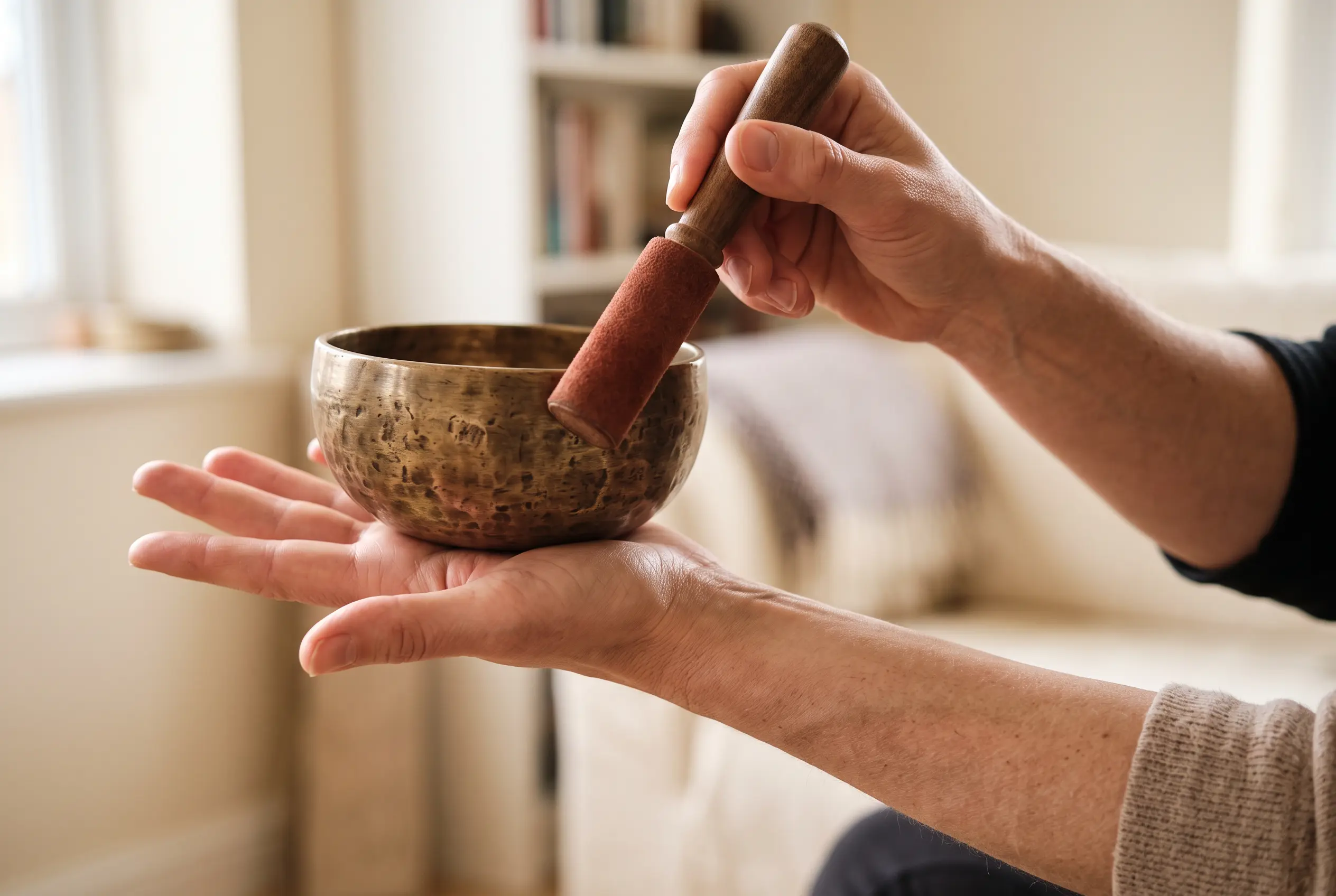
Rimming means rubbing the striker around the bowl’s outer rim to produce a continuous hum. Strike once softly, then follow these steps:
- Press the wooden or suede side of the striker against the outer rim.
- Circle slowly with steady, even pressure.
- Keep the striker at a steady angle, near vertical to about 45°.
- Wait for the hum to build, usually after 1–2 full rotations.
- Ease the pressure slightly once the sound is full.
A new wooden striker needs roughly 5 minutes of use to “break in.” The volume may pulse as you play. That is normal. Acoustics researchers at Rollins College found the sound swells and fades four times per rotation, because the vibrating pattern travels around the bowl with your striker.
Why Won’t My Singing Bowl Sing, or Why Does It Rattle?
A rattle means the bowl’s vibration is bouncing your striker off the rim. Slow down and keep the pressure steady. A rattle is common when you rotate too fast or press too lightly.
The science is simple. As you rub, the striker alternately sticks to the bowl and slips across it. Researchers describe this stick-slip motion, and each slip is only about the width of a human hair. That tiny rhythm is what sets the bowl ringing.
| Symptom | Likely cause | Fix |
|---|---|---|
| Rattling or buzzing | Moving too fast or pressing too lightly | Slow down, press a little firmer |
| No sound at all | Soft felt end used, or uneven pressure | Use the wooden or suede side |
| Sound dies quickly | Fingers touching the wall, or hard surface | Use flat palm or cushion |
| Harsh, clanging tone | Strike too hard | Use a lighter touch |
Should You Play a Singing Bowl Clockwise or Counterclockwise?
Both directions work equally well. The bowl responds to steady pressure, not direction. Clockwise is the common convention in Buddhist practice, so many players choose it. Pick one direction per session and stay with it.
How Should You Use Your Singing Bowl Every Day?
Start with 10 minutes a day: three strikes to open, five minutes of rimming with slow breathing, and one final strike you listen to until it is silent. Short, regular sessions beat long, occasional ones. Most guides suggest 5–15 minutes daily. If the sound feels overwhelming, cut back to about 5 minutes.
| Situation | Session length | How to use it |
|---|---|---|
| Morning reset | 3–5 minutes | Three strikes, then gentle rimming |
| Work break | 2–3 minutes | Rimming only, with slow breaths |
| Bedtime wind-down | 10–15 minutes | Soft strikes, long pauses |
What Are the Most Common Singing Bowl Mistakes for Beginners?
Most beginner problems come from five habits: rushing, pressing unevenly, striking too hard, using the wrong striker end and skipping the cushion. Each one is easy to fix. Here is a quick list of what to change:
- Rushing the rim. Rotate slowly. Fast circles are the top cause of rattling.
- Uneven pressure. Keep the same light, steady push all the way around.
- Hitting too hard. A gentle tap rings longer than a hard knock.
- Using a felt end for rimming. Switch to the wooden or suede side.
- Playing on a hard surface. Use your palm or a cushion.
Give a new striker about 5 minutes of rimming practice before you judge the bowl. To put it simply, patience and a light touch matter more than any equipment upgrade.
Do Singing Bowls Actually Work? What the Research Says
Early research suggests singing bowl meditation can lower tension and lift mood in the short term. But the evidence is thin, so treat a bowl as a relaxation tool, not a medical treatment.
In a 2017 observational study, 62 adults (average age 49.7) joined a roughly 60-minute sound meditation. Afterward they reported less tension, anger, fatigue and low mood. Newcomers saw the biggest drop in tension. However, the study had no control group, so it cannot prove the bowls caused the change.
A 2020 systematic review found just four peer-reviewed studies and concluded that singing bowl therapy could not yet be recommended. A larger 2025 review described potential for easing anxiety and depression and improving sleep. It still called for stronger research. The key takeaway is simple: the bowls may help you relax, but be wary of claims that they cure illness.
How to Care for Your Singing Bowl: Cleaning, Storage and Safety
Wipe your singing bowl with a soft, dry cloth after every session, and store it on its cushion. Those two habits prevent most tarnish, scratches and dull tone. Skin oil is the main cause of tarnish, so dry-wipe often.
How Do You Clean a Metal Singing Bowl?
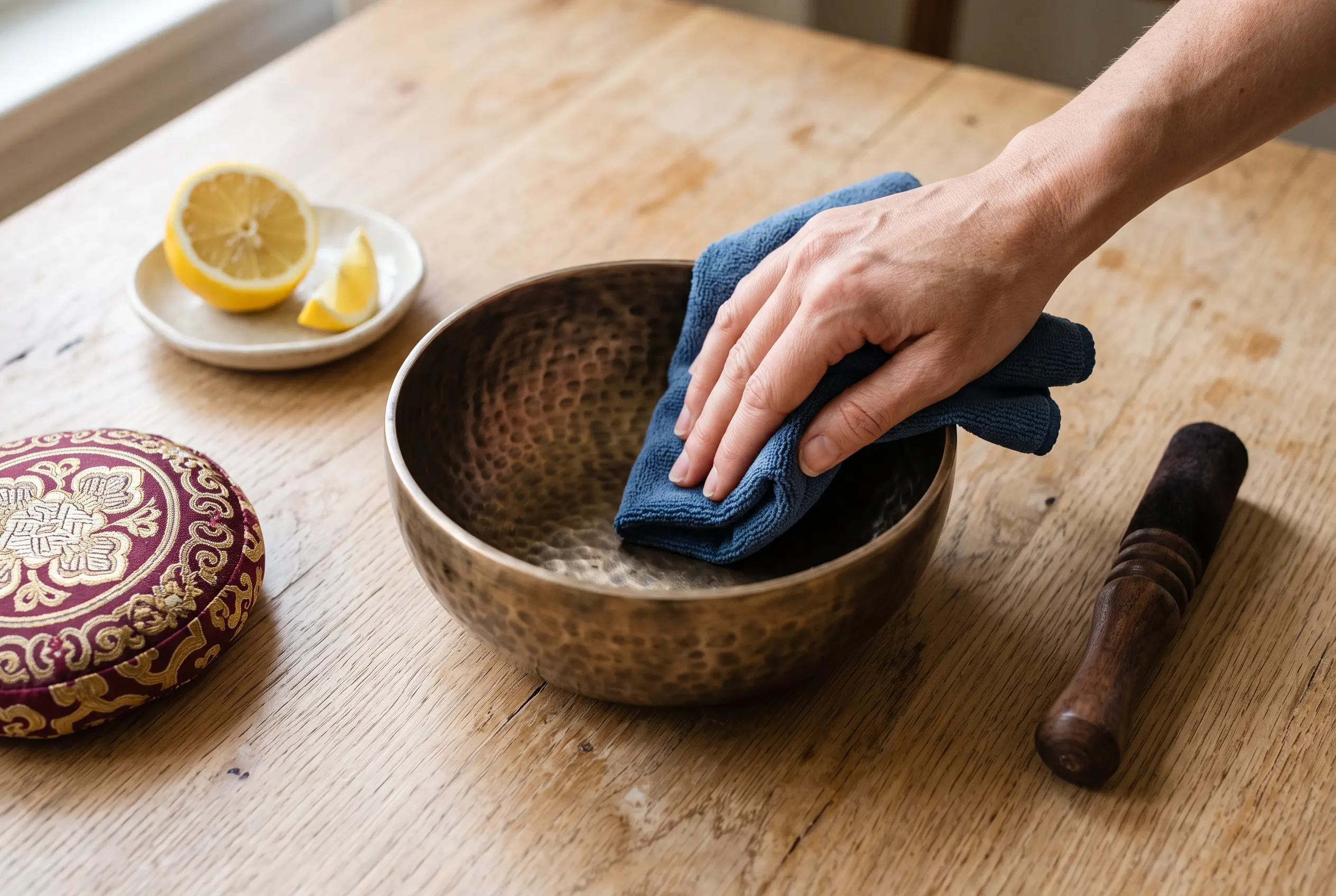
Clean a metal bowl every few weeks with a barely damp cloth and 2–3 drops of mild soap in lukewarm water. Dry it right away. For visible tarnish, use lemon juice or white vinegar, then rinse and dry. Avoid harsh chemicals, since they can dull the finish. Keep in mind that a darker patina (natural aging on the surface) does not hurt the sound. Many owners like it.
How Do You Clean a Crystal Singing Bowl?
Wash a crystal bowl with warm water, dish soap and a soft brush, then dry it with a lint-free cloth. Avoid sudden temperature changes, which can crack quartz. Always set it on its ring, and carry it in a padded case.
How Should You Store a Singing Bowl?
Keep your bowl on its cushion in a dry, ventilated spot out of direct sun. For travel, use a padded bag. Never stack bowls without padding between them. Leaving the bowl in view also helps you play it daily.
Are Singing Bowls Safe? Lead, Water and Health Precautions
Playing a singing bowl is safe for most people. But don’t drink water from a metal bowl, and keep cheap brass bowls away from children. Some budget brass bowls contain lead; one lead-safety advocate’s X-ray test of a cheap bowl reported about 5.6%. A real bronze bowl from a trusted seller lowers that risk.
If you have epilepsy, a pacemaker or metal implants, or you are pregnant, ask your doctor before placing a bowl on your body. These precautions come from practitioner guidance rather than clinical trials.
❓ Frequently Asked Questions
A hand-hammered metal bowl about 5–7 inches wide, sold with a wooden striker and a cushion. It is forgiving to play, durable and affordable. Crystal works better as a second bowl.
Yes. Most guides suggest 5–15 minutes daily. Short, regular sessions work better than occasional long ones. If the sound feels overwhelming, cut back to about 5 minutes.
Almost certainly not. Dealer testing reports that real bowls are mostly copper with about 20–23% tin. “Seven metals” is largely a marketing story.
You can play a bowl with a little water for a shimmering effect. Don’t drink the water, because metal alloys may contain trace lead. Dry the bowl fully afterward to prevent tarnish.
A well-made bronze bowl can last for generations, and antique bowls are still played today. Keep it on a cushion, avoid drops and wipe it after use.
Ready to Choose Your First Singing Bowl?
Bottom line: your first singing bowl doesn’t need to be expensive or ancient. It needs to be hand-hammered, sized for your hands, played gently and wiped after every session. Use the five-step checklist above to choose with confidence. When you’re ready to shop, explore the singing bowl range at ShaoLinStore and start your first sound practice this week.
📚 References
- Sound meditation and mood: The 2017 observational study of 62 adults used in the research section. Goldsby et al., Journal of Evidence-Based Complementary & Alternative Medicine (SAGE)
- Health evidence review: The 2020 systematic review that found four peer-reviewed studies. Stanhope & Weinstein, University of Adelaide Digital Library
- Recent clinical evidence: A 2025 systematic review of clinical studies on singing bowls. Cai et al., Integrative Medicine Research (PubMed Central)
- Playing physics: Plain-language explanation of stick-slip motion and why bowl volume swells four times per rotation. Acoustical Society of America, Rollins College lay-language paper